In this guide 17 sections ▾
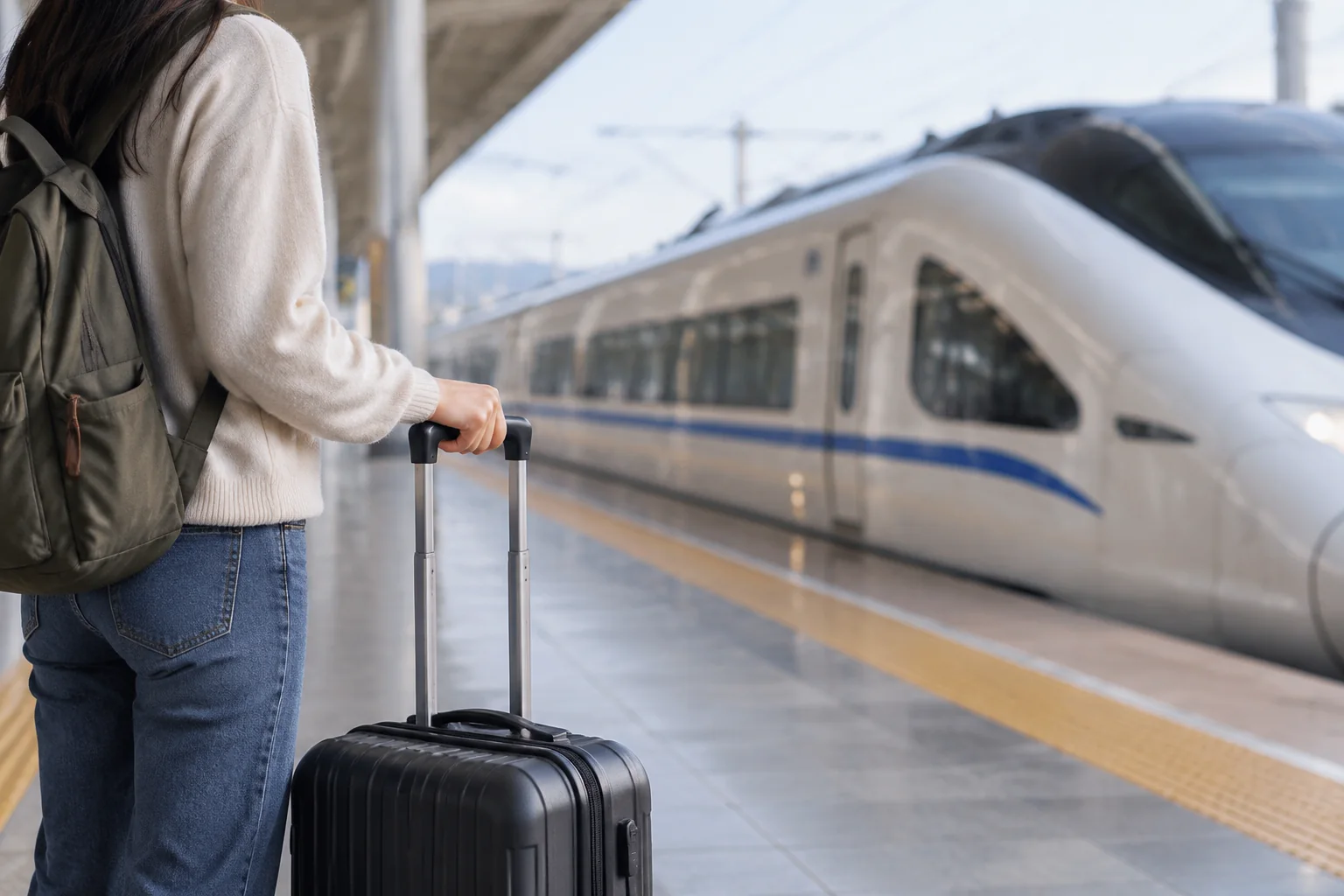
Wuzhen (乌镇) sits in Zhejiang’s water-town belt, roughly between Hangzhou, Jiaxing and Shanghai. It is close enough to Hangzhou for a day trip on paper, but it is not on the rail network in the reference material, so every route from Hangzhou ends with a road leg. That final leg — a coach, a local bus, or a taxi — is where the real planning decisions sit.
This guide is for independent travellers starting in Hangzhou who want to understand how the three broad options work, how much connection risk each carries, and what to check before committing. One limitation matters from the start: the Chinese reference material behind this article dates from an earlier period, and its fares, departure counts, route numbers and bus windows have not been verified for today. Treat everything below as a description of how the routes are structured, not as a current timetable.
The short answer
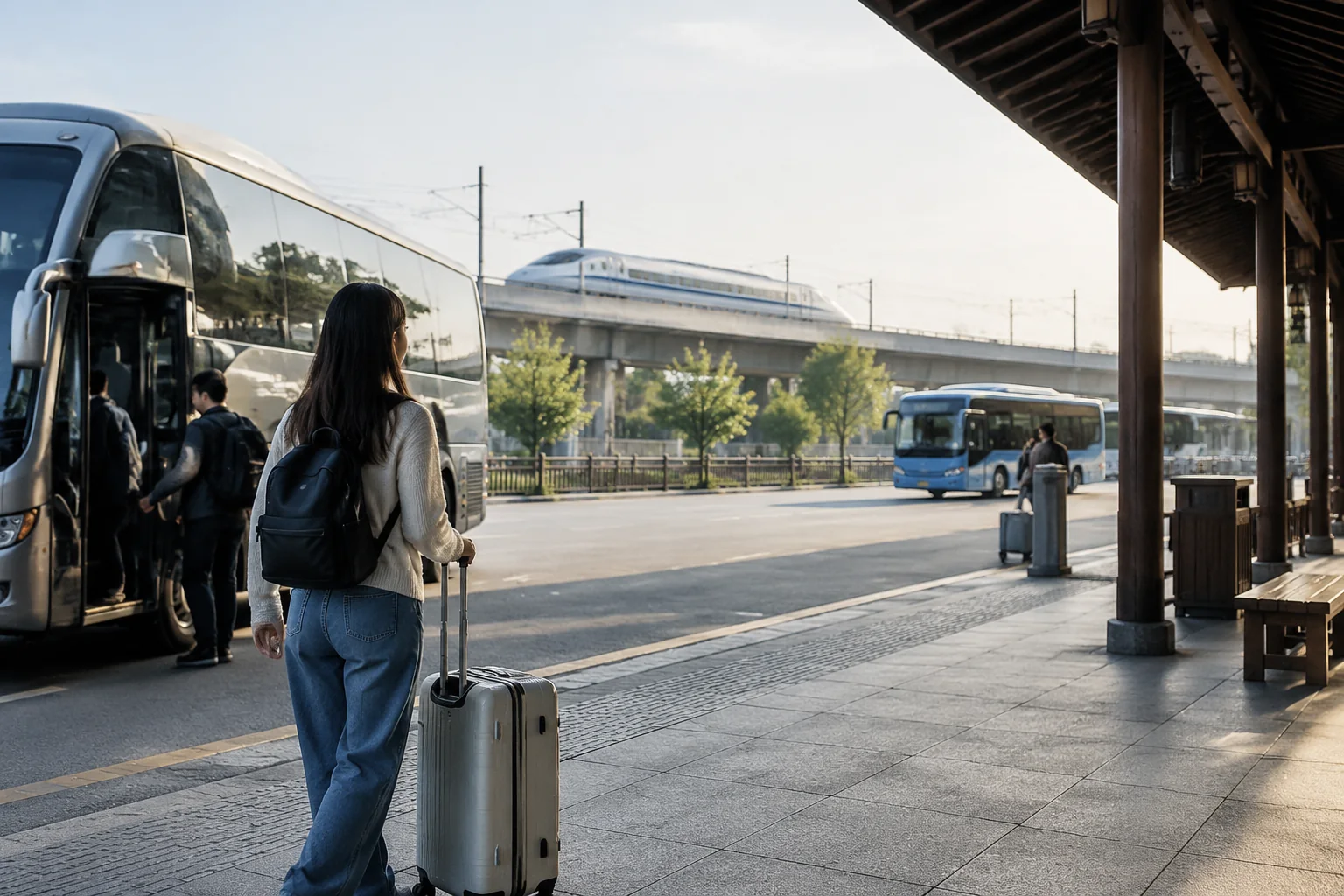
There are three practical patterns, and they fail in different ways.
- Direct coach from Hangzhou. One seat, one leg, no interchange. Best if you are travelling with luggage or arriving on a tight schedule and want to avoid a chain of local buses.
- High-speed rail to Tongxiang, then the K282 bus. The fastest rail-side option in the reference, because Tongxiang station is close to Wuzhen. You trade a single seat for three short legs and dependence on the local bus window.
- Rail to Jiaxing, then bus via a Jiaxing coach station. The longest chain, and the one with the most places to lose time. It makes sense mainly if Jiaxing already forms part of your itinerary.
The single most important thing to confirm before booking anything is the last connection of the day on whichever route you choose. Old references describe an early-evening cut-off on the Tongxiang–Wuzhen bus; if that pattern still holds, a late-afternoon train is a poor choice.
Option 1: The direct coach from Hangzhou
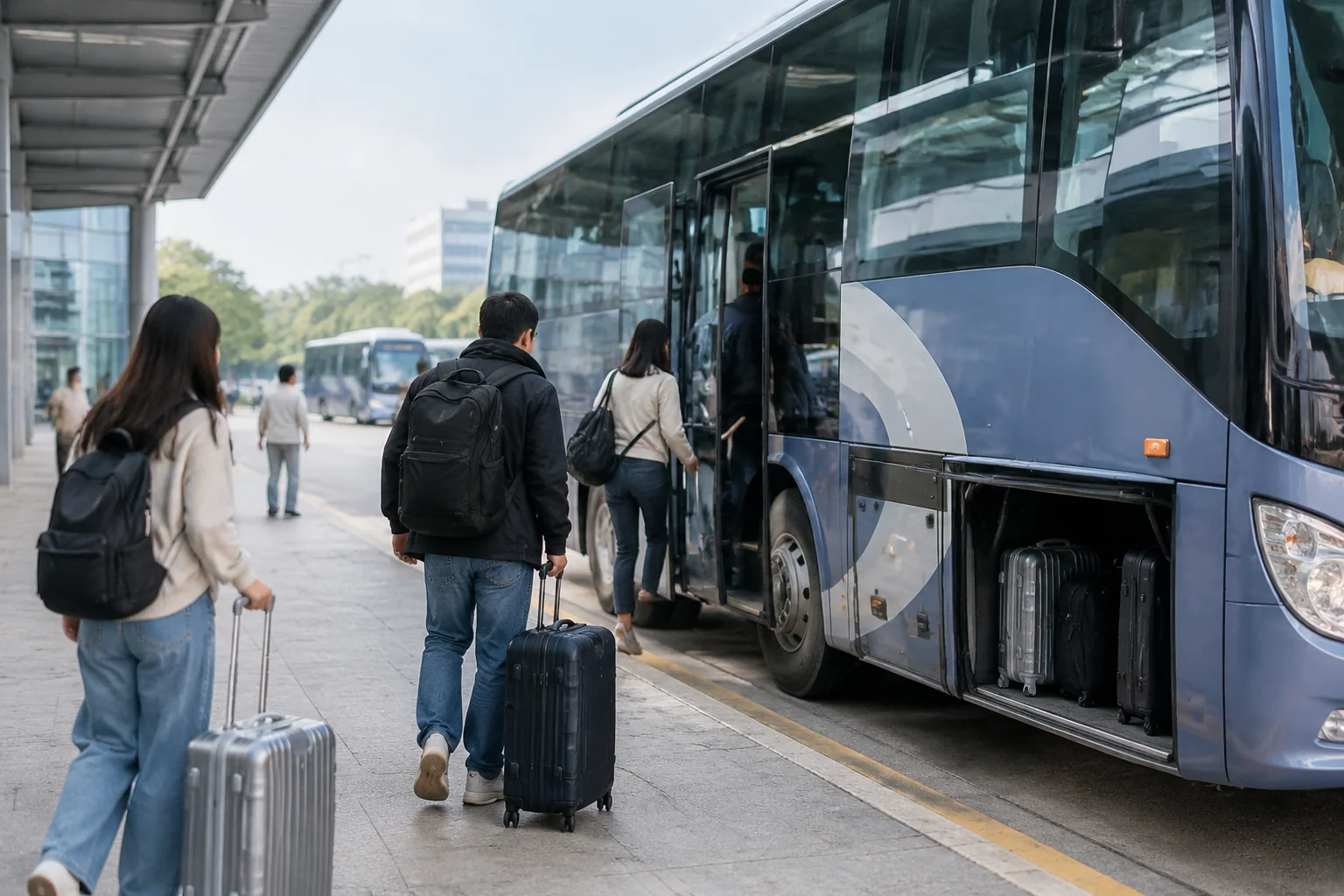
The reference material names Hangzhou Passenger Transport Centre station (杭州客运中心站) as the Hangzhou departure point for direct coaches to Wuzhen, and describes a journey of roughly an hour and twenty minutes. It also records a spread of departures across the morning and early afternoon, with a return service running from early morning into the late afternoon. Those counts and clock times should be re-checked rather than assumed.
What makes this option attractive is simplicity. You board in Hangzhou and step off in Wuzhen, with no need to manage luggage across a rail station, a bus stand and a second bus. For travellers with suitcases, older relatives or children, that reduction in handling is often worth more than the time saved by rail.
The reference also lists a coach link from Hangzhou Xiaoshan International Airport, which would suit anyone flying in and heading straight out. Whether that service still runs, and from which airport stop, needs confirming with the airport or the coach operator.
Practical points to verify: which Hangzhou coach station currently sells the Wuzhen service (Hangzhou has several long-distance stations and they do not all serve the same destinations), whether seats can be reserved in advance, and what time the last coach leaves Wuzhen for the return journey. Arrive with margin — a coach that fills up is not a flexible booking.
Option 2: High-speed rail to Tongxiang, then the K282 bus
Tongxiang (桐乡) is the rail gateway described in the reference. The station sits on the Shanghai–Hangzhou high-speed line, and the reference puts the Hangzhou–Tongxiang hop at around fifteen minutes, which is why this option appeals to anyone who wants to spend the day in Wuzhen rather than travelling to it.
The connecting chain is:
- High-speed train from Hangzhou to Tongxiang.
- Bus K282 from the station forecourt to Wuzhen bus station — the reference describes a roughly half-hourly frequency, with the first and last departures falling in the morning and late afternoon respectively.
- A local bus onward to the scenic area (the reference names K350 for the final approach from Wuzhen bus station).
Three legs sounds worse than it usually feels: the train is short and the buses are short. The genuine risk is the time window. If the last K282 leaves in the late afternoon, an evening arrival at Tongxiang leaves you dependent on a taxi. Before booking a train, look up the current first and last bus times, not just the frequency, and work backwards to a train that lands comfortably inside the window.
Also confirm at Tongxiang station where the bus actually picks up. "Station forecourt" is the pattern in the reference; station layouts change with renovation, and a five-minute search at the wrong exit can cost you a departure.
Option 3: Rail to Jiaxing, then bus via the Jiaxing coach station
Jiaxing (嘉兴) has two railway stations in the reference — Jiaxing station for conventional trains and Jiaxing South for high-speed services — and they are not interchangeable for onward connections. The documented chain from the conventional station is:
- Local bus 6 from Jiaxing railway station to the Jiaxing passenger transport centre.
- An ordinary bus from there to Wuzhen bus station.
- Bus K350 for the final stretch to the scenic area.
The same reference notes that Jiaxing’s newer west coach station also has long-distance coaches to Wuzhen, which shortens the chain if your train happens to arrive on that side of the city.
This route has the most interchange points of the three, and each one is a chance to miss a departure or misread a bay number. It makes most sense if you are breaking the journey in Jiaxing anyway, or if the Hangzhou–Jiaxing train times happen to fit your day better than the Hangzhou–Tongxiang ones. As a straight Hangzhou-to-Wuzhen transfer it is rarely the efficient choice.
One further caution, and it applies to any rail plan: older references describe Hangzhou’s station layout in a form that no longer matches reality — one major station was being rebuilt at the time of writing. Confirm which Hangzhou station your train departs from when you book, and allow transfer time within the city if you are coming from a different station.
Comparing the three options
| Route | How it works | Changes | Best for | Main risk |
|---|---|---|---|---|
| Direct coach | Hangzhou coach station to Wuzhen, roughly 1h20 in the reference | None | Luggage, families, anyone who wants one seat | Limited departures; seats may not be reservable; return times to check |
| Rail via Tongxiang | High-speed train to Tongxiang, K282 to Wuzhen bus station, local bus to the scenic area | Two | Day-trippers and time-sensitive travellers | The local bus window; you must land inside it |
| Rail via Jiaxing | Train to Jiaxing, bus 6 to the coach station, bus to Wuzhen, K350 to the scenic area | Three | Travellers combining Jiaxing with Wuzhen | Most points where a missed connection strands you |
Journey times, fares and frequencies are deliberately omitted: the reference values are old and unverified, and quoting them as current would be misleading.
East Scenic Area and West Scenic Area: planning the last connection
Wuzhen is visited as two distinct areas, the East Scenic Area (东栅) and the West Scenic Area (西栅). The reference itinerary treats them as a half-day each, which is a sensible way to structure a single overnight. They are not a single continuous zone, so where you are dropped off matters.
Buses in the reference run to "Wuzhen scenic area" and to "Wuzhen bus station" without specifying a gate. The internal shuttle arrangements between the East and West areas are not described in detail in these sources, so check the current arrangement at the visitor centre or with your accommodation rather than assuming a shuttle will be waiting.
Two habits make arrival easier. First, if you are staying overnight, go to your accommodation before entering a scenic area — arriving with a suitcase at a ticket gate at dusk is the most common way to spoil an otherwise easy transfer. Second, decide in advance which area you want for the evening. The West area is the more natural base for an overnight in the reference itinerary, with the East area visited as a half day.
Connection risk, luggage and late arrivals
Every option here has a failure mode, and they are worth naming plainly.
- Coach: the risk is a sold-out or cancelled departure, or a return time that is earlier than you assumed.
- Rail via Tongxiang: the risk is arriving after the last local bus and paying for a taxi.
- Rail via Jiaxing: the risk is cumulative — one missed link pushes the next one out of reach.
Build slack rather than optimising. A train that lands two hours before the last bus is a comfortable plan; one that lands twenty minutes before is not. If your arrival is unavoidably late, have a fallback in mind: a metered taxi or a ride-hailing pickup, agreed before you get in. The reference also warns about unofficial drivers soliciting passengers at Hangzhou’s railway stations, which is a general caution worth keeping — buy transport from counters or official apps rather than from someone approaching you.
On luggage: the coach wins outright. On the rail routes, pack so you can move your own bags up and down bus steps without help, since assistance at local bus stops should not be assumed. The sources do not describe step-free access at Tongxiang station, Jiaxing’s bus stations or the local buses, so travellers with limited mobility should confirm facilities directly before relying on this route.
Common planning mistakes and a pre-trip checklist
Recurring mistakes are predictable: assuming a train runs to Wuzhen; treating an old timetable as current; booking the last fast train of the day into Tongxiang; and planning both scenic areas on a day trip that starts with a two-leg transfer.
Before you travel, confirm:
- The current departure station and operator for the Hangzhou coach, and whether seats can be reserved.
- The last bus of the day on the Tongxiang–Wuzhen and Wuzhen–Tongxiang legs, and whether the route number has changed.
- The first and last onward buses from Wuzhen bus station to the scenic area.
- Your Hangzhou departure station, since the city’s rail layout has changed since the reference was written.
- Which scenic area your ticket covers, and whether a combined ticket is available.
- The drop-off point nearest your accommodation, and how you will cover the final stretch after dark.
- A fallback plan if the last connection has gone — taxi availability and an approximate fare checked in advance.
FAQ
Do trains run directly to Wuzhen?
Not according to the reference material: Wuzhen has no railway station, so any rail journey finishes with a bus or taxi. The nearest rail gateway described is Tongxiang, with Jiaxing as an alternative. Confirm this is still accurate when you book, since regional rail networks change.
Is the coach or the train better for a day trip from Hangzhou?
If your priority is maximising time in Wuzhen, the high-speed rail route via Tongxiang is the quicker structure, provided you arrive inside the local bus window. If your priority is avoiding connections and luggage handling, take the direct coach. A day trip only works if you accept one scenic area rather than both.
What happens if my train reaches Tongxiang after the last K282?
You would need a taxi or ride-hailing car for the final stretch, which turns a cheap connection into a more expensive one. Rather than risk it, choose an earlier train, or switch to the direct coach. Check the current last departure before booking, since the old window in the reference may no longer apply.
Should I visit the East or West Scenic Area first?
If you are staying overnight, the reference itinerary pattern — East area as a half day, West area for the rest and the evening — keeps travel short. If you are arriving late in the day, go straight to the area closest to your accommodation and leave the second area for the morning.
How much buffer should I leave between the train and the bus?
Enough to absorb a delay and a wrong turn inside the station. Landing an hour or more before the last bus is prudent; twenty minutes is not. If your only feasible train leaves a thin margin, treat the taxi as part of the plan rather than a surprise.
Sources and verification
This article was assembled from internal Chinese reference documents, not from live operator checks. They are reference material only: no public URLs are given here, and no fact-check date is claimed.
- Wuzhen Guide (《乌镇攻略》), page 12 — rail access via Tongxiang, the K282 connection and the Wuzhen bus station transfer; the absence of a railway station at Wuzhen.
- Wuzhen Guide (《乌镇攻略》), page 13 — direct coach services including the Hangzhou departure point, journey duration and return pattern; the Tongxiang–Wuzhen road distance; driving approaches.
- Zhejiang Guide (《浙江攻略》), page 18 — Tongxiang station and K282 details; Jiaxing’s two stations and the bus chain via the Jiaxing passenger transport centre to Wuzhen and K350; airport coach mention.
- Zhejiang Guide (《浙江攻略》), page 8 — Hangzhou’s long-distance coach stations and the caution about unofficial buses at railway stations.
- Hangzhou Guide (《杭州攻略》), page 13 — Hangzhou’s rail stations as described at the time, including a station then under reconstruction.
- Zhejiang Guide (《浙江攻略》), page 4 — the suggested Wuzhen pattern of a half day in the East area and a half day in the West area.
Background supported by these sources: the general structure of the three routes, the role of Tongxiang and Jiaxing as rail gateways, the need for a road transfer into Wuzhen, and the existence of two distinct scenic areas.
Requires official confirmation before you rely on it: all fares and journey times; every departure count, frequency and first/last bus window; current route numbers and station names; which Hangzhou station and coach station serve Wuzhen today; ticket types and opening arrangements for the East and West areas; and accessibility facilities at stations, buses and the scenic areas. Check with the coach operator, the rail operator and the scenic area directly, and re-check the return leg before you set out.
Find places & plan your visit
These links open external search results. Confirm the exact place, entrance and current arrangements.
Need help planning your trip?
Tell us about your travel plans and send an inquiry.