Table of Contents
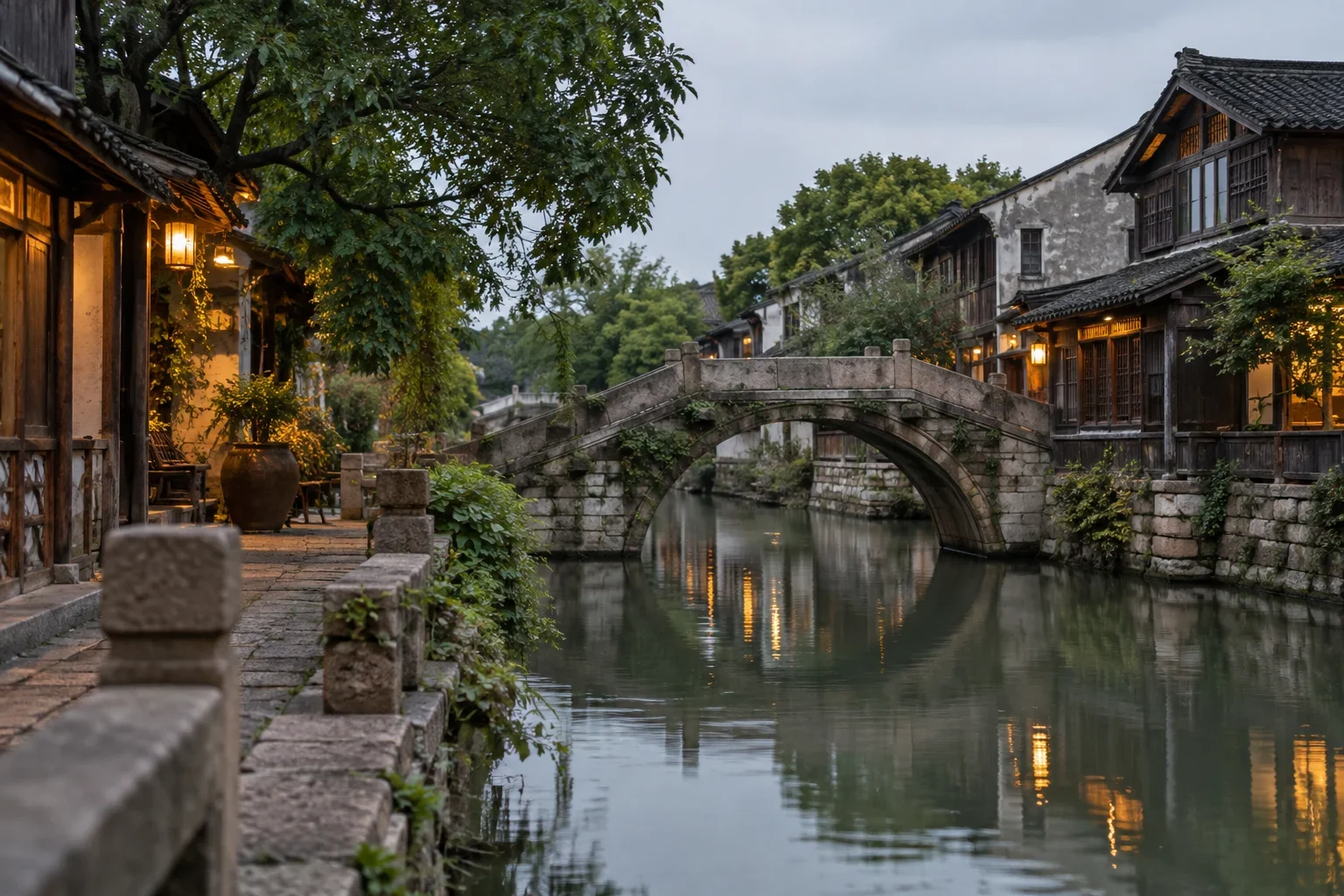
Wuzhen is a canal town in the Yangtze Delta and a common family side trip from Shanghai or Hangzhou. Its two ticketed scenic areas, Dongzha (East Scenic Area) and Xizha (West Scenic Area), are often compared as a pair, but they do not feel the same. Dongzha is associated with a heritage walk of workshops and small museums, including an indigo dye house, a collection of carved canopy beds, a rice-wine workshop, a shadow-puppet stage, and the former residence of writer Mao Dun. Xizha was comprehensively rebuilt by a developer and reopened in 2007; it is a polished reconstruction with uncluttered views, no cables strung overhead, and shopfronts built to a uniform pattern. For families, that difference matters: one zone may suit a slow craft-focused walk, while the other may feel more orderly for pushing a stroller. What this guide will not do is pretend that operational details are fixed. Ticket prices, opening hours, shuttle arrangements, boat rules, and child discounts can change; verify them with the official scenic-area website or ticket office before you set out. The advice below focuses on stable layout and practical pacing, with clear checks for the details that must be confirmed on the day.
Zone-by-Zone Suitability for Families
Wuzhen’s two ticketed zones are usually visited separately or linked in one trip. For a family, the useful question is not which zone is better but which one matches your child’s age, patience, and tolerance for steps and crowds.
Dongzha: A Heritage Walk With Concentrated Stops
The East Scenic Area contains workshops and small museums: an indigo dye house, carved canopy beds, a rice-wine workshop, and a shadow-puppet stage. It also includes Mao Dun’s former residence. The available facts also mention three folk performances in the East Scenic Area: shadow puppetry at Hanlin Di, flower-drum opera at the old temple stage, and the high-pole boat. For children, this can mean frequent short stops rather than one long walk. That is good for keeping interest, but it also means thresholds, doorways, and museum entries may interrupt stroller flow. Treat Dongzha as a stop-and-go heritage walk: plan a few must-see stops, use a carrier for tight or stepped entries, and avoid trying to cover every workshop.
Xizha: A Polished Reconstruction
Xizha was rebuilt wholesale by a development company and reopened in 2007. It is not presented as a lived-in village but as a carefully managed scenic area. The stable description is clean sightlines, no overhead cables, and standardized shopfronts. For families, that can make wayfinding and stroller pushing feel more predictable, but it does not remove bridges, stone paving, or crowds. The uniform layout can also be easier for children who are overwhelmed by visual clutter. If you have a baby or toddler and want the simplest possible walk, Xizha is often the more forgiving choice on layout alone. If you have school-age children who enjoy crafts and performances, Dongzha may hold attention better.
Choosing by Age and Energy
With a baby, consider one zone only and keep the route short. With a toddler, choose the zone with the widest main path you can confirm and plan a carrier backup. With school-age children, Dongzha’s craft stops can be the highlight, but split the visit with rest breaks. For a mixed-age family, do not force both zones into one day unless you have checked the inter-zone transport and closing times. The safe plan is to choose one zone as the anchor and add the second only if energy and timing allow.
Stroller-Friendly Route Planning
Stroller-friendly route planning in Wuzhen starts with a realistic premise: no supplied source identifies a certified stroller route, and historic water towns are not uniformly step-free. The goal is to reduce lifting, not eliminate it. Ask at the ticket office, your hotel if staying inside a scenic area, or staff at individual venues for the most direct step-free approach. Take a photo of the entrance map and mark the main canal-side path.
Use the Main Promenade as Your Spine
A practical default is to use the main canal-side promenade as your route, because it is easier to follow than side alleys; still ask staff which sections are widest. In Dongzha, use the main heritage walk to link the workshop and museum stops, then branch off only for the stops your children care about. In Xizha, the rebuilt layout and clean sightlines can make the main promenade easier to follow; still check each bridge before committing. An out-and-back plan on the main path is often easier than a loop that forces repeated bridge crossings.
Identify Barriers Before They Become Problems
Expect uneven stone paving, thresholds at shop and museum entrances, bridge steps, and narrow passages. A stroller with larger wheels handles cobbles better, but it may be heavier to lift. A lightweight folding stroller is easier on transport but can rattle on stone. The practical compromise is a rugged but foldable stroller plus a compact baby carrier. Use the stroller on the main path and switch to the carrier for bridge steps, narrow alleys, crowded stretches, and any museum entry that staff confirm is stair-only.
Plan Around the Crowd Flow
Narrow lanes become bottlenecks when tour groups arrive. Walk the main path during busier periods and save side alleys for quieter moments. If a lane looks blocked, do not push into it; wait, backtrack, or take the longer main route. For Dongzha, make a short list of the craft stops you want so you are not crossing the zone repeatedly. For Xizha, pick one or two bridge views and treat the rest as optional. Verify individual venue access on the day, because opening areas and temporary closures can change.
Pacing the Day: Avoiding Overload and Crowds
Pacing is the difference between a family outing and a forced march. Wuzhen rewards slow looking, but children rarely want to look at the same thing for long. Build the day around short walks, frequent stops, and a clear exit plan.
Use Opening Time as Your Quiet Window
Confirm the day’s opening hours with the official scenic-area website or ticket office, then arrive as early as practical. Early entry usually gives the calmest lanes and the best chance to move a stroller without constant weaving. It also lets children see the town before noise and heat build. Do not promise a specific empty experience; even early hours can vary by season and day of week.
Treat Midday as a Rest Block
Around the middle of the day, tour groups and day visitors tend to concentrate. Use that period for a sit-down meal, a museum stop, a shadow-puppet performance if it fits your route, or a return to the hotel if you are staying overnight. In Dongzha, an indoor craft stop can double as a cool-down. In Xizha, look for a bench or garden corner away from the main flow. The aim is not to do lunch at a certain time but to avoid pushing a tired child through the busiest lanes.
Save Late Afternoon for a Second Wind
As day visitors thin out, the mood usually becomes more relaxed. This is a good time for a short canal-side walk, a snack, or a boat ride if your child is calm and the operator confirms space. Do not rely on late afternoon if your child naps late or needs an early dinner; adjust to your family, not to an ideal itinerary.
Choose One Zone as the Anchor
For young children, one zone per day is usually enough. For older children, two zones can work only if you have confirmed the inter-zone transport, closing times, and re-entry rules. Build in a hard stop: when a child is melting down, leave. A shortened visit with a happy memory is better than a complete checklist with a tantrum at the exit.
Snack and Restroom Stops
Snacks and restrooms are not glamorous, but they decide how long a family visit lasts. Wuzhen’s scenic areas have food vendors and eateries, but the exact stalls and opening times vary. Plan for both purchased treats and backup food.
Kid-Friendly Snack Strategy
Expect small vendors and casual restaurants in both zones, with local snacks and simple cooked food. Choose busy stalls with high turnover, and prefer items that are freshly cooked, wrapped, or easy to peel. If your child has allergies, ask about ingredients and cross-contamination rather than assuming a snack is safe. Street-food sauces and cooking oils can be a problem for some diets. Carry familiar backup snacks, such as crackers, fruit pouches, plain biscuits, and water, so hunger does not derail a walk. Let children try one local treat as an event rather than buying something at every stall.
Restroom Planning
Public restrooms are generally available in the scenic areas, but amenities vary. Do not assume every restroom has a baby-changing table. Carry a portable changing pad, wipes, hand sanitizer, and a spare diaper or pull-up. If you are traveling with a toddler who dislikes squat toilets, ask staff at a larger restaurant or hotel for a seated option. A small purchase can make a polite request easier. In Dongzha, if a museum stop includes a restroom, check before relying on it. In Xizha, facility quality varies by location, so confirm on site rather than assuming.
Hygiene and Water
Carry hand sanitizer and use it before snacks, especially after children touch railings and walls. Bottled water is the safer default; do not assume tap water is drinking water. If you use a restaurant, ask for boiled or bottled water if that is what your child needs. Keep a small trash bag for wrappers so you are not searching for a bin in a crowded lane.
Time the Stops
Schedule a snack and restroom stop before the point when a child becomes hungry or urgent. In practice, that means a stop shortly after entering, another before the midday crowd, and one before the walk back to transport. If you are using a carrier, remember that restroom stops take longer; build that time into the plan.
Transport and Access Logistics
Transport logistics can make or break a family visit, because children have less patience for waiting than adults do. Wuzhen is commonly reached from Shanghai or Hangzhou by coach, train plus local transfer, or private car. Schedules, station choices, and transfer points change, so confirm the current route with the transport operator or official ticket office before departure.
Getting There
From Shanghai or Hangzhou, compare a direct coach against a train-plus-local-transfer plan. A private car is usually the easiest option with a baby or toddler because it is door-to-door and allows stops, but it costs more and may not include a child car seat unless you request one. On coaches and trains, pack snacks, water, wipes, and a quiet activity. If your child gets motion sick, choose seats carefully and keep the journey short where possible. Do not book a tight connection with a young child; leave a buffer for toilet stops and luggage.
Inter-Zone Movement
If you plan to visit both Dongzha and Xizha, ask whether the inter-zone shuttle is operating and what its current pickup points, frequency, and stroller policy are. Do not assume a stroller can stay unfolded; be ready to fold it if the vehicle is crowded. If the shuttle is not running or the timing does not fit, choose one zone rather than spending the day in transit. With a baby and all the gear, one well-paced zone is often the better family plan.
Boats
Canal boats are a classic Wuzhen experience, but they are not a flexible stroller activity. Space is limited, so expect to fold and store the stroller. Confirm current ticket prices, ride duration, boarding point, and any age or height restrictions with the operator. Children should be supervised at all times, and safety instructions should be followed. If your child is restless or frightened by boat movement, skip the ride; there is no need to force it. A short ride is usually easier than a long one.
Tickets and Overnight Stays
Buy tickets through the official scenic-area website or ticket office and check the current child-discount policy, because age and height rules can change. If you stay inside Xizha, ask the hotel about family amenities, luggage help, admission inclusion, and re-entry rules. Confirm whether your ticket allows the access you need before you book. Carry identification for children if age-based discounts apply. Finally, keep tickets and booking confirmations in one easy-to-reach pocket; fumbling for them at a gate with a tired child is avoidable stress.
Common Pitfalls and Practical Fixes
Most Wuzhen pitfalls are predictable. The fixes are not complicated, but they work best when planned before the day starts.
Uneven Lanes and Stroller Wheels
Stone paving can be bumpy, especially in older sections. Use a stroller with wheels that can handle uneven ground, secure loose bags so they do not swing, and keep a small repair kit or strap. In rain, stone can be slippery; put children in shoes with grip and slow down. If the surface is too rough, switch to a carrier for that stretch rather than forcing the stroller.
Narrow Alleys and Crowd Bottlenecks
Some lanes are tight enough that a stroller plus oncoming pedestrians creates a jam. Avoid side alleys when tour groups are moving through, and use the main promenade as your default. If you must enter a narrow lane, send one adult ahead to check whether it opens up. Do not block the lane while taking photos; step to the side or skip the shot.
Bridge Steps
Bridges are part of the experience, but steps are not stroller-friendly. Plan a route with fewer crossings, and cross only where you can see the full stair. Lift the stroller with two adults where possible, or take the child out and use a carrier while one adult carries the empty stroller. Never bump a stroller down stone steps with a child inside.
Boat Space and Restless Children
Boats have limited room. Fold the stroller before boarding, keep bags compact, and confirm restrictions in advance. If your child is squirmy or anxious, choose a shorter ride or skip it. Bring a snack or small toy for the wait, but keep it accessible rather than buried in a bag.
Sensory Overload and Heat
Noise, crowds, and sun can overwhelm young children. Plan an indoor break at midday, carry water and hats, and use sunscreen. Find a quiet bench or garden corner away from the main flow. If your child is done, leave; a meltdown in a narrow lane is harder to manage than a calm exit.
Getting Separated
Lanes can look alike. Photograph the entrance map, agree on a meeting point, and write your phone number on a card in your child’s pocket. Dress children in bright colors and take a photo of them at the start of the day. If you are separated, ask uniformed staff or shopkeepers for help.
The Souvenir Trap
Children will see trinkets at every turn. Set a budget and let them choose one item near the end of the visit. That reduces repeated negotiations and gives them something to look forward to. The same principle applies to snacks: plan a treat, but do not let every stall become a stop.
Final Check
Before entering, confirm the day’s opening hours, last entry, shuttle operation, boat rules, and any temporary closures through official channels. These details are the ones most likely to change, and they matter more than any fixed itinerary. The stable parts, such as stone lanes, bridges, narrow alleys, and the need for rest breaks, are what you can plan around.
Need help planning your trip?
Tell us about your travel plans and send an inquiry.