Table of Contents
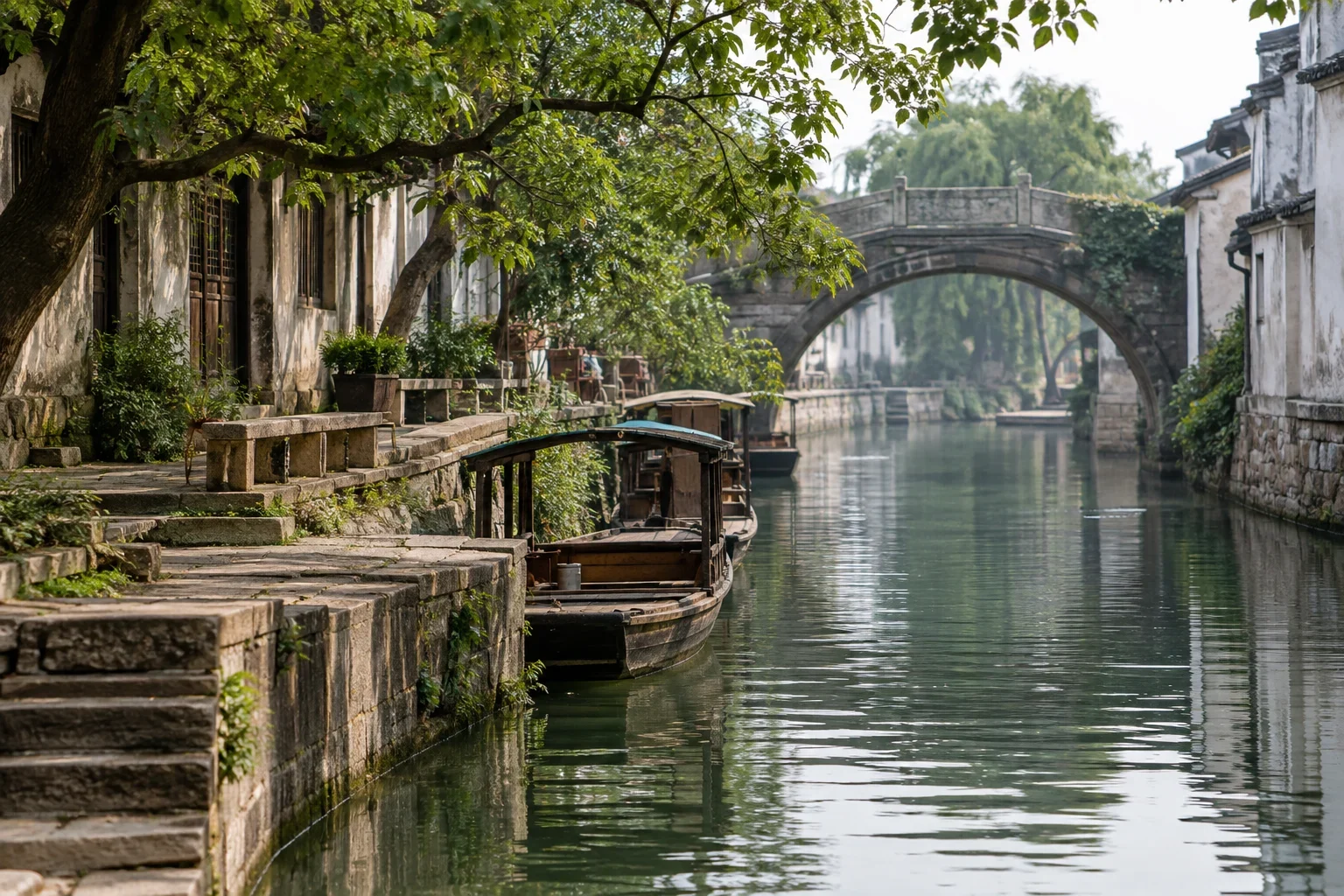
Wuzhen rewards photographers who plan around light and movement rather than a checklist of famous viewpoints. The usable structure is simple: Xizha offers long canals, stone bridges, lantern-lit streets and waterside cafés, and it is generally the better choice for international and first-time visitors who want a concentrated water-town experience. Dongzha is smaller, more traditional and mainly suited to daytime sightseeing, so it works better as a detour than as the main photographic base. The strongest images usually come from slowing down: using bridges as platforms, watching canal corners for reflections, and walking the old lanes before the day’s visitor traffic builds. This guide keeps the advice practical and honest. It names only verified photo anchors, treats exact bridge rankings as something to confirm in the field, and separates general photographic guidance from local rules that must be checked with official visitor information or your accommodation.
Orientation: Which Wuzhen Area Suits Photography
For most photographers, Xizha is the more practical base. It is the area described as having long canals, stone bridges, lantern-lit streets and waterside cafés, and it also has a stronger evening atmosphere than Dongzha. That combination matters for photography: canals give you reflections and depth, bridges give you elevated viewpoints and frames, and lantern-lit streets extend the shooting day beyond the soft morning window.
Why Xizha Works Better as a Base
Xizha also follows one long walkable loop. For basic navigation, you do not need a strict route plan; you can move between canal corners, bridges and lanes and still cover a coherent area. This is useful when light changes quickly or when a bridge is busy, because you can adjust without losing the overall structure of your walk.
How to Think About Dongzha
Dongzha is smaller, more traditional and mainly geared to daytime sightseeing. It can still be worthwhile if you have extra time, especially if you want a different visual rhythm or a detour to a named East Scenic Area subject such as Fengyuan Twin Bridge. Do not treat Dongzha as a substitute for Xizha’s canal-and-bridge loop unless your schedule or interests clearly point that way. The safer planning choice is to base the main shoot in Xizha and treat Dongzha as an optional extension.
Bridge and Canal Compositions
Bridges are the natural anchors of a Wuzhen photography walk, but they should be used in two ways: as subjects and as platforms. From a bridge, you can look along a canal and use the water as a leading line toward old houses and distant arches. From the waterside, you can include the bridge itself as a frame, letting its arch shape the composition.
Use Verified Anchors, Not Invented Rankings
Qiaoliqiao Teahouse is a named popular photo spot, and canal corners in the early morning are broadly photogenic. These are useful anchors for a walk, but they should not be presented as a ranked list of the best bridges. The available material does not support a detailed bridge-by-bridge inventory with exact viewing angles, sunrise orientation or crowd patterns. Treat any such ranking you encounter elsewhere as something to verify on site.
Practical Composition Moves
Start with the simplest approach: stand on a bridge, look down the canal, and wait for the water to reflect the sky and buildings. Then move lower and shoot the bridge arch from the bank. Repeat this at different canal corners, because the double-chessboard pattern of waterways and lanes creates repeated but slightly different views. A medium lens can compress the canal and layers of architecture; a wider lens can exaggerate the bridge arch and include more of the waterside walkway. If boats are present, include them as scale and movement, but do not assume they will appear early. Confirm boat operating times locally if a boat is essential to your composition.
For Dongzha, Fengyuan Twin Bridge is a known East Scenic Area location and can justify a detour if time allows. Its photographic merits still need field verification, especially in morning light.
Lanes, Old Streets and Textural Frames
Wuzhen’s old streets follow a double-chessboard pattern of parallel waterways and lanes. That layout is a gift for photographers who like layered frames: a lane can lead the eye toward water, a doorway can frame a distant bridge, and a narrow passage can compress light and shadow into a single graphic shape.
Shoot the Lanes Early
In the early morning, the lanes are more likely to be quiet enough for clean compositions. Use that window for stone pavement, weathered walls, wooden doors and repeated architectural details. Look for frames within frames: a doorway opening onto a canal, a lane ending at a bridge, or a patch of light falling between buildings. Keep your pace slow and avoid overloading the frame; in old streets, restraint often works better than a wide, busy composition.
Caomubense Dyehouse as a Color and Texture Subject
Caomubense Dyehouse is one of the most photogenic places in Wuzhen, largely because of its hanging indigo cloth. The cloth adds color, rhythm and texture to a scene that might otherwise be dominated by stone and water. It is also a named popular photo spot, so it belongs on a photographer’s shortlist. Visit early if you want fewer people in the frame, but verify access before general visitor hours. If the dyehouse is not open, do not force it into the schedule; use the lanes and canal corners instead and return later if your ticket and timing allow.
Why Early Morning Light Works for Canal Scenes
Morning is described as the best time for photography in Wuzhen because light reflects softly on the water and bridges, and because boats, old houses and bridges can be photographed without large tour groups. That is the core reason to plan an early start. The benefit is not only the color of the light; it is also the reduced visual clutter in the scene.
Soft Reflections and Simpler Scenes
Soft reflections help canal scenes feel calmer and more layered. Instead of a hard, high-contrast scene, you get gentler transitions between water, stone and sky. Morning is also the time when you have the best chance of shooting a bridge or canal corner without a crowd entering the frame. You can wait for a clean moment, adjust your position, and make several attempts without feeling rushed.
Do Not Overpromise Sunrise Drama
Exact sunrise direction, seasonal first-light times and the frequency of morning mist are not established here. Do not build the plan around a guaranteed misty sunrise or a specific east-facing or west-facing reflection. Instead, treat morning as a reliable window for softer light and quieter scenes, and verify sun direction and weather locally. As a general photography guideline, not a verified local schedule, aim to be in position before sunrise and stay through the early morning. Check conditions on the day and be prepared for clear, overcast or damp weather; each can produce a different but usable mood.
Crowd Avoidance and Relative Timing
Crowd avoidance is mostly a matter of relative timing. The strongest window is early morning, when the light is softer and large tour groups are less likely to be part of the scene. Rather than relying on an exact hour, plan your key canal and bridge shots for the first part of the day and move through the most popular corners before visitor traffic builds.
Overnight Stays and Access Checks
Staying overnight in or near Xizha can make an early start easier, but do not assume that an overnight stay automatically gives you access to every part of the scenic area before general visitor hours. Ticket rules, re-entry rules and early access should be confirmed with your accommodation and official visitor information. If you are not staying overnight, check the earliest practical entry time and arrive ready to shoot rather than spending the best light at the gate.
Evening as a Secondary Window
Xizha has a stronger evening atmosphere, with lantern-lit streets and waterside cafés. That makes late afternoon into evening a useful secondary window for mood and lantern light. Exact departure patterns and lighting times vary, so confirm current access and opening information instead of relying on a fixed evening cutoff.
Keep the Plan Flexible
Use relative markers: blue hour, sunrise, early morning, late afternoon and evening. If a bridge is crowded, move to the next canal corner and return later. The walkable loop makes this easier. The goal is not to beat a clock but to stay ahead of the day’s main sightseeing flow.
Shot Sequence and Practical Route Logic
Because Xizha follows one long walkable loop, you can build a simple shot sequence without committing to a rigid route. Start from your accommodation or a convenient entrance, then follow the canal and use bridges and canal corners as checkpoints. Confirm entrances, ticket rules and any temporary closures before you set out.
A Flexible Morning Sequence
- Blue hour to first light: Walk the canal path and look for reflections at canal corners. Use a bridge as a platform if access is clear. Keep the first pass simple and avoid spending too long in one spot.
- Early morning: Move between bridges and waterside positions. Shoot the bridge as a subject from the bank, then climb it for a canal view. If Qiaoliqiao Teahouse is nearby and accessible, use it as an anchor for the next part of the walk.
- Lanes and textures: Shift into the old streets while they are still relatively quiet. Look for doorways, stone surfaces and lane-to-canal frames.
- Caomubense Dyehouse: Visit the dyehouse for indigo cloth and color contrast, but check access before general visitor hours. If it is closed, keep it as a later stop.
- Late morning: Revisit a bridge or canal corner you liked earlier. Light and crowd conditions may have changed, and a second pass often produces a better frame.
Weather, Access and Boats
Weather can change the plan. Overcast light may suit lanes and details, while brighter mornings may favor reflections. If you want boats in the frame, confirm operating times rather than assuming early service. Check tripod rules before relying on long exposures, and keep an alternative route in mind if a bridge or lane is closed. The loop is forgiving, but verification is still part of the shoot.
Verification Gaps Before Publication
Before this guide is published as a final field-ready article, several details need confirmation through official visitor information, accommodation providers or an on-site check. These gaps matter because photography advice becomes misleading when exact access rules, light times or bridge names are presented without verification.
Bridge and Reflection Details
A bridge-by-bridge ranking is not available here. Confirm which Xizha bridges give the cleanest east-facing or west-facing canal reflections at sunrise, and note whether any bridge is closed, one-way or restricted during peak periods. Fengyuan Twin Bridge in Dongzha should also be checked for access and photographic value if it is to be recommended as a detour.
Access and Equipment Rules
Confirm whether tripods are allowed on bridges, in lanes and along waterside walkways. Check whether Qiaoliqiao Teahouse and Caomubense Dyehouse are accessible before general visitor hours, and whether either requires a purchase, reservation or separate entry. Also confirm ticket and re-entry rules for overnight guests who want to shoot at dawn.
Time, Weather and Crowd Checks
Record seasonal sunrise and first-light times, the likelihood of morning mist, and current opening hours. Avoid printing exact crowd cutoffs unless they are officially confirmed. Check how peak-season crowd control affects bridge access. Confirm whether boats operate early enough for morning compositions.
Lanes, Privacy and Local Etiquette
Identify which named lanes in the four old streets are narrowest or most photogenic in early morning, and note any lanes that are private or closed. Photographers should respect signage, private doorways and people’s privacy, and should ask before making close portraits. Finally, keep image permissions and text references separate: an image credit does not verify a factual claim, and a factual reference does not grant permission to use a photograph.
References
Need help planning your trip?
Tell us about your travel plans and send an inquiry.