In this guide
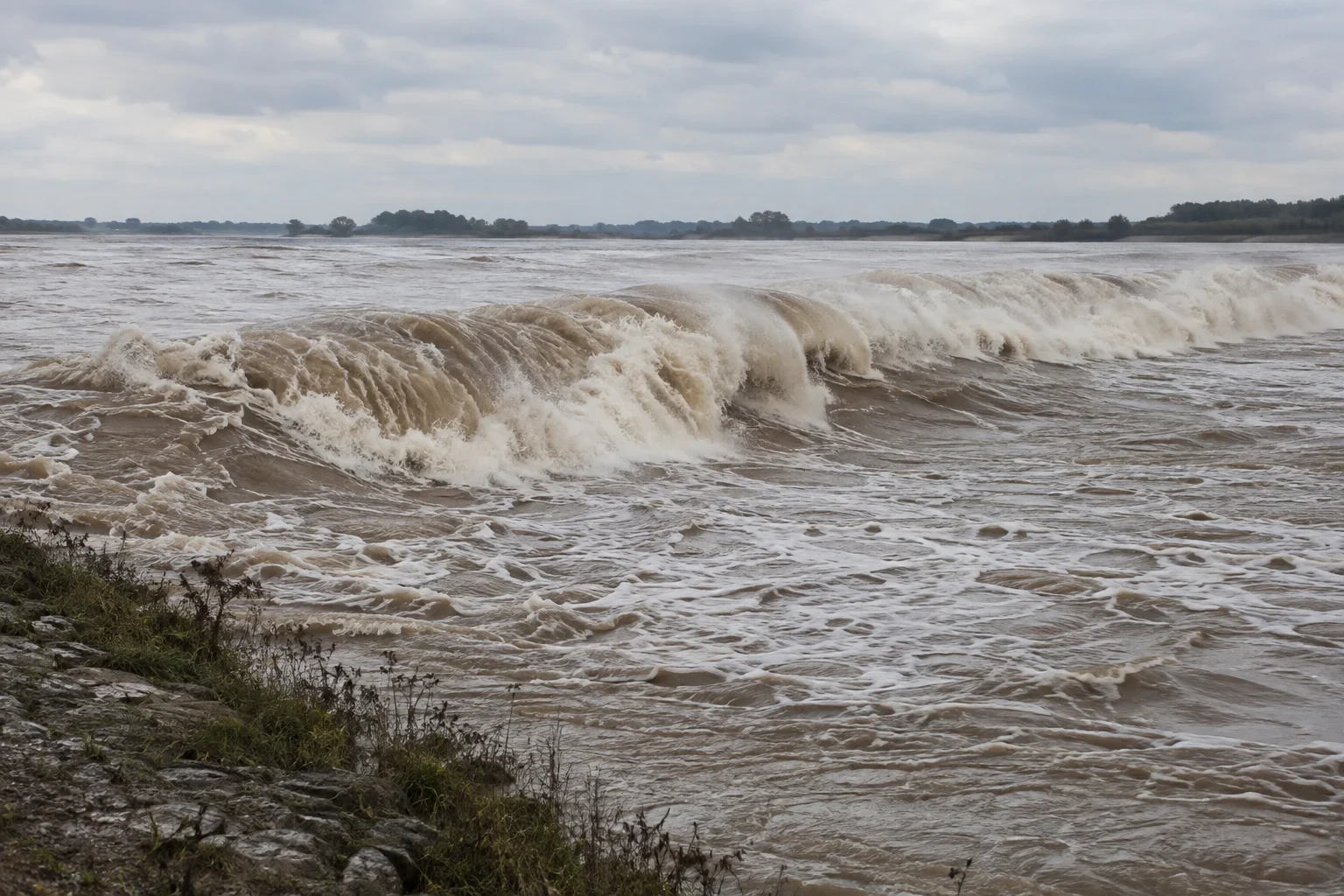
To watch the Qiantang tidal bore near Hangzhou, first choose a designated viewing area confirmed open for your visit. Then find the latest bore forecast that applies to that exact location and date. Those two checks give you a basis for planning transport, entry and where to wait.
Yanguan in Haining and several named Hangzhou locations appear in earlier official descriptions of bore watching. Treat them as candidates to investigate: their inclusion does not confirm current access or permitted viewing positions. Choose the outing your group can manage comfortably, keep behind barriers, and be prepared to change plans when access notices or on-site directions require it.
Choose a viewing area with confirmed access
Start with the actual permitted viewing area, including its entrance and exit. A broad destination name leaves important questions unanswered: where visitors may stand, how they reach that position, and whether it is open on the intended date.
Earlier official descriptions connect the following places with bore watching. The descriptions help you assemble a shortlist; each candidate still needs a current access check.
| Candidate location | Association in earlier official descriptions |
|---|---|
| Yanguan, Haining | One-line bore watching |
| Xiaoshan Tide Watching City | Back-flow bores |
| Qibao village | Back-flow bores |
| Hangzhou City Balcony | One-line bores |
| Xiasha Bridge | One-line bore watching |
| Nanxing Bridge | One-line bore watching |
The bore labels in this table do not establish which location is suitable for your visit. For that decision, compare the practical arrangements you can verify: designation of the viewing position, access for your date, a usable entrance, the permitted walking route and a clear way out.
Compare the whole outing
For Yanguan and any Hangzhou candidate you are considering, ask the same questions. Who issues access notices for the area? Does the latest notice cover the intended date? Does it identify the entrance and viewing position clearly enough to plan the visit? Which details still require confirmation?
Assess each option from your actual starting point and against your group’s needs. A familiar place name alone gives you little basis for comparing travel effort, entry arrangements or the return journey. If one option has clear current instructions while another remains ambiguous, that difference should weigh heavily in your choice.
Before committing, establish where official access updates will appear and how to recognize a newer notice. An earlier recommendation can help you discover a place, but the current notice must guide the visit.
Match the bore forecast to your location and date
Use a bore forecast tied to the place you intend to watch from. Check both the forecast’s issue time and the date it covers; these answer different questions. One tells you when the information was published, while the other tells you which visit it concerns.
Read the forecast alongside the access notice. A predicted bore arrival does not, by itself, establish that a viewing area is open or that visitors may use a particular position.
Check the forecast details
Before setting your schedule, identify:
- The publication or update date and time.
- The date covered by the prediction.
- The named observation or viewing point.
- The predicted arrival at that point.
- Any accompanying warnings or instructions.
Make sure the location name matches your plan closely enough to be useful. If the forecast names an observation point whose relationship to your viewing area is unclear, ask for clarification through an official information channel. Avoid transferring an arrival time from another location or inventing a time adjustment between places.
If you encounter a recommendation based on a lunar-calendar date, use it as background while checking the forecast for your actual visit. A calendar recommendation does not supply the location-specific arrival information needed to organize entry and walking.
What if the details do not match?
Resolve conflicting dates, place names or updates before relying on a prediction. Check which notice is newer and whether it actually replaces the earlier information. If that remains unclear, keep the plan provisional.
Record the applicable forecast and access instructions together so everyone arranging the outing works from the same information. Include when you checked them, then revisit the official updates before departure. A saved copy is useful for reference, but it should not replace checking for revisions.
Work backward from arrival at the viewing area
Plan to reach the permitted waiting position with enough time to follow local instructions and settle your group. Reaching the general destination, finding an entrance and arriving at the viewing position are separate stages. Include each stage when working backward from the predicted bore arrival.
Set your arrival buffer using current local guidance and the demands of the route you have confirmed. Without those details, a universal recommendation for how early to arrive would offer false precision.
Build the schedule in stages
- Identify the required arrival point. Establish where visitors should wait and whether current guidance specifies an arrival window or other arrangements.
- Allow for entry. Check whether tickets, reservations, opening arrangements or checks apply. Follow the instructions for your visit date, and allow for queues where relevant.
- Include the permitted walk. Confirm how to get from the entrance to the designated position. Ask about anything that could affect your group’s ability to use that route.
- Plan transport to the entrance. Check current services or other transport arrangements against the entrance you will actually use. Include transfers and the approach on foot where applicable.
Keep the return journey in the same plan. Verify how you will leave the viewing area, reach your departure point and continue to your next destination. Avoid making the outing depend on an unconfirmed connection.
Check the route against your group’s needs
Ask about walking distance, steps, surfaces, waiting arrangements and accessible access where these matter to your group. These are questions to verify for the permitted route; the supplied location descriptions do not establish its suitability.
For a group travelling together, agree on a meeting point outside any restricted area and make sure everyone knows the planned exit. If someone needs assistance, decide who will help before setting off.
If the schedule only works by rushing, skipping an access check or taking an unapproved shortcut, revise it. Choose another visit opportunity or an alternative activity when the confirmed arrangements cannot accommodate your group.
Respect barriers, closures and on-site directions
Stay within the designated viewing area and behind its barriers. Follow staff or police directions about where to wait, which routes to use and when to leave. If an area is closed, remove it from your plan unless an applicable official update confirms access has resumed.
Back-flow bores are described as striking levees and producing waves higher than the levee. That description is a reason to respect the viewing boundary and avoid seeking a closer position near a levee. It does not establish that any particular edge, structure or elevated spot is suitable for spectators.
Keep viewing and photography within the boundary
Choose a position that lets you watch without crossing a barrier or blocking a permitted route. Accept the view available from that position. A clearer photograph is never a reason to enter a restricted area, climb a barrier or move toward the water.
Keep your group together where practical, and make sure children and anyone needing support understand the boundary. Position bags and equipment so they do not obstruct movement. Identify the exit when you arrive, while you have time to understand the layout.
If an instruction is unclear, ask for clarification from the people managing the area. Follow any direction to move or leave promptly rather than waiting for the expected viewing moment.
If you arrive late
Use the entrance and position currently permitted. If access has stopped or the available arrangement no longer works for your group, abandon the attempt. Do not improvise a viewing place outside the designated area. The forecast helps organize the outing; it does not justify bypassing access controls.
Recheck before departure and keep a fallback
Make a final check before leaving for the viewing area. Confirm that the forecast still applies to your date and location, that access remains permitted, and that the entrance and transport arrangements still support your plan. Read any new warnings alongside the earlier information.
On arrival, check posted notices and on-site directions before continuing to the waiting area. If they differ from your saved plan, establish what currently applies. Follow instructions to stop, move or leave even when an earlier notice appeared to permit the visit.
Decide what would change the plan
Agree on a few clear reasons to reconsider the outing:
- A closure or restriction affects the intended viewing area or entrance.
- The applicable forecast remains unclear or has changed enough to disrupt the schedule.
- The permitted route does not meet the group’s mobility needs.
- The return journey can no longer be confirmed.
- Staff or police direct visitors to leave or abandon access.
These decisions are easier to make before the group has invested time in reaching the river. Give everyone permission to raise a practical concern without feeling obliged to continue.
Keep the fallback straightforward
Consider another designated viewing area only after checking its own access, forecast, entrance and return arrangements. Do not carry the original location’s arrival prediction over to the replacement.
Alternatively, choose an inland activity that suits the group and verify any opening or booking requirements it may have. Keep that option flexible enough to use if the river visit cannot proceed.
A workable final plan should identify the confirmed viewing area, applicable forecast, entrance, arrival allowance, exit and return journey. If a missing detail prevents you from establishing permitted access or a usable route, resolve it before committing to the visit.
Official references
Need help planning your trip?
Tell us about your travel plans and send an inquiry.