In this guide 17 sections ▾
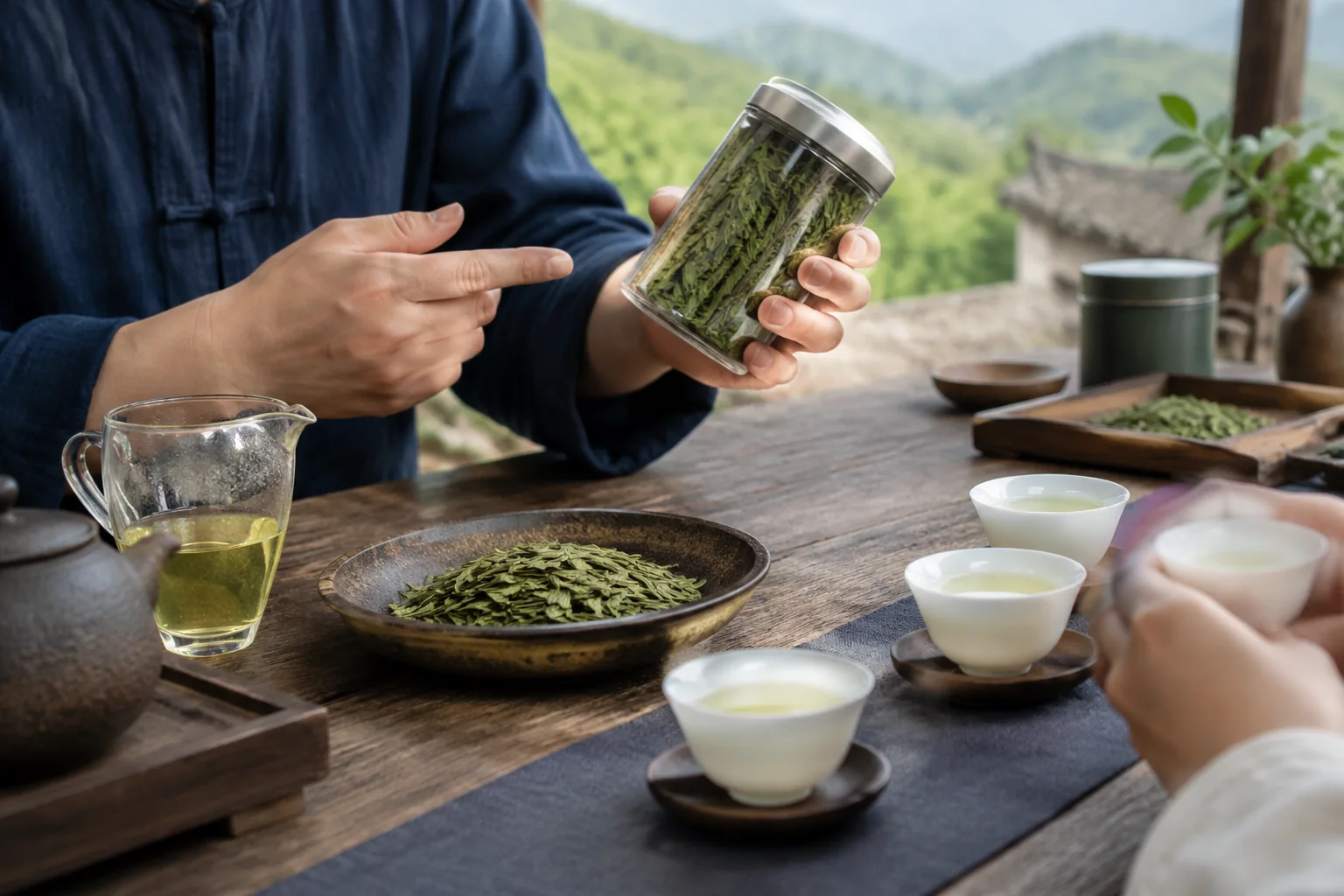
A tea tasting in Longjing Village is usually less a formal ceremony than an informal sales conversation at a farmhouse table. The host may brew several grades from the family’s own tea plots, set the cups side by side, and invite you to compare aroma, leaf shape and taste before deciding whether to buy. The reference describes tasting as free and purchase as optional, but that is a customary arrangement rather than a confirmed current policy: check the terms before you settle in, especially if you are a group.
This guide is for independent travelers who want to understand what the visit involves, how to compare tea without pretending to be an expert, and how to fit the village into a Hangzhou itinerary. The main decision is not “which tea is best” but whether a farmhouse tasting suits your interests and budget. Prices, opening arrangements, transport and current tasting practices have not been verified for this article; those points need confirming before you go.
What a village tea table is actually like
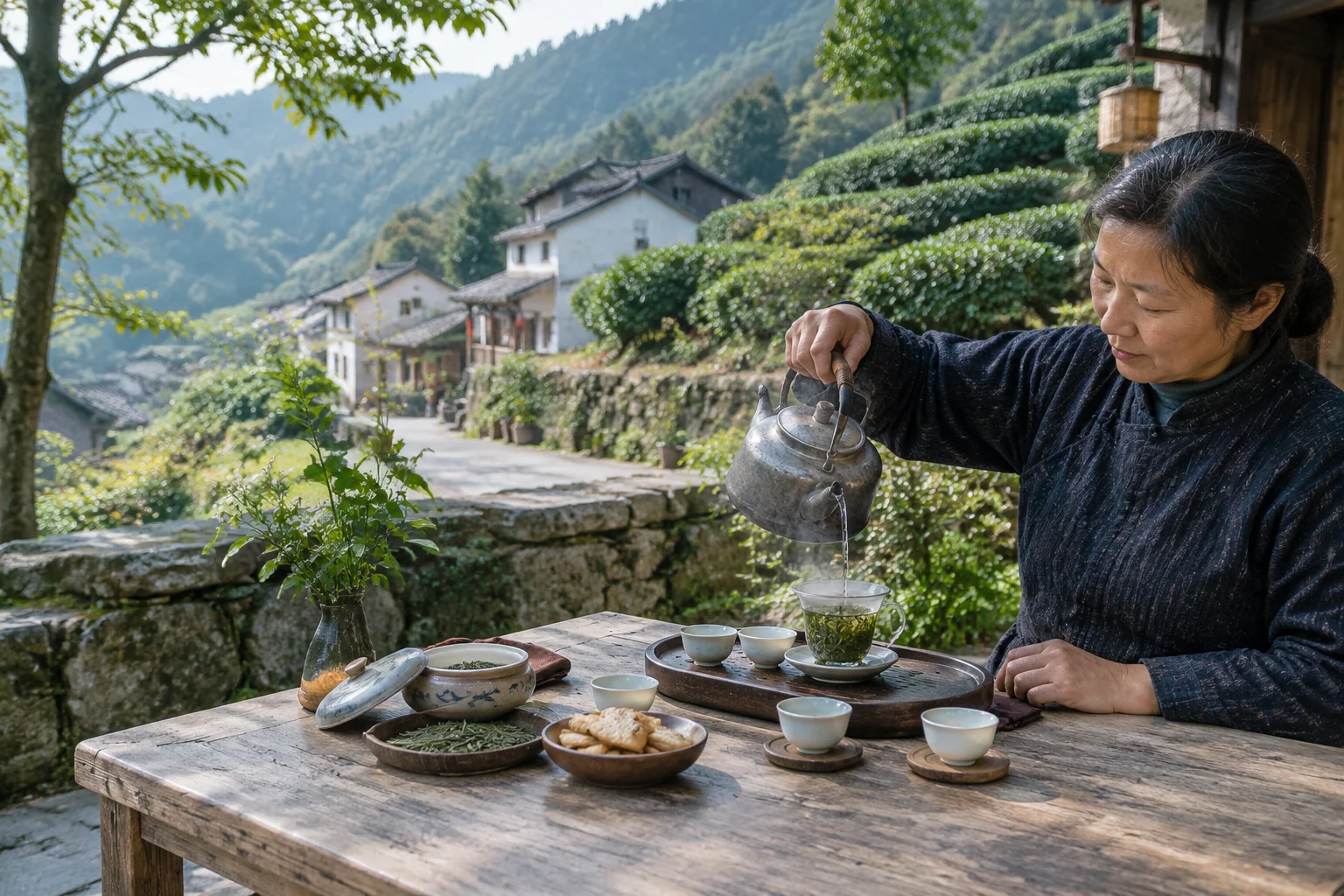
Longjing Village sits west of West Lake on the northwestern slope of Wengjia Shan. The reference describes it as a narrow settlement with one main road running through it toward Nine Creeks and Eighteen Gullies. Houses, farmhouse restaurants and small tea rooms line the road, while family tea plots sit on the slopes behind. The arrangement is practical rather than theatrical: you are visiting a working village, not entering a museum set.
At the table, expect a simple setup: a kettle, a brewing vessel, several small cups and perhaps a few containers of dry leaf. The host may ask what kind of tea you already drink, or simply start brewing. Conversation tends to move between the tea, the village and the family’s plots. It can feel relaxed, but the commercial purpose is clear in the source’s account: the tasting exists to help sell tea.
That does not make the hospitality insincere. It does mean you should treat the table as both an introduction to the tea and a shop. Ask what you are being poured, note the order of the cups, and decide on a budget before the comparison becomes confusing. A polite “I would like to compare a little more before choosing” is more useful than pretending to know more than you do.
How a tasting usually unfolds, and how to steer it
The exact sequence varies by household, but a practical way to handle the table is to slow the first few minutes down. Before the second cup arrives, establish what is in front of you.
- Ask what the tea is. Is it from the family’s own plot, bought-in leaf, or a blend? Which village or production area is named on the container?
- Ask about grade and harvest. “What grade is this?” and “When was it picked?” are basic questions. The reference notes that Longjing is divided into many grades with large price differences, so the answers matter.
- Ask for the unit and total price. A figure per 500 grams, per 250 grams or per small tin is not comparable until you know the weight. Ask what the final packed price would be.
- Look before you sip. Notice the dry leaf’s shape and colour, then the aroma of the brewed tea. Compare the cups while they are still warm.
- Decide whether to continue. You are not obliged to keep tasting indefinitely. If the sales conversation feels pressured, finish the cup, thank the host and leave.
Avoid treating the visit as a tea ceremony with fixed stages. The source presents a straightforward exchange: the farmer brews different grades, the visitor tastes and chooses. Any additional ritual depends on the household and should not be assumed.
How to compare grades without overclaiming expertise
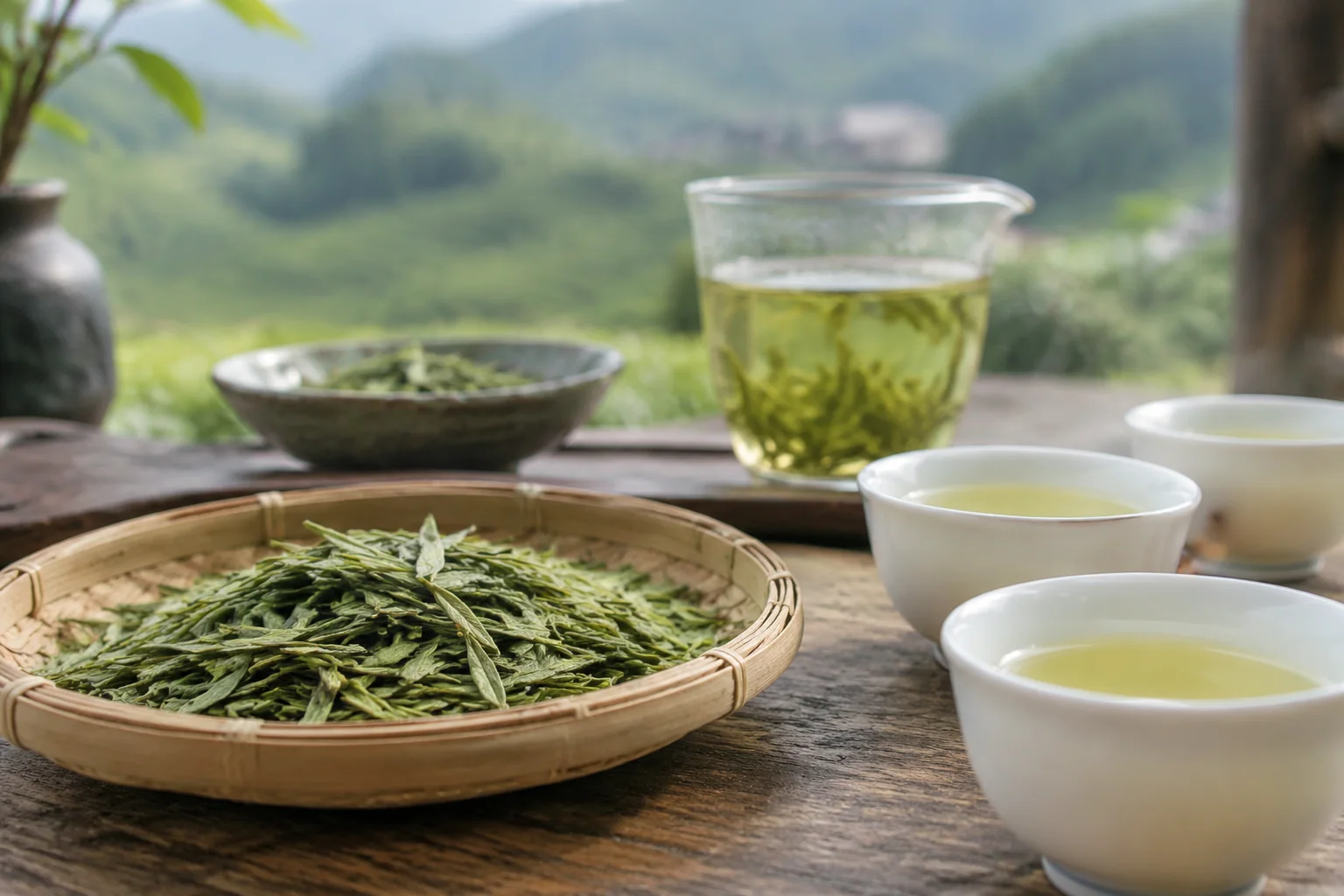
The reference gives useful descriptors for good Longjing: the dry leaf should be flat, smooth and upright; the colour tender green and glossy; the aroma fresh and high; the taste fresh, sweet and mellow; and the infused leaves tender and clustered. These are not a pass-or-fail checklist. They are a shared vocabulary for comparing one cup with another.
Try to compare like with like. If one tea is brewed much stronger than another, the difference may come from the brewing rather than the grade. Ask the host to keep the leaf quantity and infusion style roughly consistent, then focus on three questions: Does the aroma last after you swallow? Is the taste thin or rounded? Do the wet leaves look whole and tender, or broken and dull? Make a note of the cup you preferred before the conversation moves on.
It also helps to separate the famous name from the tea in your cup. The reference connects Longjing Village’s reputation with Shi Feng Mountain and the 18 old tea bushes associated with Emperor Qianlong. Village tea is sometimes called “Shi Feng Longjing” because of that association. The old bushes are heritage and branding, not proof that every packet comes from those specific trees. Ask what is actually being sold rather than assuming the story applies to the whole harvest.
The reference names Wengjia Shan, Longjing Village, Manjuelong and Yangmeiling as production areas associated with West Lake Longjing, and distinguishes West Lake Longjing from Zhejiang Longjing. Current labelling rules and trade descriptions should be checked independently. At the table, the practical move is simple: ask which name is being used, then ask whether it refers to the village, a broader production area or a grade.
Longjing shrimp: a tea-and-food pairing that makes sense
Longjing shrimp is the dish to look for if you want to take the tea theme from the cup to the table. The reference describes it as river shrimp cooked with tender Longjing tea leaves, especially new tea picked before the Qingming festival. The appeal is the combination of the shrimp’s sweetness and the tea’s fresh aroma, rather than a strong or bitter tea flavour.
Menus vary, and the tea used in the kitchen is not necessarily the same grade you tasted in the village. Ask whether the dish is made with fresh Longjing leaf, what else is in the seasoning, and whether the tea is prominent or merely decorative. The reference’s description is a useful starting point, not a guarantee of what every restaurant serves today.
The dish also works as a contrast to the tasting. After several small cups of tea, a plate of shrimp gives you something savoury and substantial, while a pot of the tea you liked can extend the comparison. If you are eating at a farmhouse after a tasting, ask what dishes are available that day rather than assuming a full restaurant menu. The reference also mentions Hangzhou classics such as Dongpo pork and West Lake vinegar fish; these are useful if you want a broader meal, but they are not tea dishes.
Planning the visit: one village, not a checklist
Longjing Village is the obvious first choice if you want the combination of farmhouse tea, the 18-bush heritage story and a short walk toward Nine Creeks and Eighteen Gullies. The reference also links the area with Su Dongpo and the monk Biancai, who are said to have discussed tea there. Treat that as cultural background rather than a verified historical itinerary.
Meijiawu is a separate option. The reference describes it as a tea-and-farmhouse-leisure area, known as “Ten-li Meiwu”, where Hangzhou residents go for a day of tea, conversation and local food. It suits travelers who want a slower meal-and-tea stop rather than a village walk. Do not try to squeeze Longjing Village and Meijiawu into a short visit: they are separate valleys and the transfer will consume the time you meant to spend at the table.
Current bus routes, taxi availability and last connections need checking with current maps or official visitor information. The reference includes older route suggestions, but transport patterns change. Allow a flexible buffer for the return journey, especially if you plan to combine the village with a West Lake or city-centre stop. For a first visit, one tasting, one short walk and a meal are enough.
| Option | Best for | What the reference supports | Planning trade-off |
|---|---|---|---|
| Longjing Village | A first farmhouse tasting and village context | A narrow village road, family tea plots, farmhouse tea rooms, several grades offered for comparison, the 18-bush heritage story and a route toward Nine Creeks | It is a sales setting as well as a visit; confirm current transport and tasting terms, and do not pair it with Meijiawu on a short trip |
| Meijiawu | A relaxed tea-plus-farmhouse meal | A long tea-valley area associated with tea and agritourism, popular for local day outings | It is a separate area with a different rhythm; it is not a substitute for the historic village circuit |
| Hangzhou West Lake Tea Market or Jiefang Road Tea Market | Convenient tea shopping or a fallback if the village does not fit | The reference names both markets and describes them as more convenient but generally pricier than buying in the village | You lose the farmhouse context; verify current opening, vendors and labelling before buying |
Wet weather can make an indoor tasting the sensible centre of the day, but the village lane and the stone steps toward Nine Creeks may be slippery. Wear shoes with grip and be willing to skip the climb. The source describes a narrow road and stepped paths; do not assume step-free access or a quiet, pedestrian-only environment. Travelers with limited mobility should ask a specific venue about seating, toilets and the route from the vehicle drop-off before committing. Families should treat the lane as a working village road and keep children close near entrances and traffic.
Buying tea without pressure
The reference’s account is clear that tasting is a sales step and that purchase is optional. In practice, you should confirm that understanding before sitting down: ask whether there is a tasting fee, whether a purchase is expected, and what the price is for the tea being poured. If the answer is vague, decide whether you are comfortable continuing.
Before agreeing to a packet, ask for the grade, harvest, production area, net weight and total price. Compare at least two or three cups if the host is willing. Do not let the number of infusions create a sense of debt; the hospitable thing is to be direct and courteous, not to buy tea you do not want. Keep a written note or receipt with the name of the tea and the weight, particularly if you are buying several packets.
The reference advises bargaining in the village and says that city tea markets are generally more expensive. Current norms and prices have not been verified, so treat bargaining as a local negotiation custom rather than a guaranteed discount. Ask politely whether the price can be improved, compare the offer with another shop if you have time, and be prepared to decline. The same reference warns about unsolicited offers to take visitors to Longjing, suggesting that commission arrangements can affect the price. Arrange transport yourself or through a reputable provider, and be cautious rather than suspicious of every local conversation.
Finally, check your home country’s rules on bringing tea leaves across borders, and confirm packaging suitable for travel. These are practical travel checks, not tea-quality judgments.
Common mistakes and a practical checklist
A few habits make a village tasting more enjoyable. Do not expect a formal ceremony, do not assume the famous 18 bushes supply the tea in your cup, and do not buy the first tea simply because the tasting was free. Avoid cramming two tea villages into one short outing, and do not rely on old bus numbers or opening details from a reference alone.
Before leaving for the village, confirm the current transport route and return options; check whether the venue or farmhouse needs a booking; ask about tasting terms if they matter to you; check the weather and wear suitable shoes; set a tea budget and a sensible luggage limit; and prepare a few questions about origin, grade and weight. If you have food allergies or need a child-friendly meal, ask the restaurant directly rather than assuming a farmhouse menu can adapt.
Frequently asked questions about a Longjing Village tasting
Do I have to buy tea after a farmhouse tasting?
The reference presents purchase as optional: the farmer brews tea in order to sell it, but visitors can decline. That is a customary description, not a consumer guarantee. Ask about tasting terms before you sit down, and if you feel pressured, finish politely and leave. You are buying a product, not paying for the hospitality with an obligatory purchase.
Can I compare several grades at one table?
Yes, that is the central practical advantage of a farmhouse tasting. The source describes hosts bringing out different grades and brewing them for the visitor to choose. Ask for two or three cups rather than a long parade, keep the brewing style as consistent as possible, and note which one you preferred before discussing price.
Is the tea in Longjing shrimp the same tea I tasted?
Not necessarily. The dish is traditionally associated with tender pre-Qingming Longjing leaves, but a restaurant may use a different grade or a small quantity for aroma. Ask what tea is used and whether it is noticeable in the dish. Treat the shrimp as a separate food experience, not as a continuation of the tasting flight.
What is the difference between Longjing Village and Meijiawu?
Longjing Village is the historic tea village with the narrow lane, farmhouse tea rooms and the 18-bush story. Meijiawu is a broader tea-and-farmhouse leisure area, described in the reference as a local day-out destination. For a short stay, choose one. For a longer day, visit one properly rather than treating the two as adjacent stops.
When is the best time to taste new-season Longjing?
Spring, especially around Qingming, is traditionally associated with new-season Longjing. The exact harvest window shifts with the weather each year, and the tea available on a given day cannot be assumed from the calendar alone. Ask when the leaf was picked and check current growing-season information before planning a trip around new tea.
How can I avoid paying too much?
Ask for the unit price, net weight, grade and production area before agreeing to a packet. Compare two or three teas and, if practical, another shop. The reference advises bargaining in the village, but current norms are not verified; a friendly question about the price is reasonable, while a demand for a specific discount is not. Also be wary of unsolicited “helpful” escorts who may be earning a commission.
If you would like help fitting a farmhouse tasting, a tea-country walk and a Longjing shrimp meal into a wider Hangzhou plan, use the travel inquiry form at the end of this guide.
Sources and verification
This article draws on internal reference documents, not public web pages or an on-site inspection. The relevant source material is:
- Hangzhou Guide (杭州攻略), pages 3–5, 7, 11–12 and 17: village layout and access, farmhouse tasting and sales context, tea grades, the 18 bushes and Shi Feng, Longjing shrimp, tea-buying advice and the two city tea markets.
- Zhejiang Guide (浙江攻略), pages 5–6: Longjing Village as a tea destination, the 18-bush story, Meijiawu as a tea-and-farmhouse area, and the four production areas associated with West Lake Longjing.
- Wuzhen Guide (乌镇攻略), page 16: the description of farmhouse tea rooms, hosts offering several grades, and Longjing shrimp as a local dish.
The source-backed background includes the village’s narrow road and family tea plots, the custom of tasting several grades before buying, the heritage association with Shi Feng Mountain and the 18 old bushes, the reference’s quality descriptors, Longjing shrimp as a tea-and-food pairing, Meijiawu as an alternative tea area, and the two named city tea markets. Historical stories about Qianlong, Su Dongpo and Biancai are presented as cultural tradition, not as independently verified history.
Current details still need official or direct confirmation: whether tasting is free, prices, opening hours, transport routes and return connections, booking arrangements, any charge for the old tea bushes, restaurant menus and the tea used in Longjing shrimp, the operation of the tea markets, harvest dates, and current labelling or bargaining practices. No fact-check date is claimed here, and no source PDF or embedded image is republished.
Find places & plan your visit
These links open external search results. Confirm the exact place, entrance and current arrangements.
Need help planning your trip?
Tell us about your travel plans and send an inquiry.