In this guide
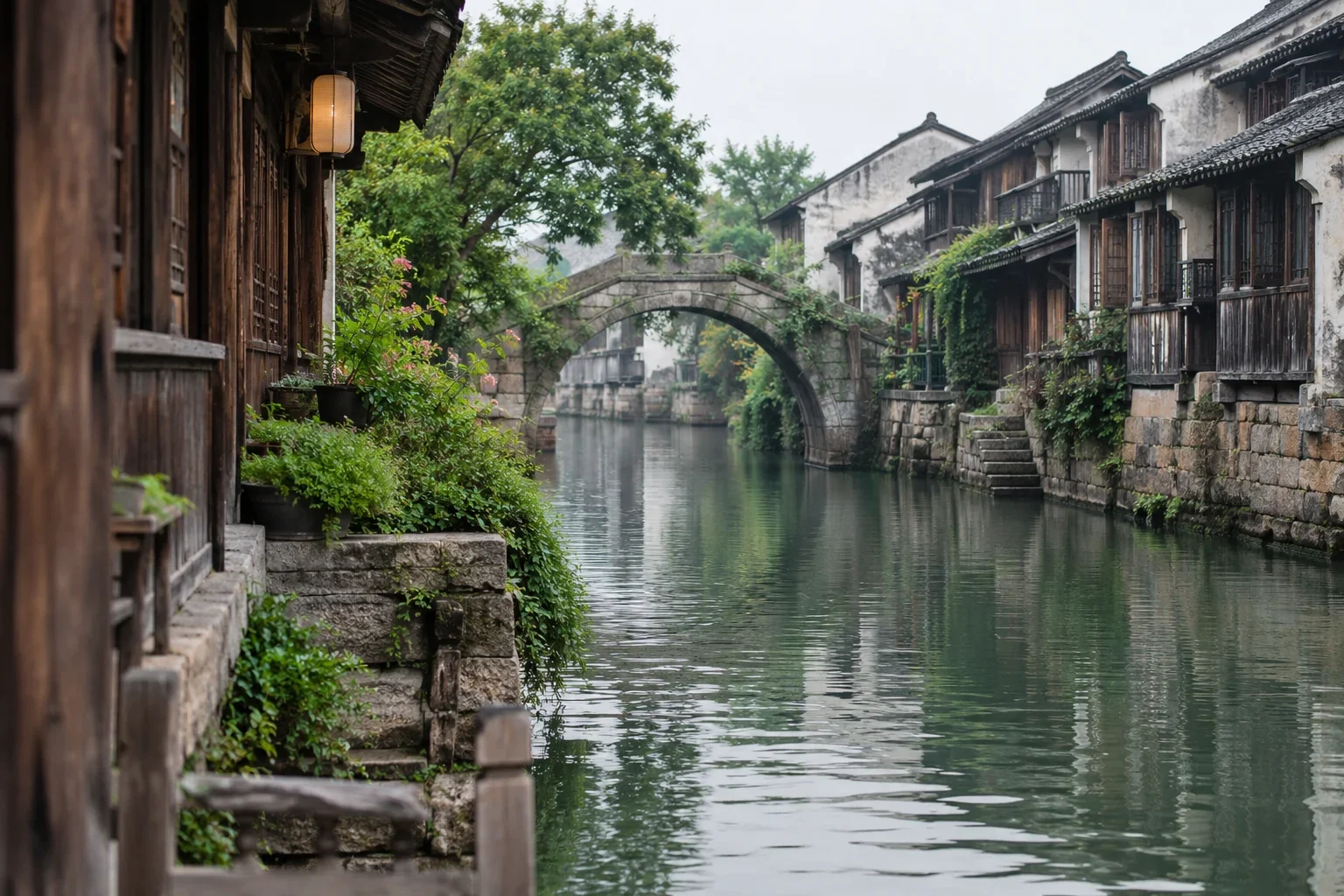
Wuzhen’s canals, stone bridges, and wooden houses make an overnight stay appealing, but the booking decision is not just about the room. The most important choice is whether to stay inside a ticketed scenic area or outside it. That choice affects evening access, transport, luggage handling, cost, and how much local life you experience. This guide walks through the practical trade-offs and the questions to resolve before you pay, so you can reserve a homestay that fits your trip rather than discovering the fine print at check-in.
The Core Decision: Inside vs. Outside the Scenic Areas
Wuzhen is a carefully restored Jiangnan water town with two ticketed scenic areas: Dongzha, the original zone, and Xizha, the larger zone known for evening lighting. Xizha was rebuilt as a managed attraction, and most original residents moved out. That matters for booking: staying inside Xizha buys convenience and atmosphere, not necessarily an untouched village experience.
Staying inside Xizha is usually the stronger choice if your priority is walking to the canals after dark, avoiding a late transfer, and waking up in the scenic area. You still need to confirm the practical details: whether your room rate includes the required entry ticket, whether you can leave and re-enter during your stay, where you collect keys, and how bags reach the door. Rules can differ by property and ticket type.
Staying outside the ticketed areas can cost less, offer more ordinary local dining and shops, and put you in contact with hosts who are not running a scenic-area operation. The trade-off is friction: you may need a taxi or shuttle to the gate, you may not have unlimited re-entry, and a late evening return can be less convenient. Neither choice is automatically better. Decide whether you are buying atmosphere and access or space and local interaction, then verify the entry rules before paying.
Location Trade-Offs: Dongzha vs. Xizha and Beyond
Location within Wuzhen is not one choice but three broad options: near Dongzha, inside or near Xizha, and in the town proper outside the gates. Dongzha is the original zone and suits travelers who plan a half-day visit focused on workshops and museums; it is less about nighttime atmosphere. Xizha is larger and night-lit, so it is the natural base for an overnight stay, evening photography, and slow dinners by the water. If you stay inside Xizha, confirm which gate serves your homestay and whether your ticket is single-entry or allows re-entry.
The town proper can be a good compromise for travelers who want easier road access, a wider range of restaurants, or a lower room rate. It is not inside the ticketed scenic area, so you will still need to travel to the gates and plan around opening hours and ticket rules. “Near the scenic area” can mean a short walk, a long walk, or a taxi ride; check the map and the exact address rather than relying on the listing label.
Also check how your choice fits the rest of your trip. Dongzha is better for daytime workshops and museums, while Xizha is better for overnight stays and evening atmosphere. If you are visiting both zones, a base between them may reduce transfers, but it may not give you the same late-night access. Ask the host which gate is closest and what transport is available after dark.
Room Types and Availability: What to Expect
Homestay rooms in Wuzhen vary more than hotel categories suggest. Common formats include standard doubles or twins, river-view rooms, family or triple rooms, and small courtyard or loft-style rooms. A “river view” may mean a direct canal outlook, a partial view, or a view from a shared terrace; ask for a photo and the floor level. Upper-floor rooms may be quieter and brighter but involve stairs, while ground-floor rooms can be convenient for luggage but may be darker or closer to passing foot traffic.
Availability is the bigger constraint. Wuzhen is popular on weekends, public holidays, and event dates, and the best-located or best-value rooms go first. Book as early as your plans allow, especially if you need a family room, a private bathroom, or a specific view. Do not assume that booking a room type guarantees a specific room number. Many properties assign rooms at check-in, so if a particular feature matters, ask for written confirmation or choose a property that allows room selection.
Finally, check the basics that affect comfort: private bathroom, window, heating and air conditioning, toiletries, hairdryer, and whether breakfast is included. These details are easy to miss in listing photos and can matter more than decor after a long day of walking.
Cancellation Policies and Payment Terms
Cancellation and payment terms are where cheap bookings can become expensive. Policies vary by property, by room rate, and by booking channel. A flexible rate may allow free cancellation up to a stated deadline; a discounted rate may be non-refundable or require a deposit. Before paying, confirm the free-cancellation deadline, the amount of any deposit or prepayment, when the balance is due, and what happens if you cancel late, fail to arrive, or leave early.
Also ask about date changes. Some hosts will move a booking; others treat it as a cancellation. If you are booking through a platform, read the platform’s rules as well as the property’s rules, because the stricter term may apply. Keep the confirmation in writing, including the total price, currency, any service fees, and the cancellation deadline. A screenshot of the listing is useful if the terms are unclear later.
If the answers are vague, treat that as a warning. A host who cannot explain the cancellation policy before payment may be harder to deal with after a delay or change of plans. Paying a little more for clear terms can be worthwhile on a short trip where transport delays are possible.
Peak-Date Availability and Event Planning
Wuzhen’s calendar can change the booking math. Availability and room rates can tighten around Chinese public holidays, long weekends, and any major local events or conferences announced for your dates. Event schedules, ticketing arrangements, and access rules can change from year to year, so do not rely on an old blog post or a social-media screenshot. Check the official Wuzhen scenic-area website and official ticketing or booking channels for current dates, entry rules, and any event-related restrictions.
If your dates overlap a known event or holiday period, plan earlier than usual. Secure accommodation first, then confirm transport and entry tickets. Consider arriving on a weekday or staying outside the busiest core if your budget is tight, but weigh that against the convenience of walking to the evening sights. For a short trip, the cost of a late taxi or a missed entry slot can outweigh a lower room rate.
Build a buffer into your schedule. Peak dates mean more traffic, longer queues at gates, and less flexibility if a train is delayed. Keep your booking confirmation, host contact, and gate information handy. If you are traveling for a specific event, confirm that your homestay is accepting guests on those dates and that your entry ticket matches your accommodation location. Also check whether any road closures, shuttle changes, or ticket-sales limits apply during your stay.
Logistics: Luggage Access and Getting There
Luggage is the practical detail most likely to surprise first-time visitors. Many homestays inside the scenic areas are reached on foot, across stone paths and bridges, and vehicles may not be able to pull up to the door. Ask whether the property provides luggage service, whether a staff member will meet you at a gate or visitor center, what it costs, and how late the service runs. If you are changing trains or arriving after dark, a small overnight bag and a clear meeting point can save a lot of friction.
The usual route from Shanghai or Hangzhou involves a high-speed train to Tongxiang, followed by a bus or taxi to Wuzhen. Direct buses may also be available from some cities, but schedules and stops vary. Confirm the last transport option for your arrival time and ask the host for the exact check-in point, not just the town name. If you are staying inside a ticketed area, you may need to validate your ticket or entry permission before entering with luggage.
Before arrival, send the host your expected time, the number of bags, and your mobile number. Ask for the address in Chinese characters and a pin or map link. Do not assume a driver can reach the homestay or that the host can accept bags before check-in. A short written plan for the final 100 meters is often more useful than a long list of train options.
Key Questions to Ask Before Paying
Ask these questions before you pay, ideally in writing through the booking platform or the host’s official contact channel. Clear answers reduce the risk of a surprise at the gate, at check-in, or at cancellation time.
- Does the homestay allow unlimited re-entry to the scenic area, or is it a single-entry ticket? If re-entry is allowed, what do you need to show at the gate?
- What is the exact cancellation policy, including the free-cancellation period and the penalty for late cancellation, date changes, or no-show?
- Is there a staff member or luggage service to move bags from the main entrance to the room? Is there a fee, and what hours does it operate?
- Does the room have a private bathroom, and are toiletries, a hairdryer, and heating or air conditioning provided?
- What are the check-in and check-out times, and is luggage storage available after checkout?
- Can you choose a specific room type, floor, or view, or are rooms assigned at check-in?
- Is breakfast included or available for purchase, and what dining options are nearby at night?
- What is the official booking process for a homestay inside the scenic area, and how will your ticket and entry be validated?
- How do you reach the homestay from Tongxiang train station or the Wuzhen bus station, and is pickup available?
- Are there additional fees, such as a key deposit, air-conditioning charge, or local tax?
- What are noise levels like at night, and are the walls soundproofed?
- Does the homestay provide a map or directions for navigating the old town, especially after dark?
If a property cannot answer basic questions about entry, luggage, or cancellation, consider a different stay. The right homestay is not just the prettiest room; it is the one whose access rules, payment terms, and practical arrangements match your trip.
Need help planning your trip?
Tell us about your travel plans and send an inquiry.