What to verify
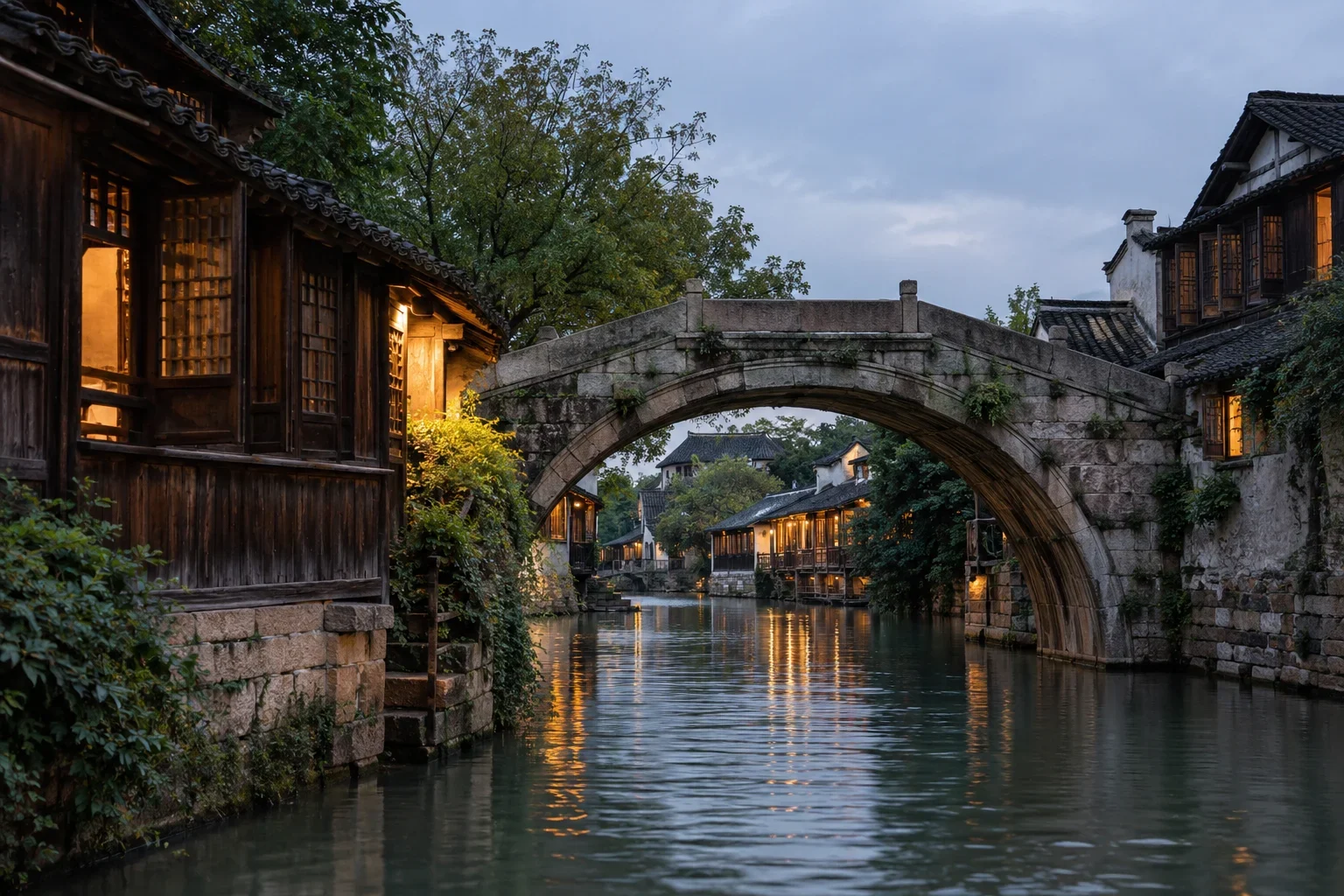
Wuzhen is often described as one water town, but visitors actually choose between two ticketed scenic areas with different characters. Dongzha is the older, lived-in eastern district and is a daytime heritage stop. Xizha is the larger restored western district and the area most travelers associate with late-afternoon and evening atmosphere. That split is the foundation of every good visit plan, because the ticket you buy and the hours you travel within determine what you can realistically see. This guide does not quote live prices or fixed opening times, since those details change by season, date and sales channel. Instead, it explains the decisions to make before booking and the points to verify with official Wuzhen channels or the on-site ticket office. Use it to choose between single and combined tickets, understand pass validity and refund limits, plan around last entry, prepare concession and passport documents, and sequence the two areas without rushing.
Ticket types and pass choices
Wuzhen’s ticket structure is built around two separate scenic areas, so the first decision is whether you want one district or both. A Dongzha single ticket covers admission to the eastern scenic area only. Dongzha is the older, lived-in side, with lanes, traditional housing and daytime heritage appeal; it is not the area to choose for nightlife or evening lighting. A Xizha single ticket covers the western scenic area only. Xizha is larger, more restored and more evening-oriented, which is why many travelers treat it as the late-afternoon and dinner stop. A combined pass is the usual choice for first-time visitors who want both districts in one trip. It buys admission to Dongzha and Xizha, but travelers should not assume it includes boats, shuttle transport, shows, museums or other paid experiences inside either area. Check the inclusions at the point of sale.
The combined pass also raises two practical questions: validity and flexibility. Do not assume the pass is valid for one calendar day only, or that it automatically covers multiple days. Ask whether it is tied to a calendar date, a time window or a multi-day period, and whether each area can be entered once or more than once. Refund, change and transfer rules matter just as much. Some tickets may be tied to the buyer’s identity or may not be transferable after purchase, and refund eligibility may depend on the channel and timing. Buy from official channels when possible, keep the confirmation and carry the same ID used for booking. If the plan depends on visiting both areas across an overnight stay, confirm the pass type before paying, because the cheapest-looking combined ticket may be less flexible than a pair of single tickets.
Opening hours, evening access and last entry
Opening hours in Wuzhen follow seasonal patterns rather than one fixed schedule all year. Travelers should expect longer opening windows in busier travel seasons and shorter ones in quieter or colder periods, with possible differences between Dongzha and Xizha. The important planning point is the East-West rhythm: Dongzha is a daytime heritage visit, while Xizha is the area to keep for late afternoon, dinner and evening lighting. Do not plan to finish Dongzha after dark and then expect the same experience; its appeal is in daylight.
Evening access needs a specific check. A Xizha day ticket may or may not cover evening entry, and a separate night ticket may be required for some dates or products. The available planning information does not establish a universal rule, so confirm the exact product before relying on it. The same caution applies to last entry. Official closing time is not the same as last entry time. Scenic areas often stop admitting new visitors earlier than the posted closing hour so that guests can walk out and staff can close facilities. Ask for the last-entry cutoff for each area and for the date of your visit, then arrive with a buffer.
If you are staying overnight inside or near Xizha, ask how re-entry works. A room booking does not automatically prove that your ticket allows repeated entries, and a multi-day pass may or may not be available. Confirm the gate, the document required and the procedure for leaving and returning. Also allow transfer time between Dongzha and Xizha; do not schedule the two areas back-to-back if you need to collect luggage, check in or eat. In peak periods, queues at entry can eat into the time you planned for the narrow lanes, so treat the official opening time as the start of your day, not the moment you leave the hotel.
Discounts, passport rules and booking channels
Concession categories vary by scenic area and by ticket type. Travelers commonly look for reduced or free admission for children, students, seniors, disabled visitors and military personnel, but the exact age, height, residence or documentation thresholds must be checked with official Wuzhen channels. Do not assume that a foreign senior card, student card or disability document will be accepted without verification. Carry the original document that supports the category, not a photograph, and check whether a free ticket still requires a reservation or a zero-value booking. If you are traveling with family, confirm child rules before buying adult tickets, because height-based and age-based policies can produce different outcomes.
Booking procedures may involve real-name registration, so identity documents can matter. Foreign visitors should confirm with official channels whether a passport must be entered at booking, whether the name must match the passport exactly and what document is required at the gate. The difficult question is online purchase. The available planning information does not establish that foreign passport holders can always complete online booking, and some platforms may be built around mainland identity documents or local mobile payment. Do not assume a successful payment means the ticket is valid for a foreign passport. If an official online channel rejects the passport number or requires a local ID, use the official on-site ticket office instead. Avoid unofficial resellers that promise entry without explaining how the passport will be registered.
Booking channels should be chosen for control, not just price. Official Wuzhen channels and the on-site ticket office are the best places to confirm inclusions, validity, refund rules and passport handling. Third-party platforms can be convenient, but they may add fees, limit changes or complicate a refund. Before paying, check whether the ticket is date-specific, whether it can be changed, whether it is refundable and what proof is needed at the gate. Keep a screenshot of the confirmation and the official cancellation policy, but verify live details again close to departure.
Peak periods, closures and event calendars
Crowds in Wuzhen follow holiday and season patterns. Expect peak pressure during major public holidays, school vacation periods, festival dates and pleasant-weather weekends in spring and autumn. These are also the times when accommodation prices rise, entry queues lengthen and the narrow lanes feel less relaxed. Lighter periods are usually weekdays outside school holidays, early mornings near opening and quieter seasons, though weather and event schedules can change the picture. Evening can feel calmer after day-trippers leave, but not every date follows the same pattern, and late transport options should be checked before you plan a late finish.
Scheduled closures are the detail most likely to disrupt a plan. The available planning information does not establish a fixed maintenance calendar or a list of special-event access restrictions. Some indoor museums, halls, boats or performances may close on separate schedules, and a special event may restrict access to parts of a scenic area or require a separate ticket. Check the official Wuzhen calendar before booking transport and accommodation, especially if you are traveling for a festival or a specific exhibition. Do not rely on an old blog post or a third-party itinerary for closure dates.
Build flexibility into the itinerary. If a closure or event restriction appears, decide whether the trip still works with one scenic area rather than forcing both. A West-only evening visit can be a good fallback for a short stay, while an East-only morning suits travelers who care most about older architecture and local life. Keep the official query entry handy on your phone, and re-check the day before travel. If you are booking a guided tour, ask the operator how they handle last entry, passport registration and re-entry, because those details can matter more than the headline ticket price.
A practical East–West visit sequence
The classic first visit is East in the morning and West from late afternoon. Start with Dongzha near opening, when the lanes are quieter and the heritage focus makes sense in daylight. Give yourself time to walk the older streets, look at the water-town architecture and have lunch before moving on. Dongzha is not the evening district, so do not save it for after dark. In the early afternoon, transfer to Xizha, check in if you are staying overnight, and leave the late afternoon and evening for the restored western area. The lighting, canals and dinner atmosphere are the reason many travelers choose this sequence.
If you have only one day, treat the combined pass as a logistics decision rather than an automatic bargain. Confirm that the pass allows the entries you need, that it is valid for your date and that you can reach Xizha before last entry. Start Dongzha at opening, leave enough buffer for the transfer, and enter Xizha well before the cutoff rather than at the last minute. If the combined pass is tied to a single day and you also want a relaxed evening, an overnight stay is the better structure. If you are not staying overnight, check the last train or bus before committing to a late evening in Xizha.
For overnight guests, ask three questions at booking: how re-entry works, whether a multi-day pass exists for your dates, and whether the accommodation can register your stay in a way that helps with gate procedures. Do not assume that sleeping inside Xizha gives unlimited entry or a discount on every ticket type. Keep your passport and ticket confirmation with you, and follow the official gate instructions if you leave and return. A practical plan is to arrive in Xizha in the late afternoon, settle in, explore until dinner, enjoy the evening atmosphere, and use the next morning for a quieter walk before departure. That pattern reduces rushing and makes the East-West split work as intended.
Before you go, verify the live details that this guide deliberately leaves open: current prices, seasonal opening and closing times, last-entry cutoffs, whether a Xizha day ticket covers evening access, combined-pass validity, refund and transfer rules, concession thresholds, passport online booking, scheduled closures, event restrictions and overnight re-entry. Use the official Wuzhen website, official WeChat account or on-site ticket office as the final check. Wuzhen rewards travelers who plan around its two districts rather than a single ticket gate, and the best plan is one that can absorb a small schedule change without losing the day.
Need help planning your trip?
Tell us about your travel plans and send an inquiry.