In this guide 19 sections ▾
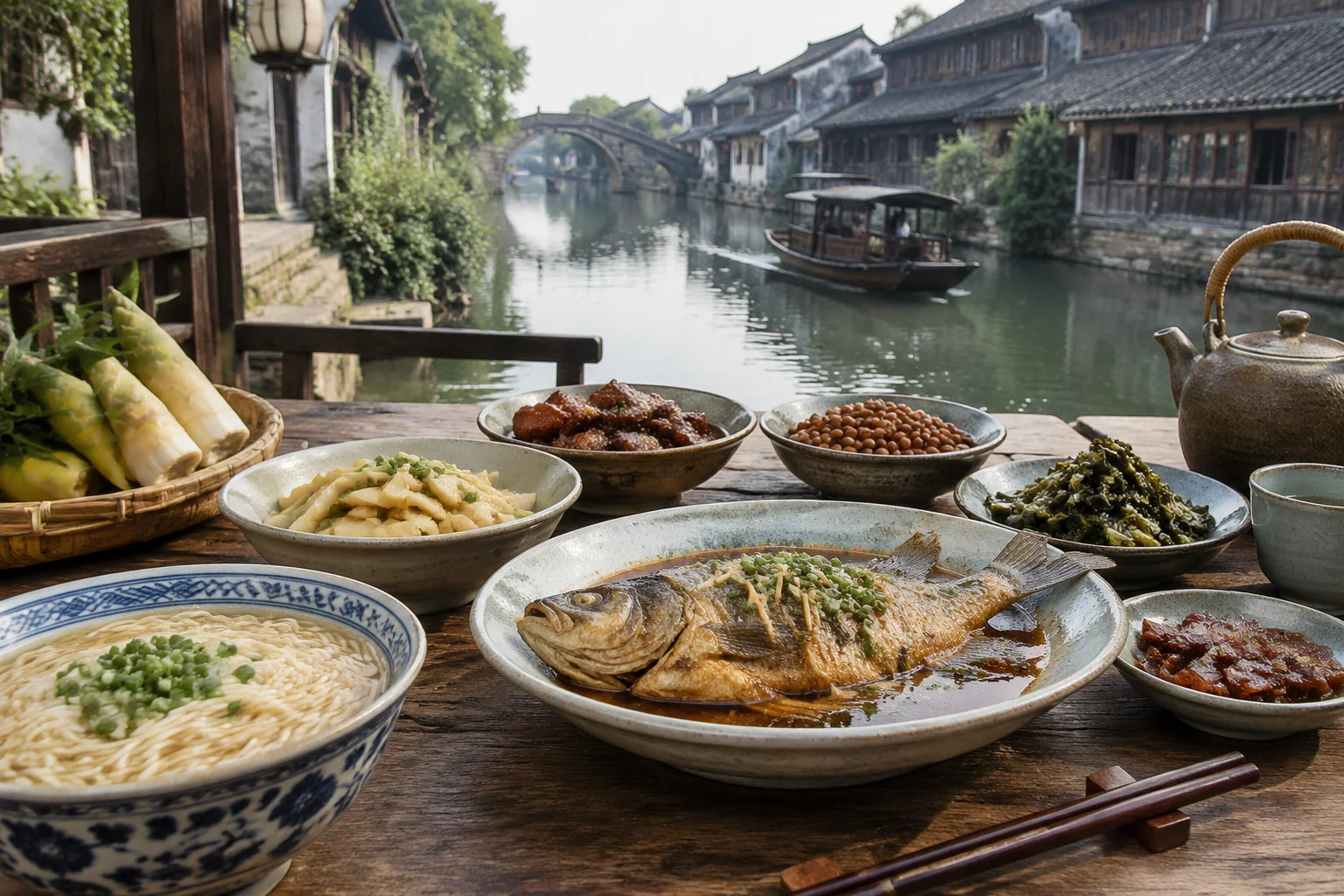
Wuzhen’s food is easier to understand as a calendar than as a restaurant list. Spring points to bamboo shoots; winter points to wild vegetables, oil tofu, winter bamboo and red-braised lamb; river fish and noodles fill the table year-round; smoked beans and guo ci belong to the New Year tea table. This guide is for travelers who want to eat with the season in Wuzhen, usually as a day trip or overnight from Hangzhou. The main decision is not which famous address to chase, but how to divide your time between a snack stop, a proper river-fish meal and a tea break. The background material used here is historical and does not confirm current menus, prices, opening hours or availability. Use it to ask better questions at the counter, then verify locally.
The Short Answer: Eat by Season, Not by Menu
A useful way to plan is to follow the local seasonal pattern: spring for bamboo shoots, winter for wild vegetables, oil tofu and winter bamboo. That simple rule is more practical than a long "must-eat" list. It tells you what to ask for first, and it warns you not to expect every dish all year. The same logic applies to red-braised lamb, which is associated with cold-weather eating, and to smoked beans and guo ci, which belong to the New Year tea-table tradition.
The year-round staples are river fish and noodles. These are the dishes to fall back on when the seasonal board is thin. For planning, choose one anchor meal and one snack wander. A day trip can manage both if you keep them in separate parts of the day; an overnight gives you more room for a slow breakfast, a tea stop and an evening meal. Do not treat this guide as a live menu. Seasonal produce varies with weather, supply and the kitchen’s own schedule.
A Seasonal Food Calendar for Wuzhen
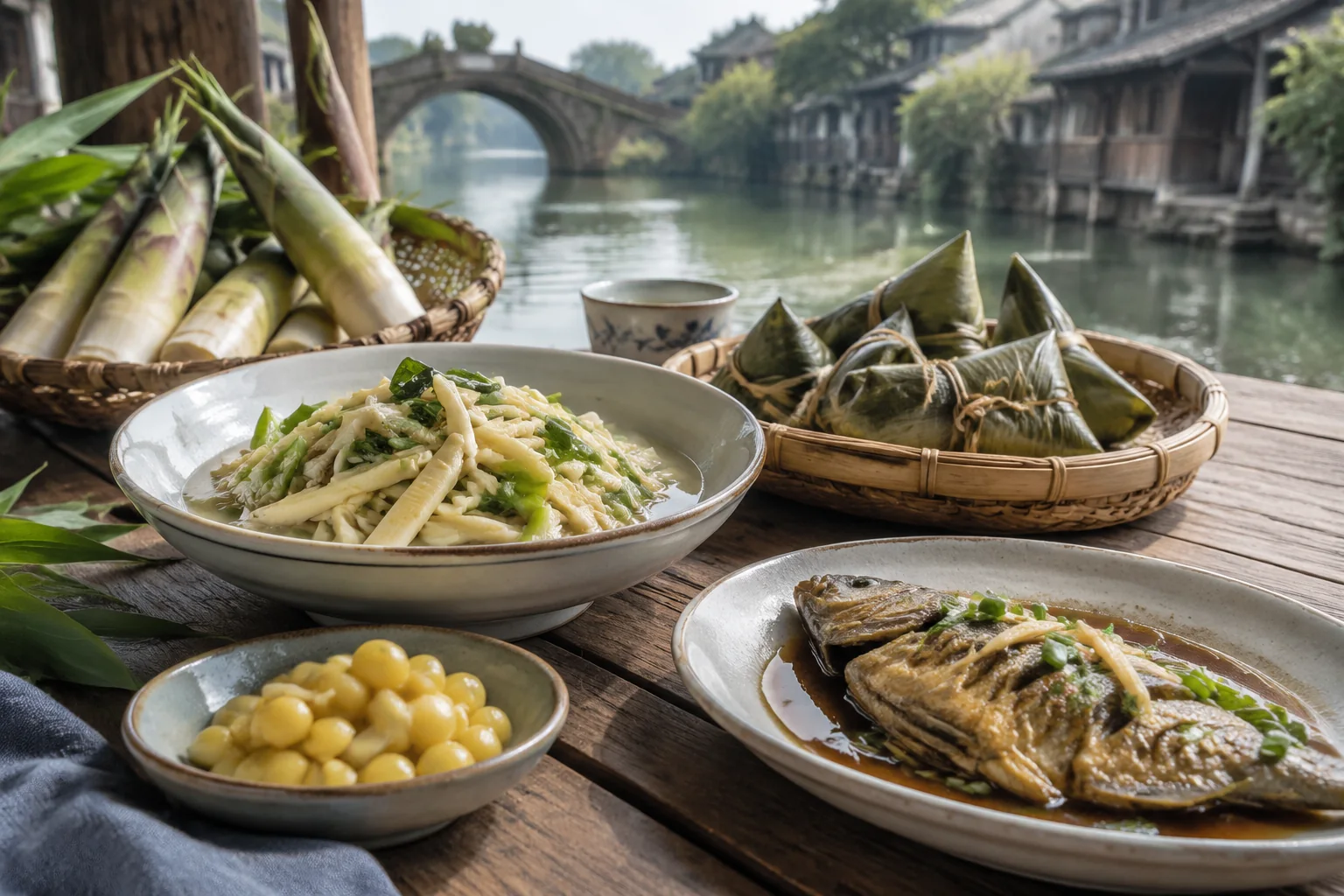
A practical way to plan is to match your visit to the traditional seasonal cues, then ask what is actually available on the day. The table below is qualitative: it is not a promise of current menus or dates.
| Season or occasion | What to look for | How to ask | Planning note |
|---|---|---|---|
| Spring | Fresh bamboo shoots, the first seasonal marker | "Is there fresh spring bamboo shoot today?" | Best treated as a vegetable dish to share; availability depends on the year. |
| Early summer / Dragon Boat Festival | Zongzi and the "five yellow" festival foods | "Are you serving festival dishes today?" | Festival food is not everyday food; confirm whether it is a seasonal special. |
| Winter | Wild vegetables, oil tofu, winter bamboo, "embroidered fine vegetables," red-braised lamb | "What winter vegetables do you have?" | Associated with cold-weather eating; ask about preparation and portion size. |
| Year-round | White water fish, other river fish, noodles, claypot dishes | "What fish is fresh today?" / "What noodles do you recommend?" | Ask about bones, cooking style and whether the fish is sold by weight. |
| New Year tea table | Smoked beans, guo ci | "Are these for tea?" | Buy small amounts first; these are snacks, not a meal. |
The table is deliberately broad. It gives you a conversation starter rather than a fixed schedule.
Spring: Bamboo Shoots and the First Fresh Greens
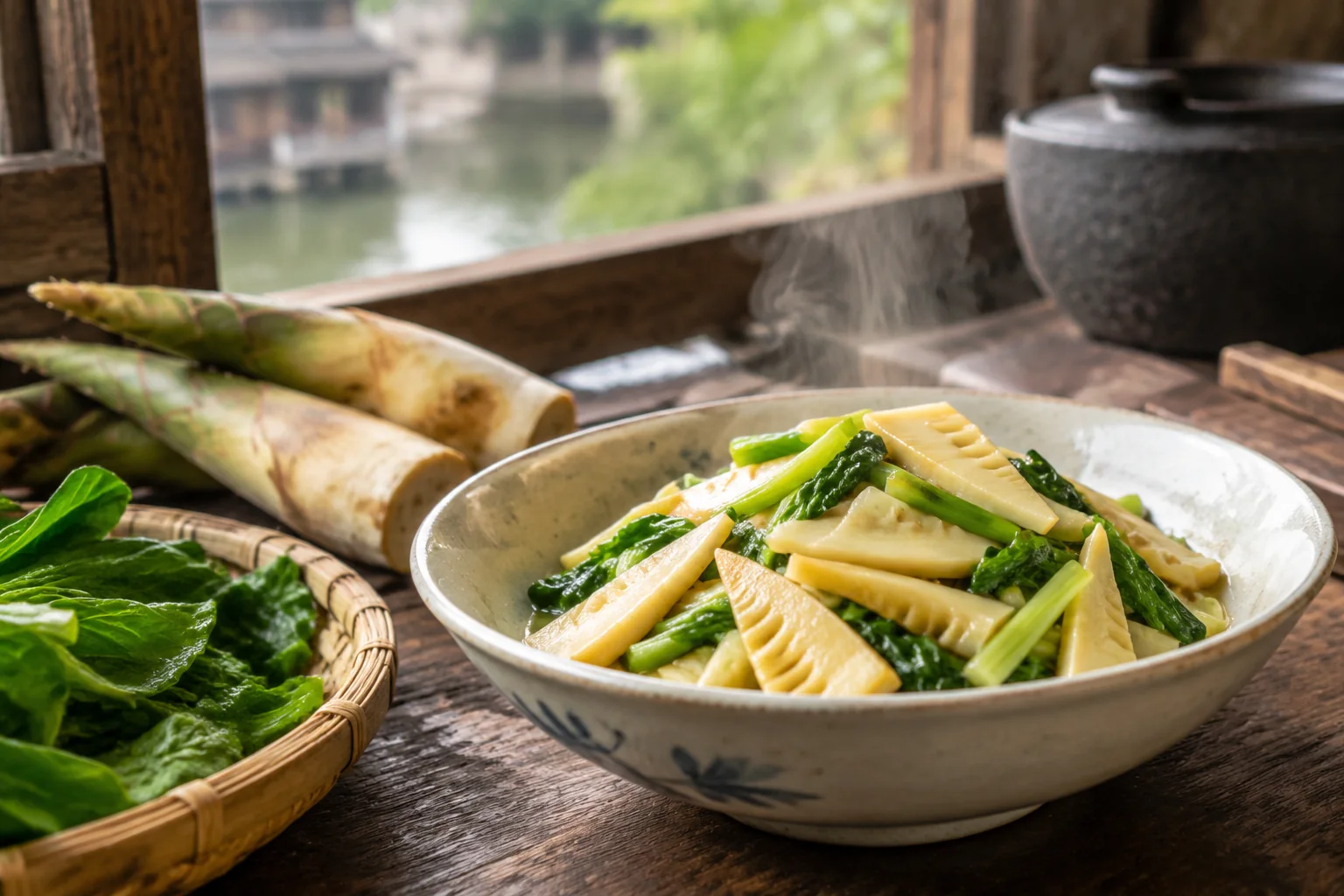
Spring bamboo shoots are the clearest seasonal signal in Wuzhen’s food tradition. They are not a heavy dish; their appeal is freshness, texture and the way they soak up the oil or broth around them. Ask whether the shoots are fresh that day and how the kitchen plans to cook them. A simple preparation is often the best test: if the kitchen can let the shoot taste like itself, the rest of the meal usually follows.
Do not treat a calendar date as a guarantee. Weather and supply change. If you are building a snack route, keep the bamboo-shoot meal separate from the sweet snacks; the flavors and textures deserve their own stop. This is also a good dish for sharing, especially if you want to try several courses without over-ordering.
Winter: Wild Vegetables, Oil Tofu and ‘Embroidered Fine Vegetables’
Winter is the most distinctive season in the local food calendar. Wild vegetables, oil tofu and winter bamboo suggest a table built on warmth, salt and texture rather than light spring freshness. Oil tofu is the easy entry point: it is familiar, absorbent and usually served with something savory. Winter bamboo is the firmer, more structured vegetable.
The unusual dish to seek out is the one known locally as "embroidered fine vegetables" (绣花精菜). It is described as a celery-like vegetable cooked with glutinous rice, salt pork and vegetables into a savory rice dish. The name may not appear on an English menu, so show the Chinese characters or ask for the local vegetable rice. The background material also singles out red-braised lamb as a winter dish, noting its deep red color and moist sauce. Its point is richness and warmth, not delicacy. Ask about the cut, the sauce and the portion size; lamb can be heavy for a quick lunch. These are seasonal associations, not a guarantee that every kitchen serves them on your date.
River Fish and Everyday Noodles
White water fish (白水鱼) is the most specific river-fish recommendation in the local repertoire. It is described as a wild fish with fine, tender flesh, and as one that has become less plentiful. That makes availability a real question rather than a menu formality. If you see live fish, ask whether it can be killed fresh and steamed plain to taste the original sweetness. Red-braising, chopping with chili, or lightly salting and steaming are other possibilities worth asking about.
Do not assume a large fish is better. Ask about size and price before it is cooked, especially if it is sold by weight. Wuzhen noodles are the everyday counterpoint. They are described as good and varied, so use them for a quick bowl rather than a full banquet. Ask for the local topping, and check whether the broth is light or rich. Claypot dishes such as black fish, chicken, bullfrog and prawn are also part of the local range, but not every place has them. Treat these as a shareable option for a group, not a solo default.
New Year Tea-Table Snacks and a Small Snack Route
Smoked beans (熏豆) and guo ci (锅糍) are the clearest examples of food that belongs to a specific social moment. Both are described as things once used to make tea around New Year. That does not mean they are only museum pieces; it means you should ask for them as tea-table snacks, not expect them as a main course. Smoked beans bring salt and smoke; guo ci brings a toasted rice texture. Try a small portion first, then decide whether to take some away.
Rice cakes (定胜糕), rice-wine balls (酒酿圆子) and qingtuan are also part of Wuzhen’s water-town snack range. A simple route works better than a checklist: start with one savory item, then one sweet rice snack, then a tea stop. Keep the route short and leave room to sit down. Dongzha Scenic Area (East Scenic Area) is associated with a traditional snack street, while Xizha Scenic Area (West Scenic Area) is the larger area with shops and evening atmosphere. Use those areas as orientation, not as a guarantee. Avoid naming a specific shop from an old guide; the shop may have changed, and the point is the food, not the address.
Festival Food and Daily Food: How to Tell Them Apart
The local tradition distinguishes everyday eating from festival eating without saying so directly. The winter list is about habit: wild vegetables, oil tofu, winter bamboo and lamb. The Dragon Boat Festival material is about occasion: zongzi, the "five yellow" foods and special dishes that hotels may promote. That is a useful distinction for travelers. If a dish is presented as a festival special, ask whether it is a local custom or a restaurant promotion. If it is presented as an everyday dish, ask what is in season and how it is usually eaten.
The same question helps with New Year snacks. Smoked beans and guo ci are not a test of whether you are eating "authentically"; they are a way to participate in a tea-table habit. A better approach is to ask: "Is this a festival food, a daily food, or a dish you are serving because the ingredient is good today?" That one question will usually tell you more than a long menu description.
How to Ask What’s in Season
You do not need fluent Chinese to eat well in Wuzhen, but a few direct questions help. Ask "现在什么当季?" (What is in season now?) or point to the vegetable section and ask "这个新鲜吗?" (Is this fresh?). For bamboo shoots, say "春笋" (spring bamboo shoot); for winter bamboo, "冬笋"; for wild vegetables, "野菜"; for oil tofu, "油豆腐." For fish, ask "今天什么鱼新鲜?" (What fish is fresh today?) and "可以清蒸吗?" (Can it be steamed plain?).
If you are avoiding bones, say so before ordering; if you are watching salt or spice, ask for it to be reduced. Pick two or three dishes and let the kitchen guide the rest. Ask about portion size if you are a small group. Ask whether a dish is sold by weight if fish or lamb is involved. These are practical questions, not guarantees. Menus and English translations vary, and the person serving you may be more reliable than a printed description.
Practical Planning: Day Trip, Overnight and Dietary Needs
From Hangzhou, Wuzhen can be planned as a day trip or an overnight. A short stay works best if you choose one anchor meal and one snack area; an overnight lets you add a slower breakfast and an evening meal without rushing. Use Dongzha Scenic Area and Xizha Scenic Area as rough orientation points, but verify current access, opening arrangements and internal transport before you go.
For families, order one plain fish or noodle dish, ask about bones, and share the richer lamb or claypot dish. For limited mobility, ask about seating and step-free access at the specific venue; old water-town buildings can have uneven floors and narrow passages. In wet weather, a tea-table snack stop is a sensible pause, but confirm indoor seating. If you have dietary restrictions, write them down in Chinese and show them to the server. Do not assume a dish is vegetarian because it sounds vegetable-based; ask about meat, stock and lard.
Common Planning Mistakes and a Pre-Trip Checklist
The most common mistake is treating an old food list as a current menu. The second is chasing a single "best" restaurant instead of eating by season. The third is ordering a full table of heavy dishes when the best memory may be a bowl of noodles and a tea snack. A fourth is assuming festival foods are available year-round.
Before you go:
- Check the season and ask what is actually available that week.
- Decide whether you are doing a day trip or an overnight.
- List two or three dishes you want to try, not a long checklist.
- Note allergies, bone concerns and salt or spice preferences in Chinese.
- Verify current opening hours, transport and reservation rules with official or venue sources.
Leave a buffer around meals; a water-town visit is more enjoyable when the food stop is not squeezed between two timed sights. If you want help turning these ideas into a flexible food itinerary, send a travel inquiry with your dates, group size and dietary needs.
Frequently Asked Questions
What food is Wuzhen best known for?
Wuzhen is associated with river fish, especially white water fish, red-braised lamb in winter, noodles and water-town snacks. Seasonal vegetables such as spring bamboo shoots and winter wild vegetables, plus New Year tea snacks like smoked beans and guo ci, are also part of the local food tradition. Treat these as a starting point, not a fixed menu.
Is white water fish always available?
No. It is described as a wild fish whose numbers have declined, so availability varies. Ask what fish is fresh that day and whether it can be steamed plain. If it is sold by weight, ask about size and price before cooking. Do not rely on an old guide to confirm today’s supply.
What is "embroidered fine vegetables"?
It is the local name for a winter dish made with a celery-like vegetable, glutinous rice, salt pork and vegetables. The Chinese name is 绣花精菜. It may not appear on an English menu, so show the characters and ask for the local vegetable rice. Confirm ingredients if you avoid pork.
When can I find smoked beans and guo ci?
They are described as New Year tea-table snacks. That suggests they are most associated with the New Year period, but it does not prove year-round or current availability. Ask whether they are served for tea and buy a small amount first. They are snacks, not a meal.
Do I need to book restaurants in Wuzhen?
The background material does not establish current reservation rules. For a popular meal period, ask your accommodation or the venue directly, and confirm current opening hours. A day trip should keep a backup noodle or snack option rather than depending on one address.
Sources and verification
This guide draws on internal reference extracts from Wuzhen Strategy (乌镇攻略), especially pages 2, 9, 10 and 11, and Zhejiang Strategy (浙江攻略), page 18. These are historical travel-reference documents, not current menus or official tourism publications. They support the broad seasonal pattern described here: spring bamboo shoots; winter wild vegetables, oil tofu, winter bamboo and red-braised lamb; year-round river fish and noodles; New Year tea snacks; and Dragon Boat Festival food customs. They do not verify today’s prices, opening hours, availability, transport schedules or reservation rules. Those details need confirmation with current official or venue sources before you travel. This article does not claim a recent visit, a local interview or a fact-check date.
Find places & plan your visit
These links open external search results. Confirm the exact place, entrance and current arrangements.
Need help planning your trip?
Tell us about your travel plans and send an inquiry.