In this guide 18 sections ▾
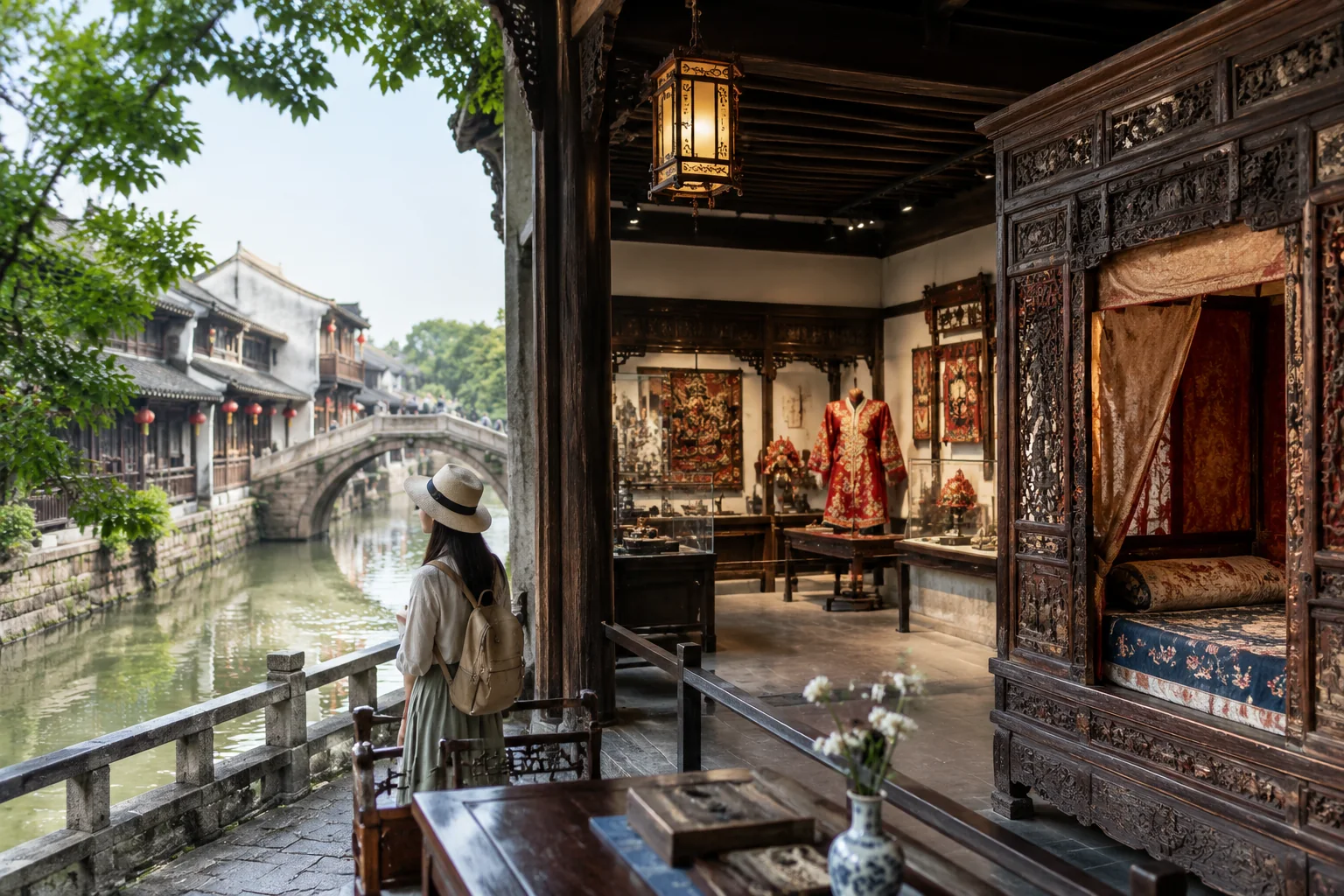
Short answer: choose East Scenic Area (东栅景区) if you want a compact half-day of old residential lanes, workshops and cultural houses. Choose West Scenic Area (西栅景区) if you want the larger waterside district, more shops and food, and the evening atmosphere. With one full day, the usual sequence is East in the morning and West from late afternoon into the evening, but treat that as a flexible plan rather than a timetable.
This guide is for travelers based in Hangzhou who are deciding how much of Wuzhen to see and in what order. Wuzhen is in Tongxiang, Jiaxing, not Hangzhou, so the journey and return matter. The reference material is older and not a live source: ticket prices, opening hours, performances, shuttle services and transport schedules all need checking for your travel date.
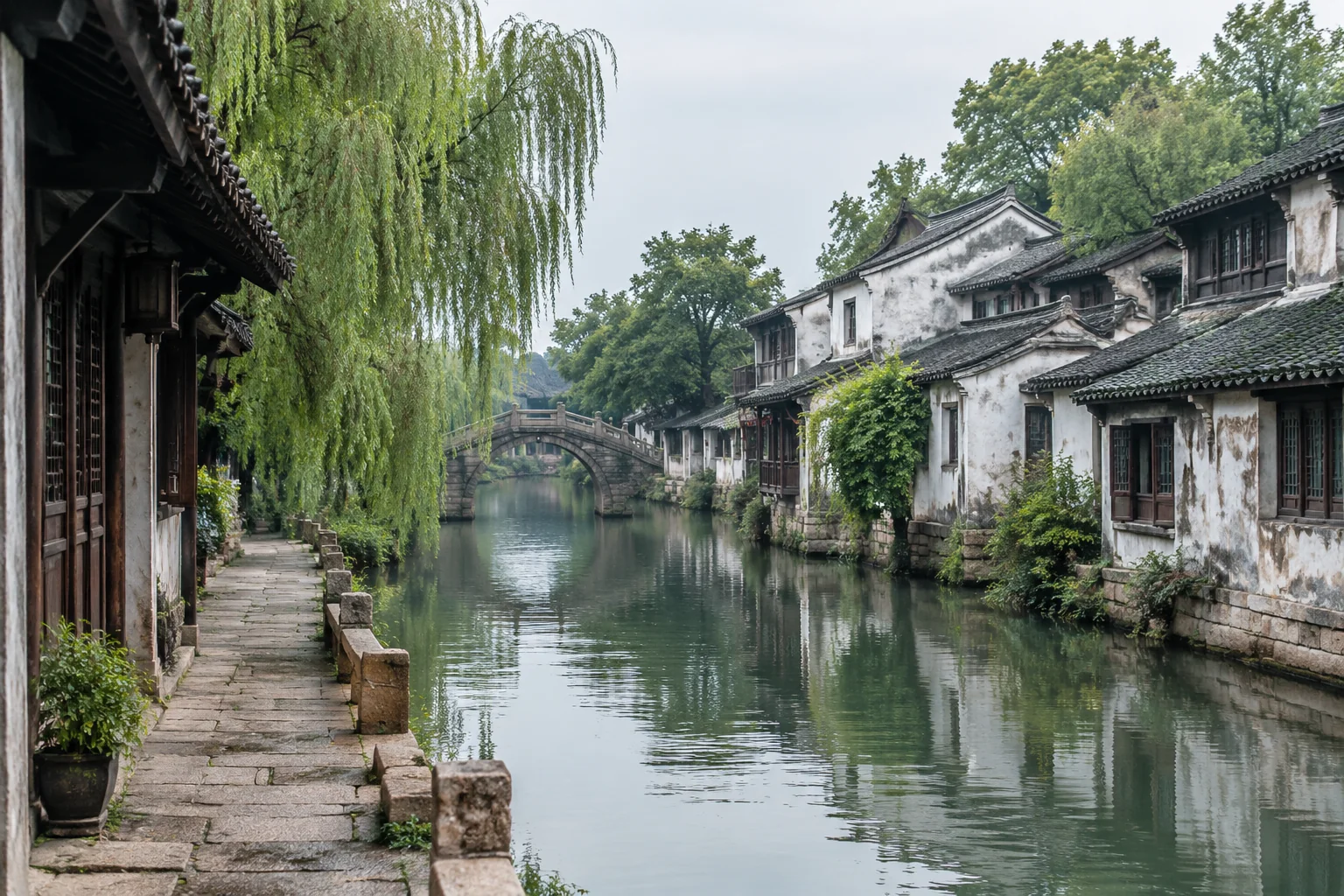
The Practical Difference: Two Different Wuzhen Experiences
The two scenic areas are not simply “old” and “new” versions of the same visit. East is described as the earlier, smaller phase, with a dense cluster of traditional residential streets, workshop displays and heritage sites. It is easy to treat as a half-day heritage walk, especially if you stop for a performance or tea.
West is the larger area, associated in the references with waterways, shops, restaurants, accommodation and a more leisure-oriented visit. Its scale is the point: you can wander, eat, shop and stay for the lighting rather than moving quickly between sights. The historical description of West as an island-like district entered by ferry is useful background, but current entry arrangements should be confirmed.
A common error is to assume the bigger area is automatically the better one. East suits travelers who want the old-town circuit; West suits those who want space, evening scenery and a slower stay. If you only have a few hours, mixing both without checking transfers is likely to feel rushed.
East Scenic Area: Old Lanes, Workshops and Cultural Houses
East works best as a focused morning. A logical route from the reference material starts near 逢源双桥, then visits 江南百床馆, 江南民俗馆, 江南木雕陈列馆, 茅盾故居, 古戏台 and 皮影戏馆, with 访卢阁 as a possible tea stop. The appeal is in the details: carved beds, displays of wedding and seasonal customs, woodcarving, the former residence of writer Mao Dun, and small-scale performance traditions.
Prioritize two or three interiors rather than trying to see every named room. 江南百床馆 and 江南民俗馆 give context to domestic life and ritual; 茅盾故居 adds a literary and family-history layer; 古戏台 and 皮影戏 are performance-related stops whose timing matters. The references also list 修真观, 汇源当铺 and the blue-print cloth dyeing workshop within the East area, but the current opening status and ticket inclusions should be checked rather than assumed.
East is the stronger fit for travelers who value old residential lanes and cultural exhibits over nightlife. Its compactness helps a short visit, though historic lanes and bridges may not suit every mobility need. Do not rely on old performance timetables: confirm times and whether a venue is operating on your date.
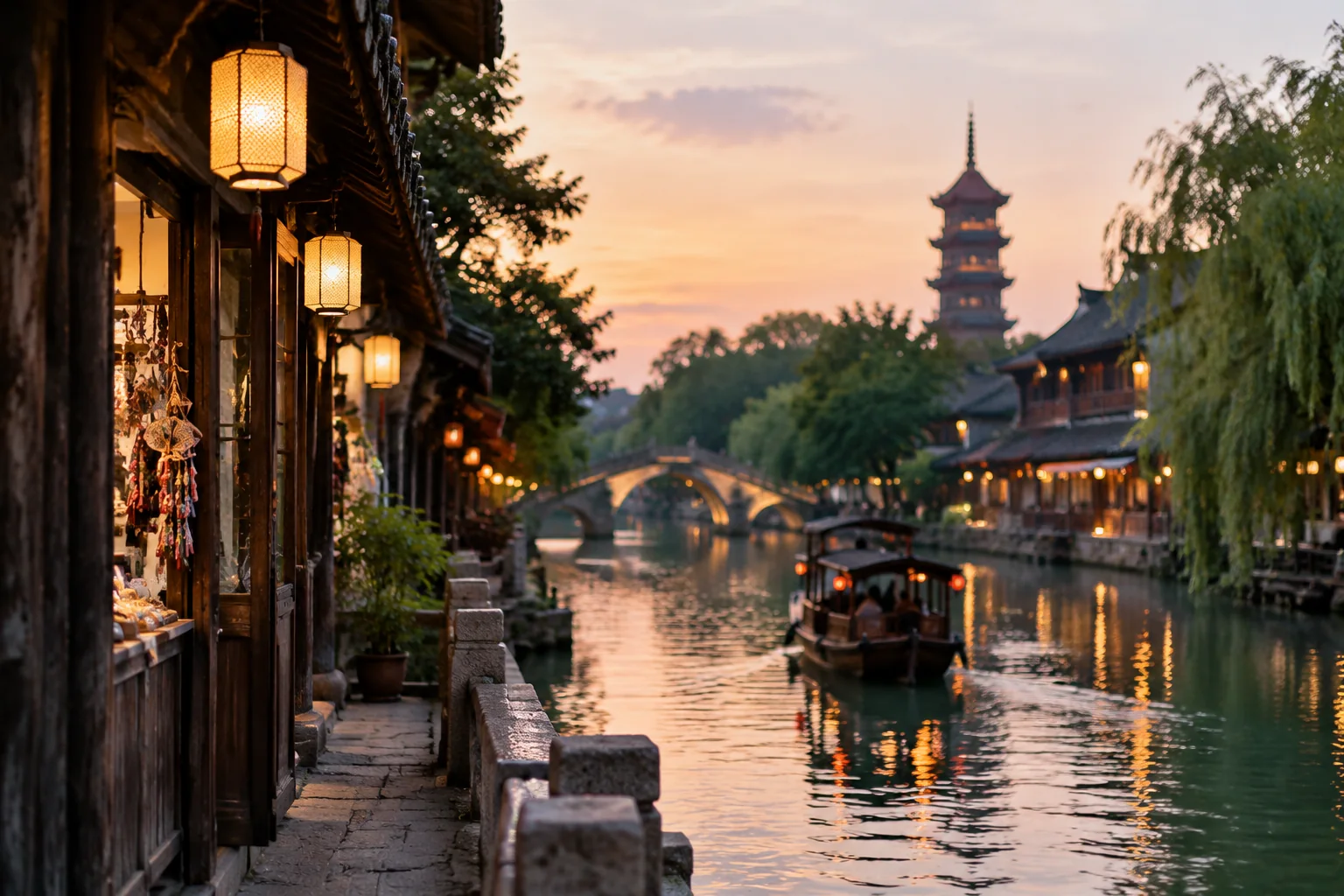
West Scenic Area: Waterways, Shops and Evening Atmosphere
West is the area to choose when you want the visit to unfold over an afternoon and evening. The references describe a larger district of waterways, streets and leisure facilities, with named stops such as 白莲塔, 乌镇大戏院, 老邮局, 三寸金莲馆, 西栅老街 and 女红街. Some are heritage sites; others are shops, cafes or performance venues. Check which are open and which require a separate ticket.
West is not just a shopping stop. 白莲塔 provides a landmark and a sense of the district’s religious history; 乌镇大戏院 is associated with performances and an open-air cinema tradition; the old post office and smaller museums add texture between walks. The evening lights and waterside setting are the main reason many visitors stay late, but lighting, boat rides and performances may be seasonal or weather-dependent.
Allow more time than you think for West. Because it is larger and more dispersed, a quick hour before dinner rarely does it justice. If evening atmosphere is your priority, arrive in the afternoon, accept that you may not see every sight, and confirm the last transport back to Hangzhou or your accommodation before settling in for the evening.
A Sensible One-Day Sequence from Hangzhou
Start with the journey, not the sightseeing. Older references describe bus services from Hangzhou and rail connections via Tongxiang, followed by local buses toward Wuzhen. They also describe a shuttle link between East and West. These details are time-sensitive; check current first and last services, station-to-scenic-area connections and whether the inter-area shuttle is running.
A workable one-day pattern is: leave Hangzhou early, visit East through the morning, have lunch, transfer to West with a generous buffer, then explore West through the afternoon and early evening. This sequence follows the character of the two areas: East is a daytime heritage circuit, while West is where you want to be as the light changes. It only works if the return transport is confirmed in advance.
For a less pressured day, choose one area. East-only suits a half-day heritage visit. West-only suits an afternoon and evening, especially if you are staying overnight. Trying to cover both while returning to Hangzhou the same night leaves little room for delay; an overnight stay in or near West is the more sensible way to see both without rushing.
East vs West at a Glance
| Choice | Best for | Character and main draws | Time and pace | Watch-outs |
|---|---|---|---|---|
| East Scenic Area (东栅景区) | Old lanes, workshops, cultural houses and a compact half-day | Traditional residential streets; 茅盾故居, 江南百床馆, 江南民俗馆, 古戏台 and 皮影戏; 逢源双桥 as a route anchor | Morning or half-day; best with two or three focused interior visits | Confirm which sites are open, what the ticket includes, and performance times |
| West Scenic Area (西栅景区) | Space, waterways, food and shopping, and evening atmosphere | Larger waterside district; 白莲塔, 乌镇大戏院, 老邮局, 西栅老街 and 女红街; evening lighting | Afternoon into evening; allow wandering time and a return buffer | Check access points, boat operations, event schedules and last transport |
| Both in one day | Travelers who want a contrast and can start early or stay overnight | East’s heritage circuit plus West’s broader waterside setting | East morning, lunch, transfer, West afternoon and early evening | Not comfortable on a tight same-day return; verify the shuttle and total journey |
Matching the Area to Your Travel Style
If heritage is the priority: choose East. It packs more old-town context into a smaller area, with museums, workshops and the former residence. If evening atmosphere is the priority: choose West and plan to stay late, but confirm that the lighting, performances and boats are operating.
Short stays: do not force both areas into a few hours. East is the cleaner half-day choice; West is better when you have an afternoon plus evening. Families: East’s compact cluster can make a half-day easier to structure, while West’s open spaces and evening lights may appeal to older children. Check stroller access over stone lanes and bridges rather than assuming it is easy.
Limited mobility: the references describe historic lanes, bridges and boats, but they do not verify step-free routes. Ask the scenic area about current accessible entrances, shuttle arrangements and whether a wheelchair or stroller can be managed on boats. Wet weather: stone lanes can be slippery and moving between interiors may be exposed; check whether boats and outdoor performances are running.
Tickets, Transfers and Other Details to Verify
Older references mention separate East and West tickets, a combined ticket, guided tours and boat charges. Do not budget from those figures. Confirm current ticket types, validity, whether East’s ticket covers multiple sites, whether West’s evening access is included, and whether any performance or boat ride is separately priced.
The same applies to transport. The references describe a shuttle between East and West, boat services within West, and local buses from Tongxiang. Current routes, fares, operating hours and frequency may differ. Check with the scenic area’s official information channels or the ticket office on arrival; no live booking or timetable detail is verified here.
Before buying a combination ticket, estimate how much time you really have after the Hangzhou transfer. A ticket is only useful if you can use it without racing between areas. Also check closures, renovation notices and event-day crowd controls.
Common Planning Mistakes and a Pre-Trip Checklist
Common mistakes include treating old ticket and performance times as current; visiting West first and then rushing East before it closes; assuming evening lights are available every night; and trying to return to Hangzhou without confirming the last service. Another mistake is forgetting that Wuzhen is outside Hangzhou and that the transfer is part of the day, not a minor detail.
Use this checklist before departure:
- Confirm current opening hours and ticket options for both areas.
- Check performance, cinema and boat schedules, plus any event closures.
- Verify the Hangzhou-to-Wuzhen route and the last return service.
- Confirm whether the East–West shuttle is operating and where it stops.
- Check the weather and wear shoes suitable for stone lanes.
- Ask about mobility access if you use a wheelchair, stroller or walking aid.
- Book accommodation near West if you want an unhurried evening.
FAQ: Wuzhen East vs West
Should I visit East or West first?
Visit East first if you are starting early and want the compact heritage circuit before lunch. Visit West first only if your accommodation or transport makes that easier, and then accept that East may be a shorter afternoon stop. The order matters less than protecting time for the area that matches your main interest.
Can I see both areas in one day from Hangzhou?
It is possible on paper, but it is a long day with little room for delays. Start early, verify transport and the inter-area shuttle, and do not attempt it if the last return is uncertain. If evening atmosphere matters, staying overnight near West is more practical than squeezing both areas into a same-day return.
Is West Scenic Area better at night?
West is the area associated with evening scenery and waterside lighting, so it is the natural choice if night atmosphere is your priority. “Better” still depends on the weather, event schedule and whether boats or venues are operating. Check current evening arrangements rather than relying on an old guide.
Which area is better for old architecture and local culture?
East is the stronger fit for a concentrated look at old residential lanes, workshops,民俗 displays and 茅盾故居. West also has heritage sites and waterways, but its larger scale and leisure facilities make it a broader visit. Choose East for a heritage-focused half-day and West for a more varied afternoon and evening.
Do I need to reserve tickets or a boat in advance?
The reference material does not establish current reservation rules. Check official Wuzhen information or the ticket office for your date, especially around weekends, holidays and major events. Do not assume that an old guide’s ticket arrangement still applies.
Are East and West connected by shuttle or boat?
The older references describe a shuttle link and separate boat services, but current routes, fares and operating hours are not verified. Confirm at the scenic area or through current official information. If the shuttle is not running, allow extra time for the road transfer.
Sources and Verification
Internal reference documents used for background:
- 《乌镇攻略》(Wuzhen Guide), PDF pages 2–5, 7–9, 13–14.
- 《浙江攻略》(Zhejiang Guide), PDF pages 4, 16–18.
These are internal reference documents, not live sources. The source-backed background covers the general character of East and West, the names of major sites, typical route patterns, and the existence of shuttle, boat and performance arrangements in the older material. Current prices, opening hours, performance schedules, reservation rules, transport timetables and accessibility details were not verified for this guide and should be confirmed with official Wuzhen information before travel. No public URL or fact-check date is supplied or invented here.
Find places & plan your visit
These links open external search results. Confirm the exact place, entrance and current arrangements.
Need help planning your trip?
Tell us about your travel plans and send an inquiry.