In this guide 19 sections ▾

Wuzhen’s East Scenic Area can easily become a checklist: cross the bridge, photograph a lane, visit a former residence, buy a snack, leave. The four small collections covered here are more rewarding when treated as one circuit about how people in a Jiangnan water town furnished rooms, marked marriages and birthdays, built houses and handled everyday exchange.
The main decision is not whether to tick off all four. It is how much attention to give the collections with the clearest material detail, the Jiangnan Bed Museum and the Jiangnan Woodcarving Exhibition Hall, while using the Jiangnan Folk Customs Museum for social context and the Yu Liuliang Coin Museum as an optional extra.
This guide is for independent visitors who want context rather than a rushed inventory of East Scenic Area sights. It cannot confirm current opening hours, ticket terms, prices, gallery closures, performance times or step-free access. The supplied references are older visitor guides. They are useful for understanding what these collections are about, not for confirming today’s arrangements. Check official Wuzhen information or the ticket desk before fixing your order, and treat any closed hall as a reason to slow down elsewhere rather than a failure of the day.
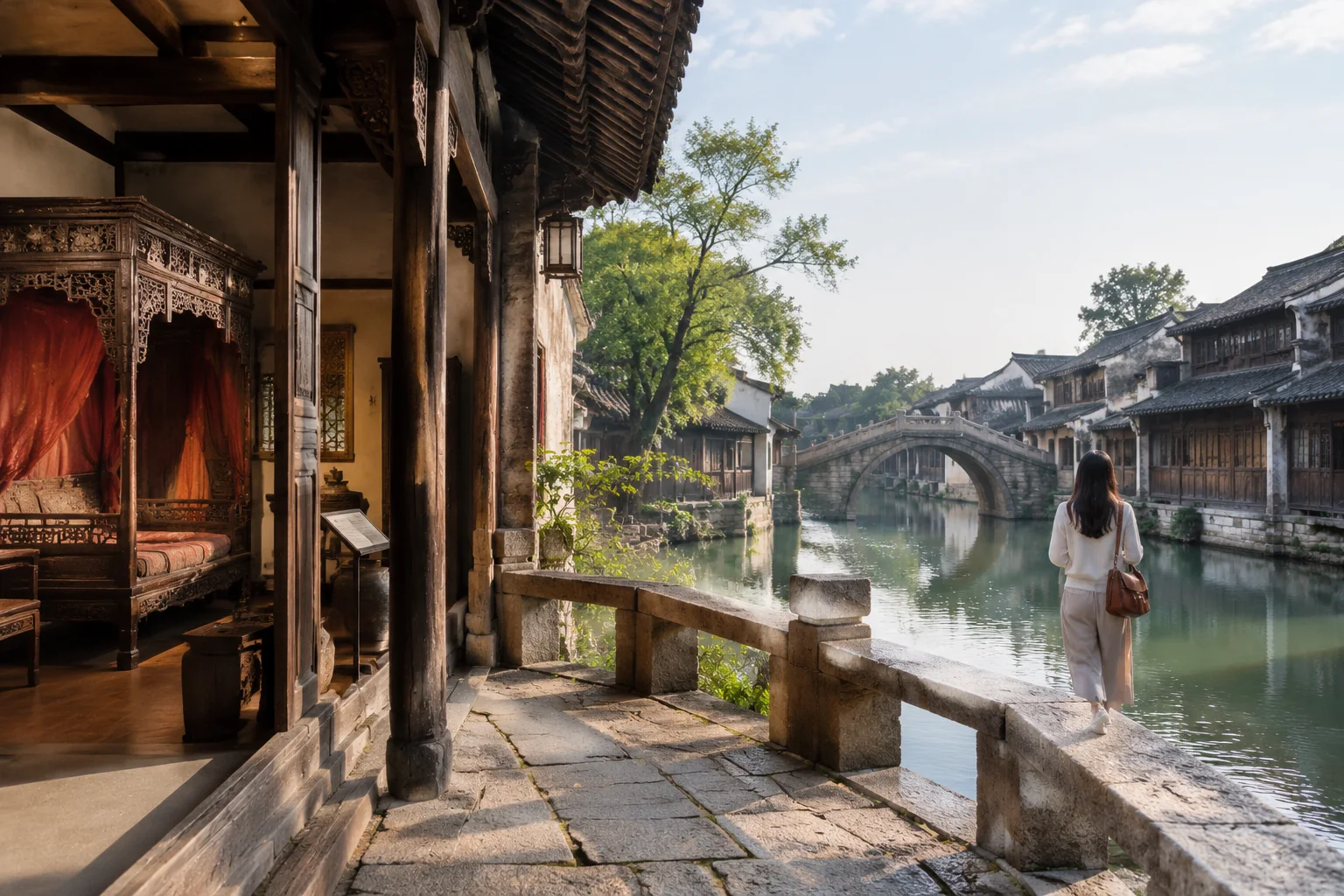
Why These Collections Reward a Slower Visit
The collections work as layers. The bed museum shows domestic space and craftsmanship at room scale. The folk-customs hall turns rituals into staged scenes. The woodcarving hall connects ornament to the building itself. The coin museum, if open and included in your ticket, adds a smaller, more specialised stop.
Small collections are easy to underestimate because they rarely depend on one famous masterpiece. Their strength is accumulation: a carved bracket above a door, a bed canopy, a wedding tableau, a worn coin, a label explaining a local family. Rushing turns all of this into furniture and wax figures. Looking closely turns it into evidence of how a household presented itself.
Bring a simple question to each room: what did this object make possible, and who was allowed to use it? That question works better than trying to see everything.
First, Read the East Scenic Area Context
Wuzhen East Scenic Area is described in the older route material as the part of town associated with traditional residents and workshops, set within a water-town pattern of old streets, lanes and bridges. The museums are not neutral galleries. They sit inside historic houses and lanes, so the visit is partly about thresholds, courtyards, timber frames and domestic scale.
Fengyuan Twin Bridge is a useful mental starting point because old route plans enter the scenic area across it before turning toward the bed museum. You do not need to follow a fixed route, but orienting yourself around the bridge and the old lanes helps the museum sequence feel like a walk through a neighbourhood rather than four separate admissions.
Nearby combinations include Mao Dun’s Former Residence, the old stage and shadow-puppet theatre, and the dye workshop if these are open. Trying to combine all of them with four collections usually produces a shallow day. Choose the collections plus one or two nearby sights, and leave room for the lanes between them.
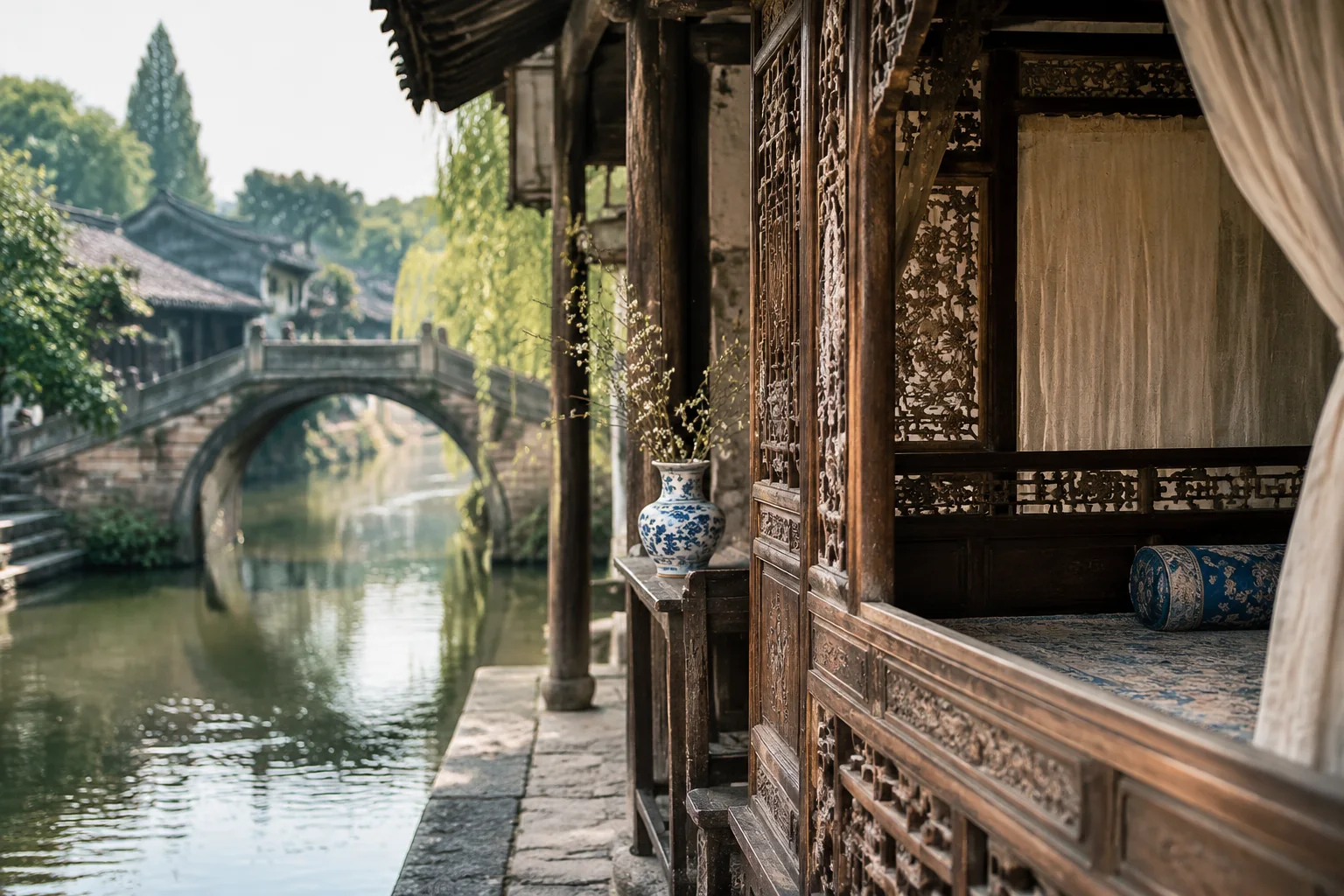
The Museum Circuit at a Glance
| Collection | Strongest reason to visit | What to look for | Practical caveat |
|---|---|---|---|
| Jiangnan Bed Museum (江南百床馆) | Room-scale domestic craft and differences in household status | Bed frames, canopies, platforms, joinery, carved panels, and the way one bed could define a room | The old guide describes a specialist collection of Ming, Qing and later beds; do not assume every furnishing beside a bed is original to it |
| Jiangnan Folk Customs Museum (江南民俗馆) | Clothing, marriage, birthdays, life-cycle rites and seasonal customs in one social frame | The sequence of display halls, wax tableaux, garments, objects and photographs | Tableaux are interpretations, not documentary records; read labels rather than treating every scene as literal |
| Jiangnan Woodcarving Exhibition Hall (江南木雕陈列馆) | Architectural carving seen as part of a house, not only as isolated objects | Bracket sets, beams, spandrels, lintels, window lattice, skirt boards, joinery and carved figures | Distinguish woodwork still in its building context from pieces displayed as a collection |
| Yu Liuliang Coin Museum (余榴梁钱币馆) | A short numismatic stop for visitors already interested in coins or collecting | Labels about issuer, date, metal, denomination, wear and display context, if the displays are open | The available references confirm the name in an old East Scenic Area sight list but do not describe the collection; treat it as optional |
A workable order is bed museum, folk-customs hall, woodcarving hall, then the coin museum if it lies on your route and is open. The older route plans put the bed, folk and woodcarving collections in that general sequence, so following it reduces backtracking. Adjust for crowds and closures rather than defending the order.
The Bed Museum: Domestic Craft and Social Status
The old guide describes the Jiangnan Bed Museum as China’s first museum dedicated to collecting and displaying antique Jiangnan beds. Its strength is the range from the Ming and Qing periods into later eras, with examples associated with wealthy households as well as more modest families. The displays move from one-bed-one-room arrangements to more expansive bed settings.
Look at the bed as a room within a room. The frame and posts define a private volume; the canopy controls privacy and light; the platform changes how the sleeper enters and uses the space; the footboard and panels provide a surface for carving and finish. The most interesting comparison is not which bed is largest, but how each one organizes sleep, status, privacy and family life.
For visitors interested in craft, slow down at the junctions: how the frame is joined, how a carved panel sits within a larger composition, whether ornament follows a structural line or interrupts it. In a domestic setting, decoration was not separate from use. It advertised taste and resources while also closing a joint or finishing an edge.
Read the labels where provided, and do not assume that every object around a bed belonged together historically. Museum rooms often combine architecture, furniture and later additions. Keep bags away from textiles and carved surfaces, and follow any photography or touching rules posted locally.
The Folk-Customs Hall: Life-Cycle Rituals in Tableaux
The Jiangnan Folk Customs Museum occupies the former residence of the Jin family, described in the references as a once-wealthy household. That setting matters. The displays concern late Qing to Republican-era local customs, including clothing, marriage, birthday celebrations, life-cycle rites and seasonal festivals. The house itself helps explain the rituals: where guests were received, how family status was displayed, and how public and private spaces differed.
The wax tableaux do much of the storytelling. They are useful for understanding sequence, clothing and roles, but they are reconstructions. A tableau can show an idealised wedding or celebration without proving that every detail was typical. Use the labels to separate documented practice from museum staging, and look at the objects and photographs as carefully as the figures.
The clothing displays are especially helpful for reading the rest of the East Scenic Area. Once you notice cut, colour, fabric and formality, the figures in other halls and the garments in shop displays become easier to interpret. The collection is less about individual masterpieces than about how a community marked major passages of life.
Families may find the tableaux easier to approach than rows of object labels, but do not assume child-specific interpretation is provided. A useful prompt for younger visitors is to ask what each scene would sound, smell and feel like, then check which parts are actually shown by the display.
The Woodcarving Hall: Architecture as the Main Exhibit
The Jiangnan Woodcarving Exhibition Hall is housed in what the old guide describes as the former Xu family mansion, also known as Baihua Hall. Its reputation rests on woodcarving, especially the carved beams, door lintels and window lattice, with figures, birds and animals worked in round carving, flat carving, openwork and hollow carving.
The building is the main exhibit. Before studying individual objects, look up at the roof structure and down at the thresholds. Carved bracket sets transfer and finish roof loads; beams frame the interior; spandrels soften the junctions between beams and columns; lintels and window lattice control light and sightlines while carrying narrative ornament.
A carved panel can therefore be read in two ways. As decoration, it displays technique, motif and taste. As construction, it marks a joint, stiffens a frame or frames an opening. The most rewarding details are often where those roles overlap: a carved bracket that also makes the roof feel lighter, or a lattice pattern that shapes the view into a courtyard.
Be careful not to assume that every carved component in the hall is in its original position. Some pieces belong to the building; others are displayed as collected examples. Ask which is which when labels allow. Good lighting in courtyards helps, but interiors can be dim. Look closely without touching, and never lean on carved timber.
The Coin Museum: A Small Stop With a Caveat
The older East Scenic Area material lists the Yu Liuliang Coin Museum among the sights associated with the area, but the references available for this guide do not describe its holdings, display style or interpretation. That is a real limitation. This guide cannot promise a particular collection of rare coins, a local hoard, or a strong narrative about Wuzhen’s commercial history.
Treat the museum as a conditional stop. If it is open and included in your ticket, it can be a useful change of scale after rooms full of furniture and architectural carving. If the labels are good, read them as lessons in how a coin communicates authority, date, place, metal and value. A personal collection may also reveal a collector’s taste, but do not assume that story without evidence in the displays.
If the museum is closed or you have limited time, skip it without guilt. The bed and woodcarving collections carry more of the circuit’s material detail, and the folk hall supplies the social context. The coin museum is a bonus, not the anchor.
A Rain-Friendly Sequence Through the Collections
When weather turns, the East Scenic Area can still work as an indoor-leaning circuit, but not as a completely sheltered one. The bed museum, folk-customs hall and woodcarving hall are associated with historic houses and interior displays, so they can absorb part of a wet day. Lanes, courtyards and thresholds remain exposed, and surfaces can be slippery.
A sensible wet-weather order is bed museum first, then folk-customs hall, then woodcarving hall, with the coin museum as an optional final stop. This keeps the most object-rich interiors together and leaves outdoor combinations, such as the old stage or workshop visits, for a break in the rain. If a gallery is crowded, step into a courtyard or move on and return later rather than pressing through a tight room.
Check the day’s closures before relying on this plan. Historic buildings can have narrow passages and uneven thresholds, and this guide cannot confirm step-free access or temporary gallery restrictions. Visitors with limited mobility, families with strollers or anyone avoiding stairs should ask at the visitor desk before committing to a fixed sequence.
Common Mistakes and a Practical Pre-Trip Checklist
The most common mistake is treating the collections as interchangeable filler between outdoor sights. Each has a different job: beds show domestic craft and status, the folk hall shows ritual and clothing, the woodcarving hall shows architecture and ornament, and the coin museum is a specialised extra. Another mistake is photographing every label instead of looking at the objects. A third is assuming that a wax tableau is the same kind of evidence as an interpreted artefact.
Also avoid planning around exact opening times found in old guides, and do not assume that a ticket listing from an earlier era still applies. Ask about photography rules, gallery closures and ticket inclusion at the entrance. Keep bags clear of textiles and carved wood, and allow more time than a checklist suggests.
A practical checklist:
- Check current opening days, last entry and gallery closures through official Wuzhen information or the ticket desk.
- Confirm whether the coin museum is open and included before making it a priority.
- Carry a rain layer and wear shoes with grip for wet lanes and courtyards.
- Ask about photography, flash and touching rules where displays are fragile.
- Plan a buffer between the museum circuit and any performance or former-residence visit.
- For a short stay, choose the bed museum and woodcarving hall first; add the folk hall if time allows.
If you want help fitting these collections into a wider Wuzhen itinerary, the inquiry form at the end of this guide is the right place to ask.
Frequently Asked Questions
Are all four collections included in the East Scenic Area ticket?
The older reference material lists the bed museum, folk-customs museum, woodcarving hall and Yu Liuliang Coin Museum among East Scenic Area sights, but ticket inclusions can change. Do not rely on that old list. Confirm current inclusion at the official ticket desk or on official visitor information before planning your day around all four.
How much time should I give the museum circuit?
The old route plans treat the East Scenic Area as a half-day visit, but that is a planning guide, not a guarantee. If you care about craft, give the bed museum and woodcarving hall the largest share and treat the coin museum as optional. A rushed circuit through all four is less useful than a slower visit to two or three.
Which collection should I choose if I can only visit one?
Choose the woodcarving hall if you want to read architecture and ornament together. Choose the bed museum if domestic furniture and social status interest you more. Choose the folk-customs hall if you want clothing, marriage and life-cycle rituals in a single narrative. The coin museum is best for visitors with a specific numismatic interest because the available references do not describe its displays.
Is the coin museum worth visiting?
It is worth considering if it is open, included in your ticket and you already enjoy coins or collecting. The references consulted here confirm the museum’s name in an old sight list but do not establish what is inside. Do not make a special trip for it without checking locally.
Can I visit these museums in wet weather?
Partly. Several displays are indoors or within historic houses, but courtyards, lanes and thresholds are exposed. The sequence suggested above can reduce time in the rain, but it is not a fully covered route. Check closures and floor conditions on the day.
Are the museums suitable for families or visitors with limited mobility?
Families may find the folk-customs tableaux easier to approach than object labels, but child-specific interpretation is not confirmed. Visitors with limited mobility should ask about thresholds, narrow passages and temporary restrictions before relying on a fixed route; step-free access cannot be confirmed from the supplied references.
Sources and Verification
This article draws on two internal reference PDFs supplied for research. They are not live official web pages, and their page numbers below refer to the PDF pages rather than printed guidebook pages.
- 乌镇攻略 (Wuzhen Guide), pages 4–7: East Scenic Area route suggestions; the Jiangnan Bed Museum’s focus on Ming, Qing and later Jiangnan beds; the Jiangnan Folk Customs Museum in the former Jin family residence and its clothing, marriage and life-cycle displays; the Jiangnan Woodcarving Exhibition Hall in the former Xu family mansion, also known as Baihua Hall; and the old list of East Scenic Area sights that includes the Yu Liuliang Coin Museum.
- 浙江攻略 (Zhejiang Guide), pages 16–17: Wuzhen’s East Scenic Area as a traditional residential and workshop quarter, the Jin family residence setting of the folk-customs museum, and the water-town street pattern.
The background above is source-backed: the existence and names of the collections, their broad themes, the former-residence settings of the bed, folk and woodcarving displays, and the general older route sequence. The following details were not verified for this article and need current official confirmation: opening days and hours, last entry, ticket inclusion and prices, gallery closures, guided services, performance times, photography rules, accessibility and transport or shuttle arrangements. No public URLs or fact-check date are asserted here.
For a current visit, use official Wuzhen visitor information or ask at the ticket desk. If a particular hall is closed, the East Scenic Area’s lanes, bridges, workshops and former residences can still support a worthwhile visit, but do not treat old guidebook details as today’s schedule.
Find places & plan your visit
These links open external search results. Confirm the exact place, entrance and current arrangements.
Need help planning your trip?
Tell us about your travel plans and send an inquiry.