In this guide 16 sections ▾
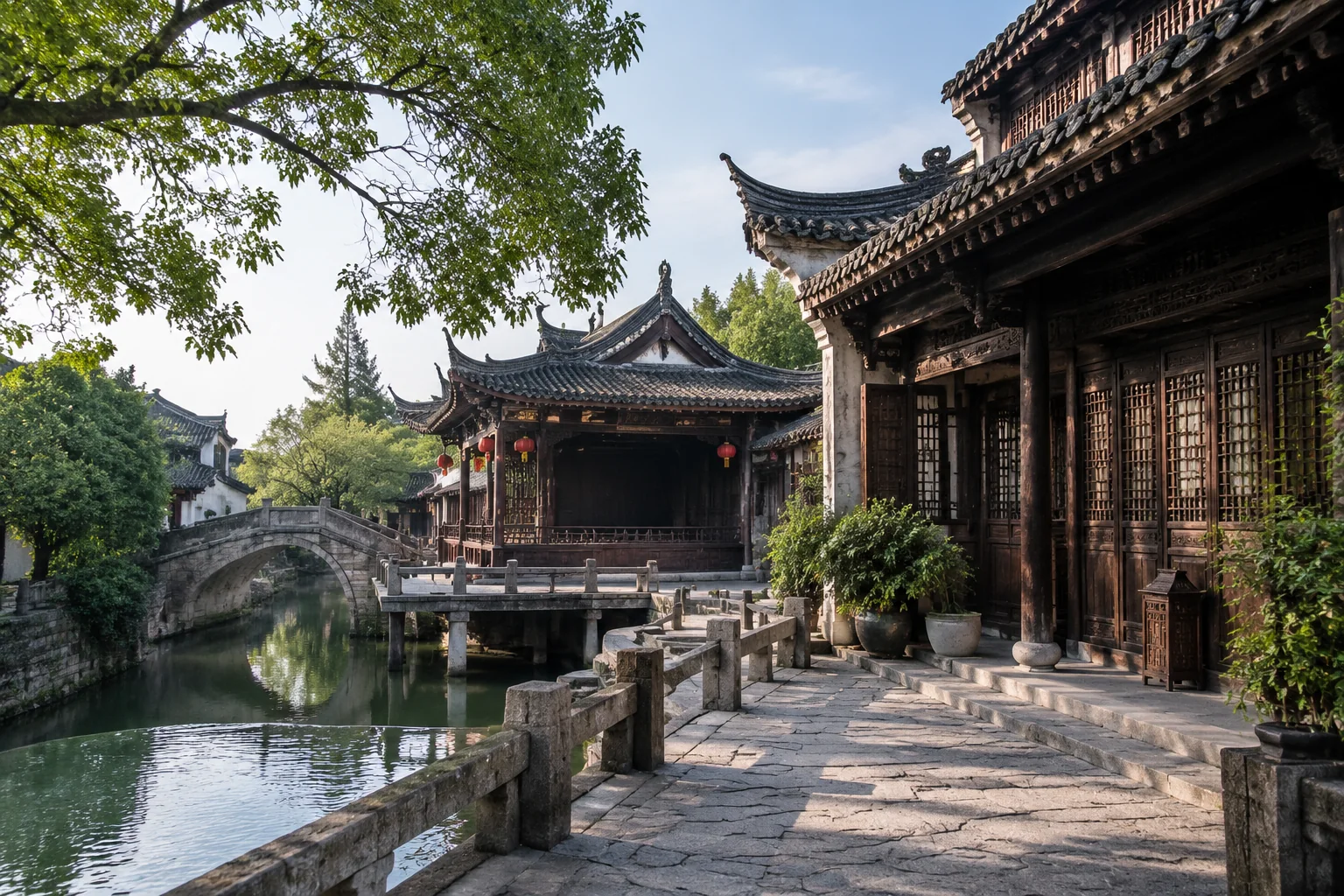
Xia Tongshan’s Hanlin Residence (夏同善翰林第) is a small, story-rich scholar-house stop rather than a headline garden. The most useful planning answer is also a correction: the supplied Wuzhen guide places Hanlin Di in the East Scenic Area (东栅), opposite Xiuzhen Temple (修真观) and its old stage, and lists it among East Scenic Area sights. It does not support treating the residence as a West Scenic Area (西栅) garden. That matters because East and West are separate visit zones. If you are staying in West Scenic Area, do not assume this house is around the corner from the evening water circuit. Either give East Scenic Area its own block of time, or choose a West-side garden stop such as Lingshui Ju (灵水居) and leave Hanlin Di for another visit.
This guide is for travelers who want a quieter, more reflective stop than the busiest riverfront stretches, and who are willing to separate a good local story from verified history. The main decision is not which photo spot to choose, but which scenic area you are actually in. The second decision is how much weight to give the Xia Tongshan and Little Cabbage stories. The limitation is important: the supplied references are old guidebook extracts, not live official pages. They do not establish current opening hours, ticket arrangements, room-by-room access, or accessibility. Check those before you go.
The Location Question Comes First
Two pieces of evidence in the Wuzhen guide point to East Scenic Area. Page 5 lists Hanlin Di with Xiuzhen Temple, the old stage, Mao Dun’s Former Residence and other East Scenic Area sights. Page 8 describes Xia Tongshan growing up at his maternal grandmother’s house, watching opera at the Xiuzhen Temple stage opposite, and later hanging the imperially bestowed Hanlin Di plaque in the family hall. The address line in the same extract is garbled enough that it should not be used as a precise navigation instruction. Treat the East Scenic Area placement as the reference’s clear planning signal and confirm the exact entrance on a current official map.
This is not a pedantic correction. East and West Scenic Area are distinct visitor areas, and the guide describes a shuttle between them. Current shuttle times, boarding points and access rules need to be checked; old schedules are not reliable. A West-only day that tries to add Hanlin Di can turn into a transfer-heavy detour. A better West-side substitute, if your goal is a walled garden and a quiet pause, is Lingshui Ju. The reference describes it as the West Scenic Area’s largest private-style garden, entered past a winding wall with traditional patterns; lattice windows reveal rockery, water and greenery, and Mao Dun’s memorial and tomb area lie on its east side. That is a garden visit in West Scenic Area, not a reason to misplace Hanlin Di.
What the Hanlin Residence Story Actually Says
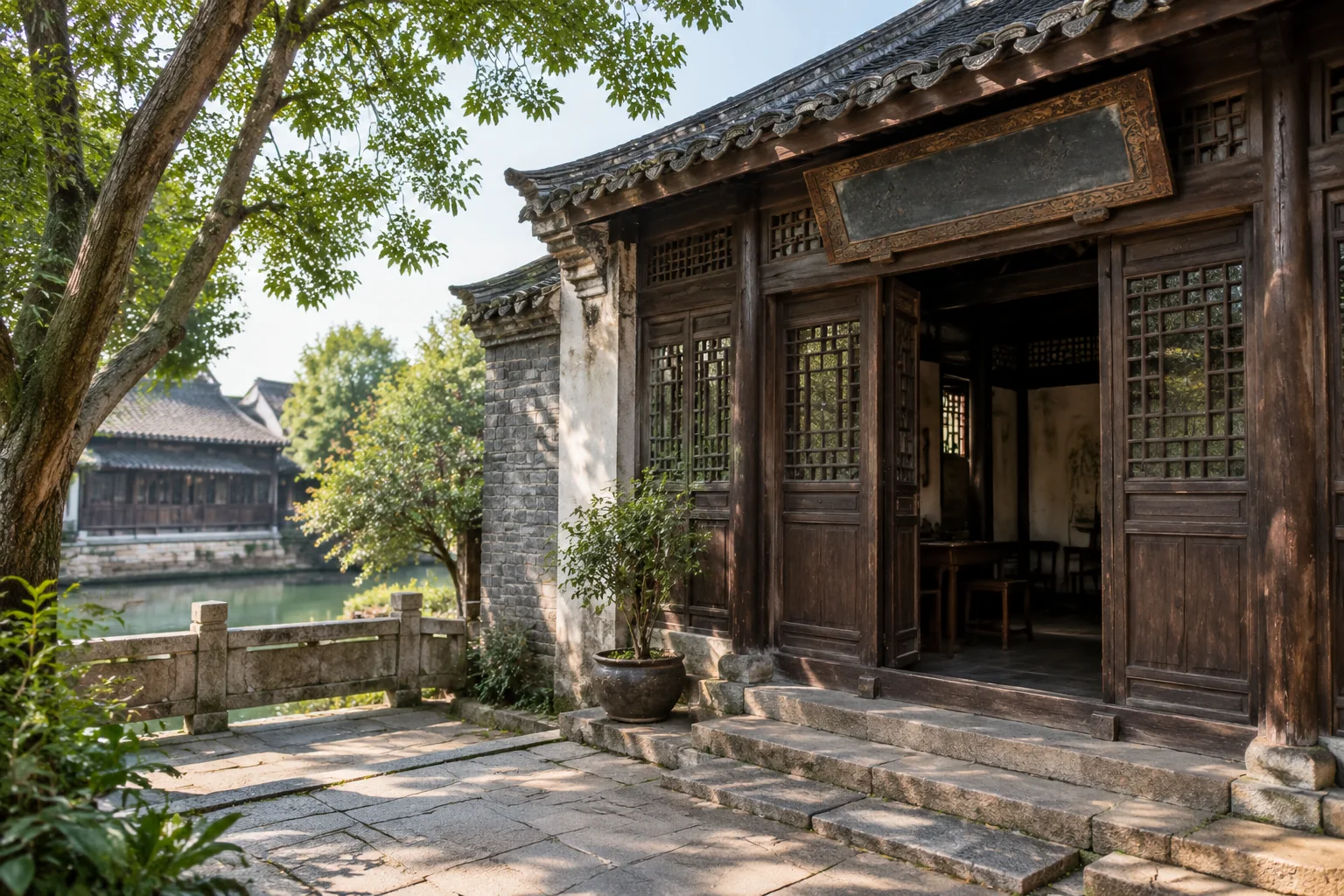
The guide presents Xia Tongshan as a late-Qing Hanlin scholar and official from Wuzhen’s notable-people roll. In its account, he lived as a boy with his stepmother in his maternal grandmother’s house in Wuzhen and studied there. He later passed the imperial examinations, was made a Hanlin scholar, and rose in official life. The guide says Empress Dowager Cixi favored his learning and assigned him, together with Weng Tonghe of Changshu, to tutor Emperor Guangxu. It also says he hung the imperially bestowed Hanlin Di plaque in his grandmother’s hall, obtained an imperial decree, renovated the Xiao family hall and expanded Hanlin Di.
Those are biographical claims in a popular guide, not independently verified facts in the supplied material. Exact court titles, the precise sequence of examinations and the degree of imperial favor should be treated as story-level unless a museum label or a scholarly source confirms them. That does not make the visit worthless. It tells you what kind of stop this is: a family-house story about education, patronage and local pride, not a neutral chronology. The building is described as a renovated and expanded family complex, so read it as a layered place rather than a single untouched late-Qing room.
Reading a Scholar Residence Without Overclaiming
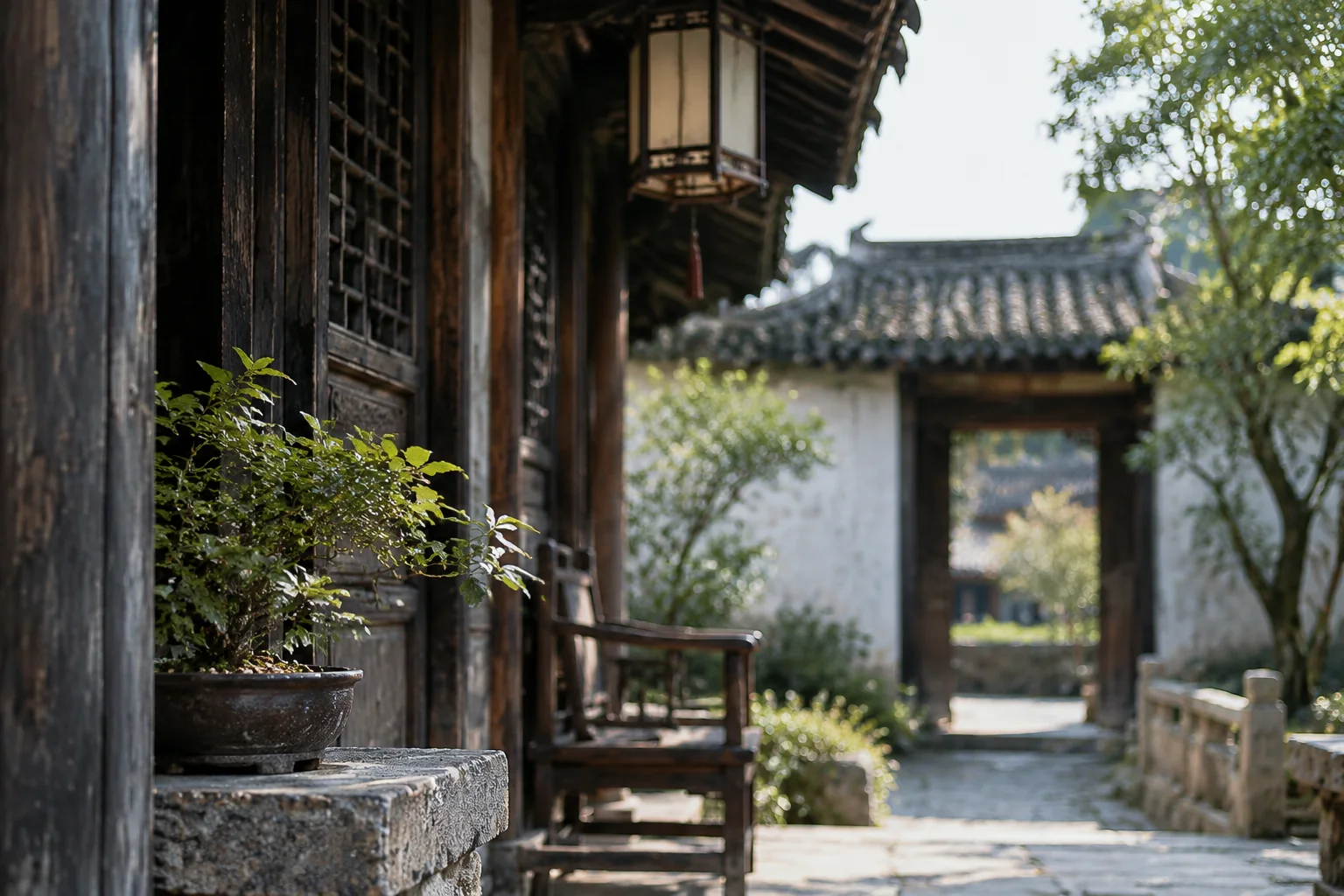
The reference does not provide a room-by-room plan, a garden description, or a construction chronology for Hanlin Di. It supports a hall, a plaque, a family-house expansion and a relationship to the temple stage opposite. It does not support expecting a large Suzhou-style garden. If you arrive looking for a major designed landscape, you may miss the smaller cues that make the stop interesting.
Use a scholar-house reading frame instead. In a Jiangnan family residence, the sequence from street frontage to public hall to inner rooms usually separates the family’s public face from its private life. The hall is where honors are displayed and guests received; inner courtyards bring light and air into a deep plan; timber screens and thresholds mark degrees of privacy. The source does not map those elements at Hanlin Di, so treat them as observation prompts, not a verified floor plan. What the source does support is the social logic: the family hall is where the imperial plaque was hung; the house was expanded after Xia’s success; and the residence faces a temple stage that, in the story, shaped his childhood imagination.
Look for the plaque and ask what it is doing in the room. Is it presented as a family heirloom, a reproduction, or a heritage interpretation? Look at the scale of the hall relative to the street. A scholar family’s status was performed through examination success, official rank and literary reputation, not only through commerce. Look at the relationship with the temple and stage opposite: the story places a boy within earshot of opera and moral tales, and later places his imperial honor in the family hall across the way. That contrast between public spectacle and domestic study is more useful than a checklist of furniture. The reference does not date the present fabric, so avoid assuming that every beam or plaque is original.
The Little Cabbage Case: Local Lore, Not Verified Biography
Page 8 also mentions the Jiangnan-wide Yang Naiwu and Little Cabbage case of 1873 and says it gave Hanlin Di additional legendary color. The excerpt does not explain Xia Tongshan’s role in the case, nor does it provide a chain of evidence connecting the case to this house. The case is a famous late-Qing legal cause célèbre in broad local memory, but the specific link to Hanlin Di should be treated as local lore.
That distinction can improve the visit. Enjoy the story as a layer of local memory; do not repeat dramatic details as confirmed biography. If a display makes a specific claim, read the label for dates, names and sources. If none are given, keep the story in the realm of the guide recounting it rather than historians having established it. This is especially important because old guidebook prose often blends family legend, opera plots and tourism storytelling. The residence can still be interesting as a place where those stories were told; it does not need to be a verified crime scene.
Fitting the Stop Into a Wuzhen Day
For East Scenic Area, pair Hanlin Di with Xiuzhen Temple and the old stage rather than treating it as a standalone destination. The temple and stage give the childhood story its physical context; Hanlin Di gives the scholar-family story its domestic setting. Then continue into the lanes, Mao Dun’s Former Residence or the small museum collections at a relaxed pace. The reference’s East Scenic Area route includes these sights, but current opening and performance details need checking. Keep Hanlin Di as a short pause, not a half-day.
For West Scenic Area, do not force the connection. Build a quieter walk around Lingshui Ju and the waterside lanes, and use Hanlin Di only if you have a separate East Scenic Area block. If you are combining both areas, give the transfer a flexible buffer and decide which area gets the evening. The guide describes West Scenic Area as the more leisure-oriented side, with waterways, shops and evening atmosphere; East Scenic Area is presented as the older residential and workshop side. That is a useful contrast, but it is not a reason to cram both into a short visit.
| Stop | What it gives you | Best for | Planning caution |
|---|---|---|---|
| Hanlin Di, East Scenic Area | Scholar-family story, imperial plaque narrative and local Little Cabbage lore | A quiet 20 to 40 minute pause within an East Scenic Area walk | The reference places it in East Scenic Area; confirm current entrance, access and opening before relying on it |
| Xiuzhen Temple and old stage, East Scenic Area | Temple and stage context for the childhood story and Wuzhen’s opera memory | Pairing with Hanlin Di for a more layered East Scenic Area sequence | Current performance schedules and interior access are not verified in the supplied material |
| Lingshui Ju, West Scenic Area | Walled garden atmosphere, rockery, water, greenery and nearby Mao Dun memorial area | A garden pause if you are staying on the West side | The reference describes the garden, but current access and opening details still need official confirmation |
Practical Choices for Different Travelers
Short stays: choose one scenic area. A rushed East-West combination is the most common planning mistake. Families: the scholar-house story may need framing for younger children; the old stage and temple are more immediately visual, but current performances cannot be assumed. Limited mobility: the reference gives no accessibility details for Hanlin Di, so ask official staff about steps, thresholds and indoor access before relying on this stop. Wet weather: courtyards and lanes are exposed; keep an indoor museum or covered market as a backup. Travelers interested in literature: pair the house with Mao Dun’s Former Residence, but treat the two as different stories. One is a literary museum; the other is a local scholar-family narrative.
Common Mistakes and a Pre-Trip Checklist
Common mistakes: placing Hanlin Di in West Scenic Area without checking; treating the Little Cabbage link as proven; expecting a large garden; using old ticket prices or shuttle times; and trying to see East and West in one cramped sequence. A better approach is to confirm the location, choose one area for the day, and let the scholar stop be a small, quiet episode.
Pre-trip checklist: confirm Hanlin Di’s current location and entrance on an official Wuzhen map; check current opening hours and whether the interior is open; check ticket and entry arrangements for the scenic area you plan to visit; confirm shuttle or transfer options if combining areas; prepare a wet-weather alternative; and decide in advance whether you are visiting for the house, the local lore, or both. The source is useful for context and for identifying the location question. It is not a live verification of any of those practical details.
FAQ
Is Xia Tongshan’s Hanlin Residence in Wuzhen’s West Scenic Area?
The supplied Wuzhen guide places Hanlin Di in the East Scenic Area, opposite Xiuzhen Temple and its old stage. It does not support placing the residence in West Scenic Area. Because old guidebook address lines can be garbled and current signage can change, confirm the exact entrance on an official current map before setting out.
How long should I allow for Hanlin Di?
Think of it as a short pause, not a main attraction. For most travelers, 20 to 40 minutes is enough to read the story, look at the hall and plaque, and connect it with the temple stage opposite. If you are especially interested in late-Qing scholar life, allow more time, but do not build a half-day around it without checking what is currently open.
Is the Little Cabbage case a verified part of Xia Tongshan’s biography?
Not in the supplied material. The guide mentions the 1873 Yang Naiwu and Little Cabbage case and says it added legendary color to Hanlin Di, but it does not document Xia Tongshan’s role or provide supporting evidence. Treat the connection as local lore unless you find a specific, sourced explanation on site or in a scholarly reference.
What should I look for if the garden layout is not documented?
Look for the social sequence rather than a checklist of plants. Notice how the hall faces the street, where the plaque is displayed, how inner rooms and courtyards create privacy, and how the house relates to the temple stage opposite. The reference does not confirm a large garden at Hanlin Di, so treat any courtyard or planted area as part of the house’s atmosphere rather than a verified designed landscape.
Should I choose Hanlin Di or Lingshui Ju?
Choose by scenic area, not by ranking. If you are already in East Scenic Area, Hanlin Di offers a scholar-family story and a useful contrast with the temple and old stage. If you are staying in West Scenic Area, Lingshui Ju is the reference’s garden stop, with walls, lattice windows, rockery, water and greenery. Trying to visit both in a short trip may cost more time in transfer than it returns in sightseeing.
If you would like help deciding between an East Scenic Area scholar stop and a West Scenic Area garden walk, send a travel inquiry using the form below.
Sources and verification
This article draws on two internal reference PDFs: 乌镇攻略 (Wuzhen Guide) and 浙江攻略 (Zhejiang Guide). These are reference documents, not live official pages, and they are not a fact-check date.
- 乌镇攻略, page 5: East Scenic Area sight inventory and suggested route, including Hanlin Di, Xiuzhen Temple, the old stage and Mao Dun’s Former Residence.
- 乌镇攻略, page 8: the Xia Tongshan and Hanlin Di narrative; the 1873 Yang Naiwu and Little Cabbage reference; and the description of Lingshui Ju as a West Scenic Area garden.
- 乌镇攻略, page 3: context for Xiuzhen Temple and the old stage as East Scenic Area sights.
- 乌镇攻略, page 7: West Scenic Area overview and its leisure-oriented presentation.
- 乌镇攻略, page 14: the reference’s description of a shuttle between East and West Scenic Area. Current times and access rules are not verified here.
- 乌镇攻略, page 17: Xia Tongshan listed among Wuzhen’s notable historical figures.
- 浙江攻略, page 17: Wuzhen overview and its late-Qing to Republican-era townscape context.
Source-backed background in this guide includes the East Scenic Area placement, the family-house narrative, the temple-stage relationship, the Little Cabbage reference and the Lingshui Ju garden description. Current details that need official confirmation include opening hours, ticket arrangements, shuttle services, interior access, performance schedules and accessibility. No first-hand visit, booking, guide service or live fact-check is claimed.
Find places & plan your visit
These links open external search results. Confirm the exact place, entrance and current arrangements.
Need help planning your trip?
Tell us about your travel plans and send an inquiry.