In this guide 19 sections ▾
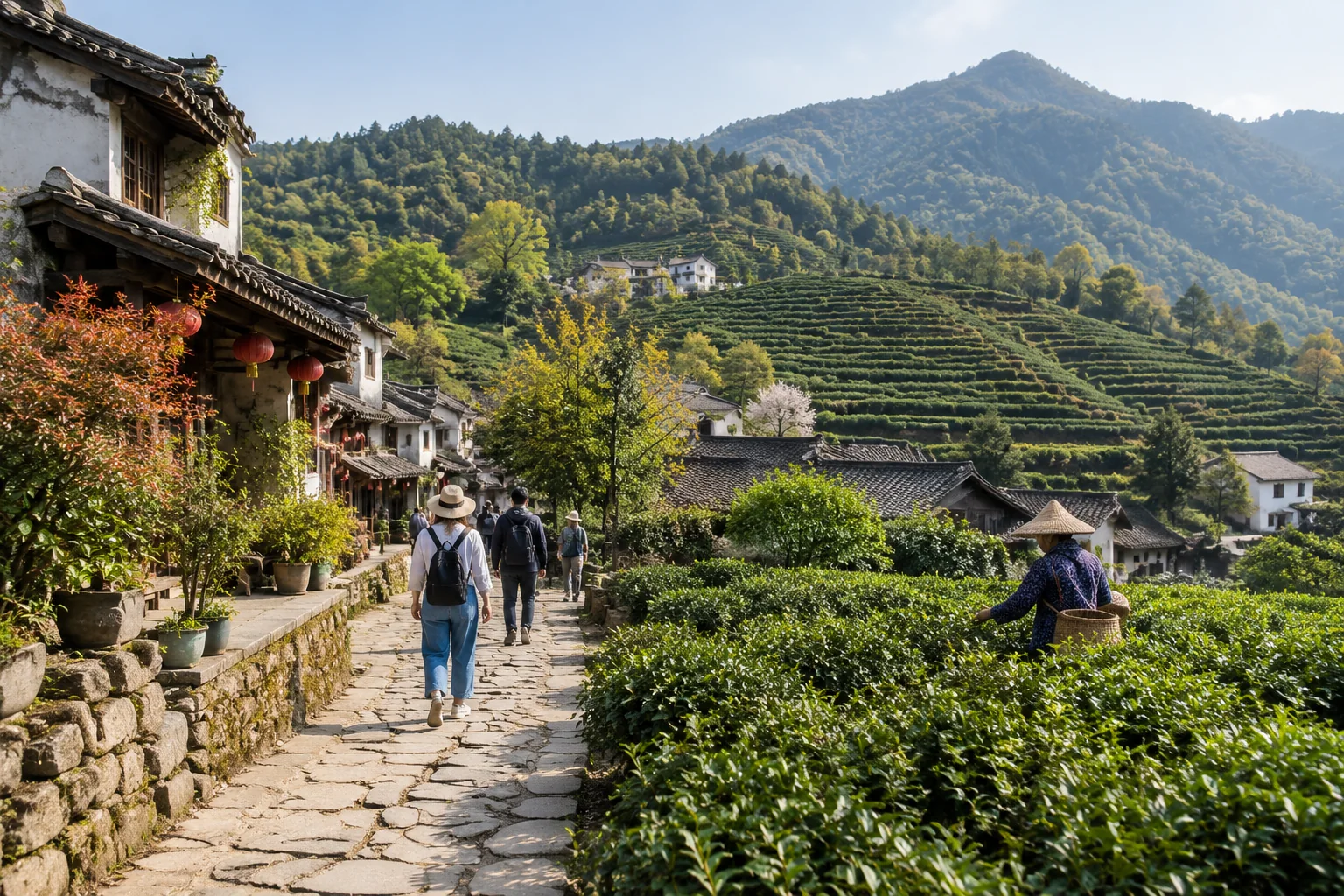
A relaxed Longjing Village day trip from Hangzhou works best as a short sequence of tea-field context, a village-lane walk, a tea tasting and farmhouse meal, and a streamside finish at Nine Creeks and Eighteen Ravines (九溪十八涧). The main decision is not how to “cover” the village, but how much walking, tea buying and sitting still you want to build into the day.
This guide is for travelers staying in Hangzhou who want a slower, tea-focused excursion rather than another museum or lakefront checklist. It assumes you can arrange your own transport or join a checked local service, and that you are willing to ask about current conditions rather than rely on an old itinerary. The historical references behind this article describe the village and its tea culture in useful detail, but they are not a current timetable, price list or access check. Treat transport, opening arrangements, tasting terms and path conditions as things to confirm for your dates.
Why Longjing Village works as a day trip
Longjing Village (龙井村) sits in the tea country west of West Lake, on the northwestern foot of Wengjia Mountain. The references describe it as a narrow settlement along a main lane, with family houses, tea rooms and tea plots on the slopes behind them. This is a working tea landscape, not a single enclosed attraction: the experience depends on where you stop, what you ask and how you behave around private tea gardens.
The village is closely associated with Longjing tea, especially the “Lion Peak Longjing” name linked to Lion Peak (狮峰山). The better-known heritage marker is the group of Eighteen Imperial Tea Trees (十八棵御茶), associated in local tellings with the Qianlong Emperor. The references also mention the Imperial Tea Garden (御茶园) near the village entrance. These are reasons to slow down and read the landscape, not boxes to tick quickly.
What makes the day work is the combination: tea knowledge, a village meal and a streamside walk are all in the same broad area. What makes it fail is over-scheduling. If you try to pair a full Longjing visit with a full West Lake circuit, both become a rush.
The shape of a relaxed day
A sensible sequence is:
- Morning arrival at the village entrance. Use the first half hour for orientation, the Imperial Tea Garden area and the story of the Eighteen Imperial Tea Trees.
- Late morning along the village lane. Walk a section of the main lane, look at the tea plots from the path and choose a tea room or farmhouse rather than drifting into the first one you see.
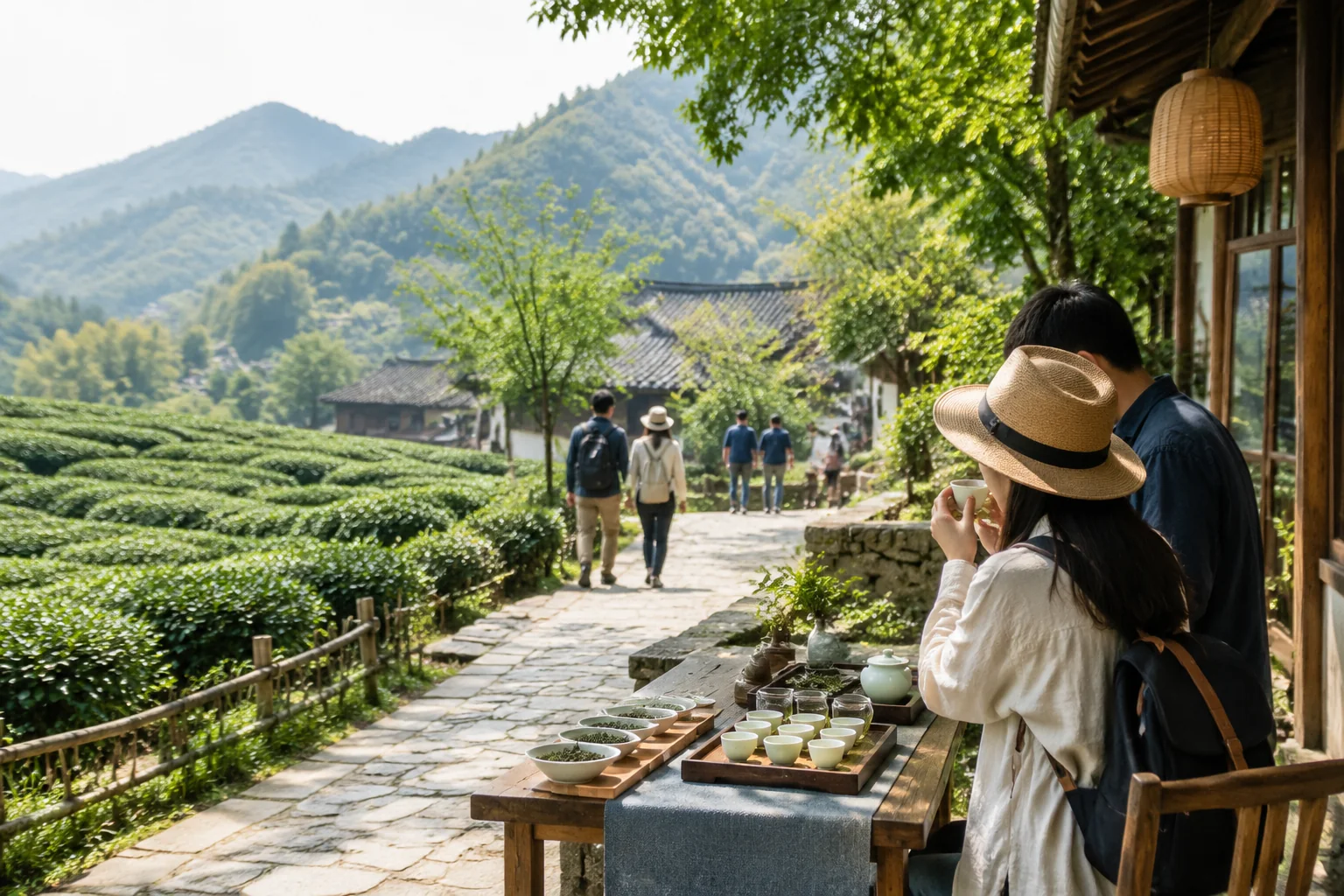
- Tea tasting before lunch. Ask about the teas being poured, the grades and whether purchase is expected. Keep the tasting unhurried but do not treat it as unlimited free entertainment.
- Farmhouse meal. Eat before the afternoon walk, and confirm prices and what is available that day.
- Early-afternoon streamside finish. Continue toward the Nine Creeks and Eighteen Ravines area for a short walk, then leave a buffer for the return to Hangzhou.
Reverse the order if your transport or the weather makes an afternoon stream walk less appealing. If you only have half a day, keep the village entrance, one tea room and a meal; save the stream for another visit or a separate outing.
Start at the village entrance: the Imperial Tea Garden
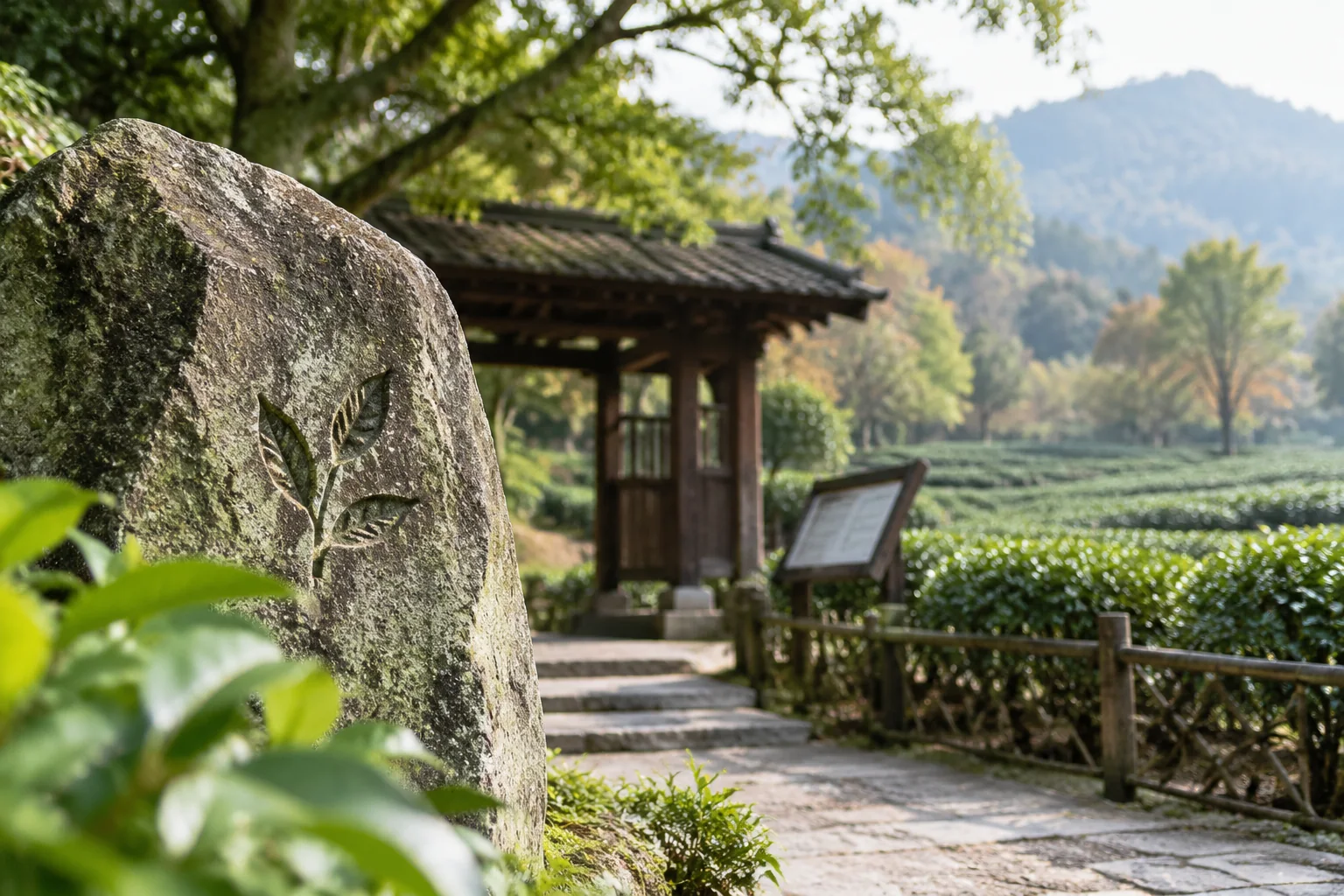
The Imperial Tea Garden area is a useful first stop because it gives context before you enter tea rooms. The references connect it with the Eighteen Imperial Tea Trees and the village’s most famous tea. Treat the stories as local heritage and tea culture, not as a guarantee that every bush you see is ancient or imperial.
Check on site whether the garden area is open, whether any ticket is required and where visitors may walk. Old references mention an admission charge for the old tea trees, but that is not a current price or access confirmation. Read the interpretation boards, keep to paths and do not pick leaves or step into cultivated rows for photographs.
This is also the point to reset expectations. The village is not a tea museum with a fixed route. Its interest lies in the lane, the farmhouses, the tea plots and the conversations you have when you stop.
Walking the village lane and reading the tea landscape
The references describe one main village road leading toward Nine Creeks and Eighteen Ravines, with farmhouses and tea rooms on both sides. Walk a comfortable section rather than trying to march from one end to the other. The point is to notice how tea is grown and sold, not to collect distance.
Ask before entering any tea plot, even if it looks open. Many plots belong to households, and a farm visit is a commercial and private space as much as a scenic one. Stay on paths, keep voices low, ask before photographing people and do not handle tea leaves unless invited.
The references note that Longjing tea is graded and that prices vary widely. A good cup may be described as flat, smooth and upright in shape, fresh green in color and clean-tasting, but those descriptions are a starting point for conversation, not a certificate of authenticity. Taste before you buy, ask where the tea was grown and do not let a single enthusiastic sales pitch decide a large purchase.
Be cautious with unsolicited offers to take you to Longjing. The reference material warns that informal “tea tour” approaches can involve commissions and inflated prices. Arrange your own transport or use a provider you have checked in advance.
Tea tasting and a farmhouse meal without pressure
The traditional village model described in the references is a farmhouse tea tasting followed by an offer to buy. Tea was offered free to encourage a sale, and visitors could decline to purchase. That may still be the pattern in some places, but do not assume it is universal or current. Before sitting down, ask whether there is a tasting fee, a minimum purchase, or a set charge for the teas being poured.
A good tasting is a conversation. Ask which grades are being compared, whether the tea is from the family’s own plot, and how it should be brewed. If you are not interested in buying, say so early and politely. If you are interested, compare more than one grade and ask for the price per unit before committing. The references describe bargaining as customary in the village tea trade; if you negotiate, keep it friendly and do not use an old guide’s discount as a rule.
For lunch, choose a farmhouse that is actually serving meals rather than assuming every tea room has a kitchen. Ask what is seasonal, whether dishes are priced per portion and whether tea is included or charged separately. Longjing shrimp (龙井虾仁), a Hangzhou specialty made with tea leaves, is a recognizable local dish to look for, but it may not be a farmhouse standard; ask rather than expect it.
The meal is part of the day, not a delay before the “real” sight. Order modestly, leave time for tea and do not occupy a table at a busy period without ordering.
Finish by the water at Nine Creeks and Eighteen Ravines
The references describe the village road continuing toward Nine Creeks and Eighteen Ravines, with stone steps leading up toward the source area. They also associate the place with the friendship between Su Shi and the monk Biancai, who discussed tea here. That literary layer is worth knowing, but the practical appeal is simpler: a short streamside walk after lunch.
For this itinerary, treat Nine Creeks as an add-on rather than a separate hiking objective. Check the weather and the condition of the steps before setting out. If it has rained, stone steps and stream edges are the first places to become slippery. The references do not provide a maintained trail map or a wet-weather alternative, so turn back if the route looks unclear or harder than your group expected.
Keep the walk short enough to leave a comfortable return buffer. The village lane, the tea rooms and the stream are close enough in concept to combine, but not so close that you should sprint between them.
Practical choices: transport, timing and crowds
Old references mention public buses to a Longjing stop, but route numbers, stop locations and service patterns change. Use a current mapping or transit app and confirm the return leg before you set out. A taxi or ride-hail can work well for a direct approach, but the village lane is narrow, so agree on a specific drop-off and pickup point rather than assuming a driver can stop anywhere.
| Day shape | Best for | What to confirm |
|---|---|---|
| Tea and culture focus | Travelers who want the Imperial Tea Garden, one or two tea tastings and a farmhouse meal | Current access to the garden area, tasting terms, purchase expectations and meal availability |
| Walk and stream focus | Travelers who prefer lanes, tea plots and a short Nine Creeks walk | Weather, stone-step conditions, a safe turning point and return transport |
| Food-led easy pace | Families, short-stay visitors or anyone who wants a slower half-day | Whether the farmhouse is serving, menu prices, seating, steps and toilet access |
A morning start gives you room for orientation before lunch. Keep the afternoon flexible rather than booking a tight sequence of tea rooms. The references do not establish current crowd patterns; check local conditions and allow more time on weekends, public holidays or wet days.
Families, limited mobility, wet weather and short stays
Families can enjoy the village, but hot tea, stream edges and stone steps need supervision. Ask a tea room about seating and whether there are steps at the entrance. The lane can be paced to your group, but do not promise children a hands-on tea-picking experience unless the farm has confirmed it.
For limited mobility, do not assume step-free access. The references mention stone steps near the Nine Creeks source, and exact gradients, entrances and toilet access are not documented. Contact a specific tea room or farmhouse before committing. If access is uncertain, a shorter stop with a confirmed seating area is a better plan than a long lane walk.
In wet weather, reduce the plan to a tea room and meal and skip the stream. The historical references do not describe a covered walking route. In a short stay, choose either the village entrance and tea room or the stream and a snack; trying to do both at speed misses the point of the place.
Common mistakes and a pre-trip checklist
The most common mistake is treating a tea tasting as a free attraction. It is a sales conversation; ask about terms before you sit. Another is buying tea without comparing grades or understanding the price unit. A third is cramming Longjing, Nine Creeks and West Lake into one afternoon. A fourth is relying on old bus routes, old admission details or old tasting customs as if they were current.
Before you go, check:
- Current access and any ticket arrangements for the Imperial Tea Garden and the Eighteen Imperial Tea Trees.
- Current transport options, the best drop-off point and the last practical return.
- Whether your chosen tea room or farmhouse is serving meals and what it charges.
- Tasting terms: fee, minimum purchase or included tea with a meal.
- Weather and footwear; stone steps and stream paths need attention after rain.
- Whether the farm welcomes visitors in tea plots, and where you should not walk.
- A backup plan if the village is busier than expected or the stream route is unsuitable.
FAQ
How much time should I allow for Longjing Village?
Allow a half-day for the village entrance, one tea room and a meal. A full day gives you room for a longer lane walk and a short Nine Creeks add-on. Treat those as planning blocks, not verified opening hours.
Can I combine Longjing Village with Nine Creeks and Eighteen Ravines in one day?
Yes, if you keep the stream visit short and check conditions. The references describe the village road continuing toward Nine Creeks, but they do not provide a current trail map. Skip the stream in heavy rain or if you need a straightforward return.
Is tea tasting in Longjing Village free?
Historically, village tastings were often offered free to encourage a tea purchase. Do not rely on that as a current policy. Ask before sitting whether there is a tasting fee, a minimum purchase or a charge for premium grades.
Should I buy tea directly from a farmhouse?
Buy only if you have compared grades and understand the price. Ask where the tea was grown and how it should be brewed. Bargaining has been described as customary, but confirm the terms politely; avoid unsolicited guides who offer to take you to a tea farm.
What is the best way to reach Longjing Village without a car?
Use a current mapping or transit app rather than route numbers from old guides. Confirm the nearest stop and the return service. A taxi or ride-hail is simpler if you agree on a specific drop-off and pickup point on the narrow village lane.
Is the day suitable for children or older travelers?
It can be, with adjustments. Hot tea, stream edges and stone steps require care, and step-free access is not documented. Ask about seating, entrance steps and toilet access before choosing a tea room.
If you would like help fitting Longjing Village around your dates, transport and walking limits, send a travel inquiry below; it is a request for contact, not a confirmed booking or quote.
Sources and verification
Background for this guide came from internal reference documents, not from a current inspection of the village:
- 《杭州攻略》 (Hangzhou Guide), original PDF pages 2, 4, 5, 7, 12 and 17: Longjing as a narrow tea village, the Eighteen Imperial Tea Trees, farmhouse tea tasting, tea-buying cautions, Nine Creeks and general Hangzhou context.
- 《浙江攻略》 (Zhejiang Guide), original PDF pages 4, 5 and 6: the Longjing day-route context, Nine Creeks reference, tea-village description and the Su Shi–Biancai tradition.
- 《乌镇攻略》 (Wuzhen Guide), original PDF page 16: a one-day Longjing itinerary mentioning the Imperial Tea Garden, a farmhouse meal, stone steps toward the Nine Creeks source and Longjing shrimp.
These are internal reference documents, not live web pages. Page numbers refer to the original PDFs, and no public URL or fact-check date is claimed. The descriptive and cultural background above is source-backed, but the references are historical and were not fact-checked for this article. Current transport routes, admission, opening hours, tea prices, tasting terms, menus, reservations, path conditions and accessibility must be confirmed with current official or on-site information before travel.
Find places & plan your visit
These links open external search results. Confirm the exact place, entrance and current arrangements.
Need help planning your trip?
Tell us about your travel plans and send an inquiry.