In this guide 18 sections ▾
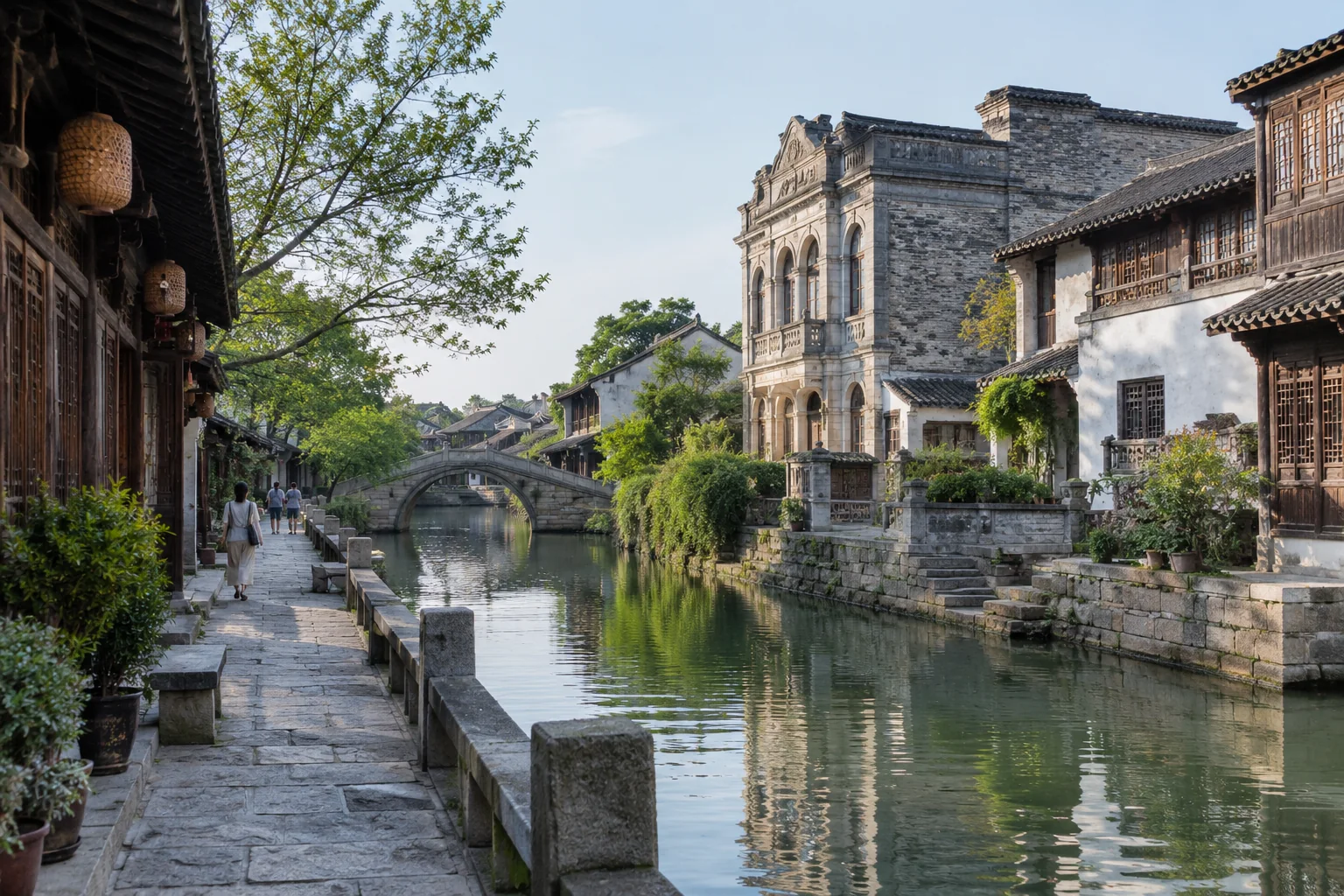
Nanxun (南浔) sits in Huzhou, Zhejiang, in the same canal country as the better-known Jiangnan water towns. The case for giving it a day is straightforward: you go for old riverside lanes, a handful of grand late-imperial merchant houses and a library, and a slow meal of river fish, bamboo shoots and local cakes. If your idea of a good day out is walking, looking and eating with room to breathe, Nanxun fits that brief. If you want a densely ticketed circuit, evening light shows and a busy shopping street, a bigger-name town will probably serve you better.
This guide is written for independent travellers with a day to spare around Hangzhou who are choosing between water towns, or who have already picked Nanxun and want a realistic shape for the visit. Three decisions do most of the work: day trip or overnight, ticketed sights or lanes first, and how much of the day to leave deliberately empty. Anything time-sensitive — how you get there, what is ticketed, when things open, what a room costs — is not settled by the reference material behind this article, and is flagged below rather than guessed at.
Why Nanxun Suits a Slower Day
The distinctive thing about Nanxun is not one headline sight but the mix: a canal-side street of old houses at Bai Jian Lou, plus a compact set of residences and a library that show how merchant wealth expressed itself in brick and stone. That combination produces a day that reads as a walk with stops rather than a shuttle between entrance gates.
The architecture is the reason to take your time. Zhang Shiming’s former residence (张石铭旧宅) is the place to see how nineteenth-century Chinese merchants connected with Western economies, building styles and art. The Liu family’s Tihao (刘氏梯号) is where Chinese halls sit alongside Western classical elements, and it rewards attention to detail rather than a photograph from the courtyard. Jiaye Hall Library (嘉业堂藏书楼) is the quiet counterweight to all that ornament — an old private library where the atmosphere is the point. Xiaolianzhuang (小莲庄), a garden with a lotus pond, gives the day a calm opening; the reference itinerary deliberately begins there, before the day has warmed up.
Bai Jian Lou (百间楼) is the piece most people remember. It is described as the building group that best expresses the town’s old, unpolished atmosphere, and it is the reason the town works as a slow day rather than a sprint.
Comparing Nanxun With a Bigger-Name Water Town
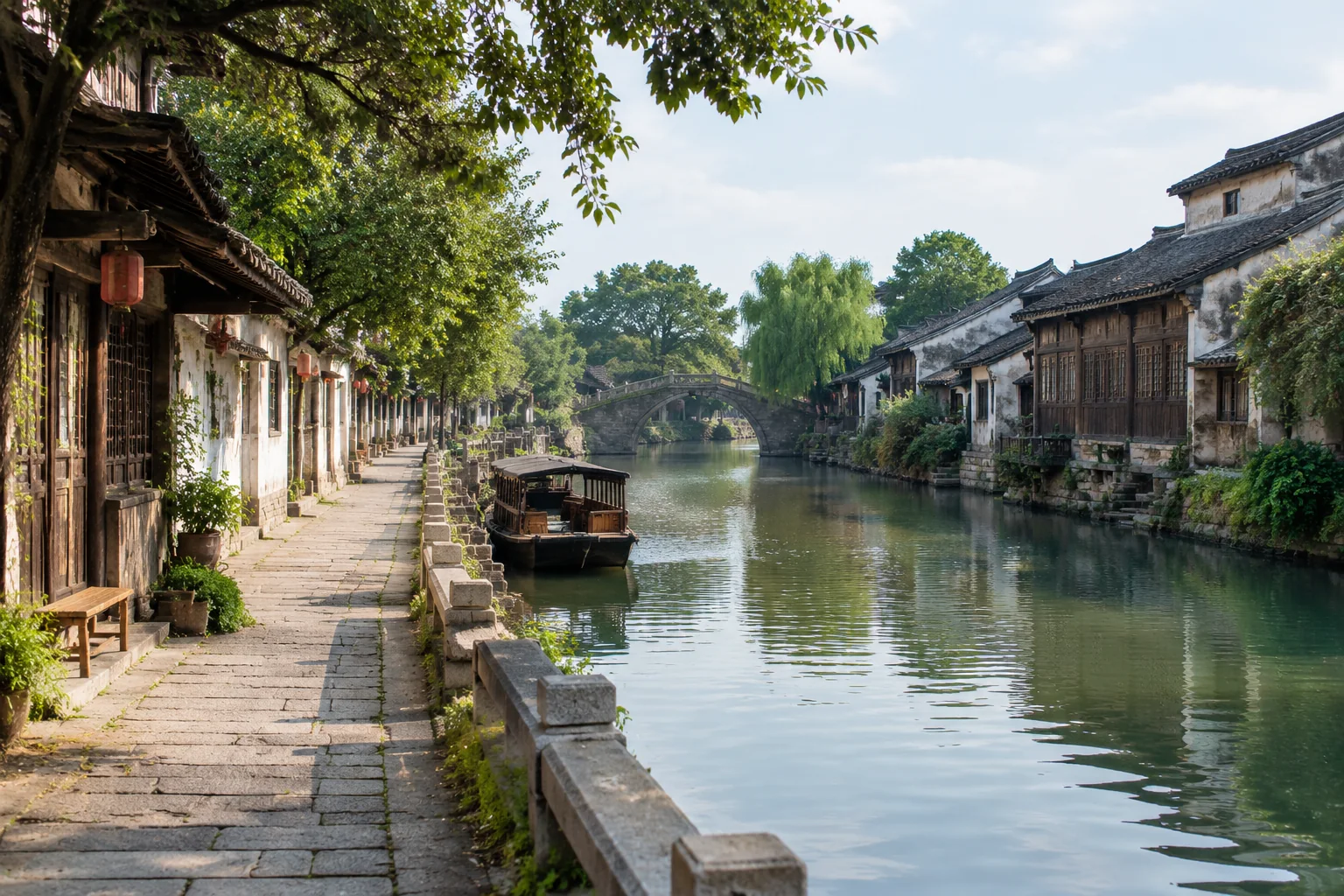
Water towns in this part of Zhejiang and Jiangsu look interchangeable in photographs and behave very differently in person. The comparison below is a planning heuristic, not a live assessment of crowds. Visitor volumes shift with season, public holidays and events, so any reputation for quiet should be treated as a trend to check, not a promise.
| What you are optimising for | Nanxun | A bigger-name water town (Wuzhen as the reference example) |
|---|---|---|
| Rhythm of the day | Lanes plus a short list of houses, a library and a garden, with long stretches of nothing much — which is the point | Two clearly defined scenic areas, each with its own entrance and internal circuit; more structured, more ground to cover |
| What you actually look at | Architectural detail, canal-side domestic streets, a private library and a garden | Old residential and workshop streets in the eastern area; a larger western area with more individual sights |
| Evening | Low-key; plan an early meal and either a night locally or the journey onward | The western area is the part people stay for after dark |
| Food | River fish, bamboo shoots and local cakes, often in small family-run places | A wider spread of restaurants and snack streets, geared to higher volume |
| Where you sleep | Family inns, including riverside houses in the Bai Jian Lou area | A larger stock of accommodation tied to the scenic areas |
| Trade-off | Fewer set pieces and less evening entertainment | More to see, more people seeing it, and a more ticketed experience |
Older guide material describes Nanxun as calmer than Zhouzhuang and Wuzhen and less disturbed by commercial tourism. That is a recorded impression from a reference document, not a measurement. Use it as a reason to shortlist Nanxun, then check recent traveller reports and avoid peak holiday weekends if quiet is the main thing you are buying.
Bai Jian Lou and the Old Riverside Lanes
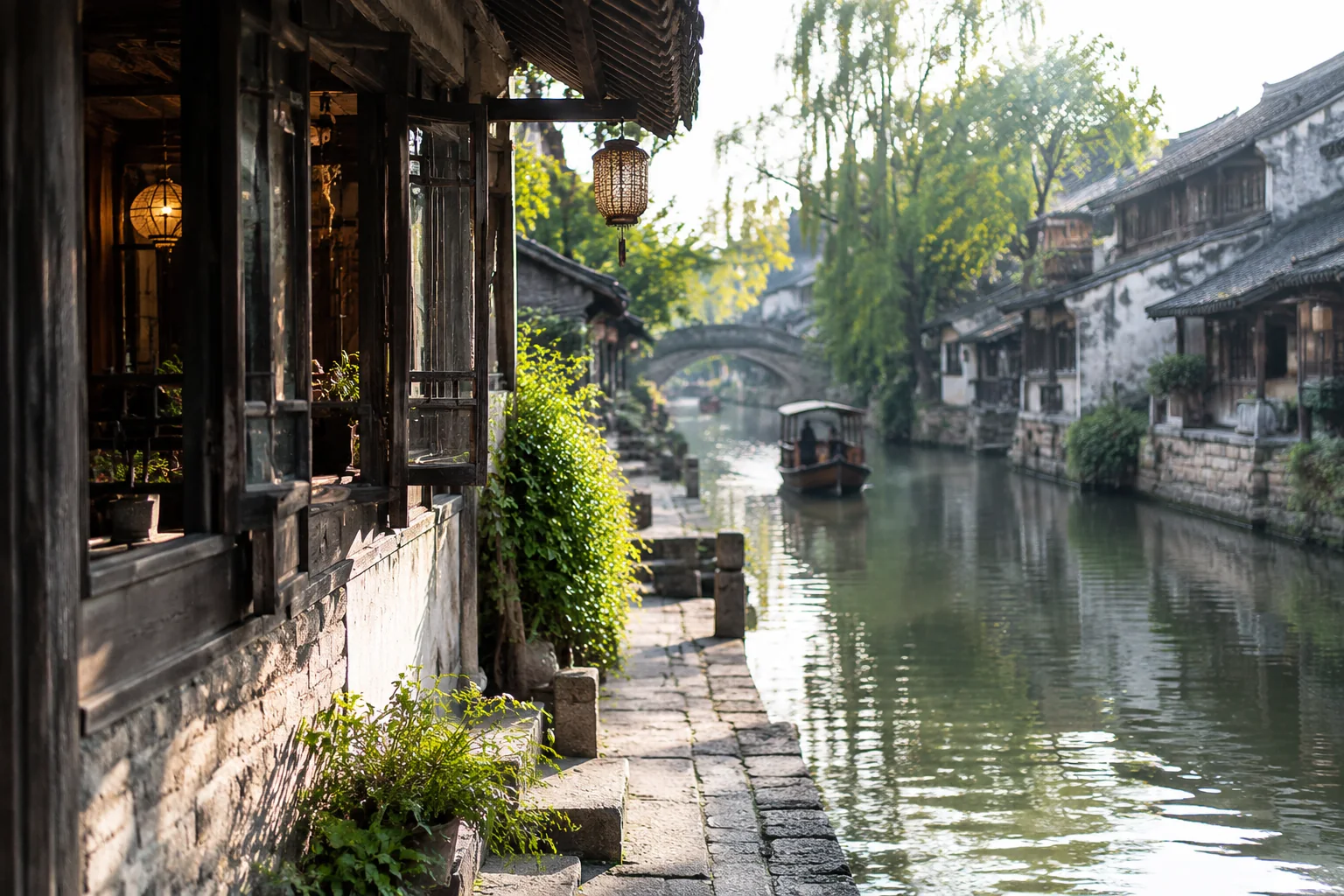
Bai Jian Lou is described as a Ming-dynasty building group and the strongest surviving expression of the town’s old character. Practically, this is the area to leave unstructured: walk its length, double back along the water, sit somewhere without a plan.
Morning and late afternoon are the natural slots. Morning gives you softer light and fewer people about; late afternoon is when day visitors thin out. Neither is guaranteed, and both depend on the day of the week and the season.
Many of the riverside houses in and around the sights operate as family inns — the "枕河之家" (houses pillowed on the river) that the reference material singles out as the most characteristic place to stay. Even if you are not sleeping there, this lane is where the town’s domestic scale is most legible. Be careful what a photograph proves: a canal-side facade in a listing does not establish that a particular room looks onto the water, and an old picture of the street is not evidence of today’s facilities.
A Flexible Walking Route for One Day
The reference itinerary runs Xiaolianzhuang → Jiaye Hall Library → Zhang Shiming’s former residence → Liu family Tihao → Zhang Jingjiang’s former residence (张静江故居) → Bai Jian Lou. It is a sensible spine because it opens with a garden, moves through interiors while you are still fresh, and finishes in the lanes where you want to linger. Treat the order as a suggestion and the count as adjustable.
Morning. Start at Xiaolianzhuang while it is still cool and quiet, then walk to the library. Two stops is enough before a break; the library in particular rewards a slow twenty minutes rather than a lap.
Midday. Eat. The reference material places a lunch of local river fish at a household-style restaurant between morning and afternoon sightseeing, which is also the right moment to get off your feet. Build in a real pause here rather than treating lunch as a gap between sights.
Afternoon. The residences. Two of them plus the library is a reasonable load; three is a lot of thresholds, courtyards and carved timber. If you are tiring, drop one and give the time to Bai Jian Lou instead — most people remember the lanes, not the third courtyard.
Late afternoon. Bai Jian Lou, then either an early meal or the journey back.
Alternatives worth considering: halve the route (garden, library, Bai Jian Lou) if you arrive late or want a gentler pace; run it in reverse if you want the lanes first thing; or skip the interiors altogether and treat the day as a walk and a meal, which is a perfectly legitimate version of this trip. The sequence above assumes a full day and an early start. If travel eats the morning, cut sights rather than compressing them, and leave generous buffers around midday and around any fixed return connection.
Eating: River Fish, Bamboo Shoots and Sweet Cakes
Nanxun’s food identity in the reference material is three things. First, river fish: the town is described as producing good freshwater fish, cooked by local people with care and served in dishes that look as good as they taste. Second, bamboo shoots: the area produces them, locals eat them readily and prepare them in many ways. Third, cakes: wild water chestnut (野荸荠) cakes are the local sweet that gets singled out.
Practically, keep the main meal in the middle of the day. Ask what is fresh, and ask how a fish is prepared before ordering — freshwater fish is bony, and a whole fish is usually a shared dish rather than a portion for one. For a single meal, aim for one fish dish, one bamboo-shoot dish and a shared plate of local cakes. If bamboo shoots are between seasons, expect the menu to change; asking what is in season beats ordering from a fixed list.
Two cautions. Restaurant names, prices and opening hours are not something to lift from older guide material; look at what is open and busy when you arrive, and check current reviews. And do not assume English menus or pictures — a translation app and a couple of dish names in Chinese will carry you a long way.
Sleeping by the Water: Family Inns and What They Offer
Accommodation in the old town is described as plentiful, with family inns recommended as the way to get a feel for life there. Two categories matter: the old houses at Bai Jian Lou, and the riverside "枕河之家" inns scattered around the sights. The riverside ones are positioned as the choice for travellers who want water-town atmosphere at a more economical level.
That is a category of accommodation, not an endorsement of any property. Before booking, ask whether the room actually faces the water, how much noise to expect from the lane, what heating and cooling are provided, what the cancellation terms are, what documentation is needed at check-in, and whether luggage can be held before check-in or after checkout. Rates move constantly, so compare at the time you book rather than relying on any figure in a guide. If you only have one day, staying the night is optional — but it is the difference between seeing the lanes at a busy hour and seeing them at a quiet one.
Getting There, Timing and Other Practicalities
Nanxun is in Huzhou, Zhejiang, in the water-town belt north of Hangzhou. The reference material does not set out a current route from Hangzhou, so treat transport as a research task: check current rail and coach options, station-to-town connections, and — most importantly — the last practical connection back. If you are doing this as a day trip, build the return leg first and fit the sightseeing around it.
An early start is the single biggest lever on how the day feels. Arriving at midday turns a relaxed walk into an argument with a map.
Wet weather. Canals, stone lanes and bridges are exposed, but the library and the residences give you indoor time. A wet day can be reordered around interiors rather than cancelled; bring footwear with grip.
Limited mobility and families. Old lanes come with bridges, steps and raised thresholds. Ask individual sites about step-free entrances and accessible routes before you go rather than assuming, and plan shorter loops with rests built in. Children generally do better with the garden and the lanes than with a run of formal interiors.
Tickets. The reference material is organised around a set of named ticketed sights, which in this part of China are often sold individually or as a combined ticket. Whether the lanes themselves are free to walk, and how ticketing and opening days currently work, must be confirmed with official sources before you travel.
If you would like help fitting Nanxun into a wider Hangzhou-based itinerary — matching the day to your dates, pace and travel style — use the inquiry form at the end of this guide.
Common Planning Mistakes and a Pre-Trip Checklist
The most common mistake is treating six named sites as a target list. They are a spine, not a quota. Others: arriving at midday and trying to do everything; assuming the lanes are free to walk without checking; expecting evening entertainment; leaving the return journey to chance; and booking a "canal view" room on the strength of a photograph.
Before you go, confirm:
- Current transport options in both directions, plus the last realistic connection back.
- Ticketing arrangements and current opening days and hours for each sight you care about.
- Whether your chosen inn genuinely faces the water, and what its cancellation terms are.
- The season, and therefore what is likely to be on the menu.
- Weather and footwear; stone lanes and bridges get slick.
- A rough meal budget with a margin, checked against current prices rather than a guidebook figure.
FAQ
Is Nanxun worth a full day, or is half a day enough?
Half a day covers Xiaolianzhuang, the library and a walk through Bai Jian Lou at an unhurried pace. A full day adds two of the merchant residences and a proper sit-down lunch of river fish, which is the version most people enjoy more. If you are arriving from another city, assume the travel will eat part of the day and plan the short version rather than squeezing the long one.
Can I visit Nanxun as a day trip from Hangzhou?
It is planned as a day trip in the reference material, and Nanxun lies in the water-town belt north of Hangzhou. The specific route, journey length and service frequency are not established here, so check current rail and coach options and the last return connection before committing. Build the day around the return leg, not the other way round.
What should I eat in Nanxun if I only have one meal?
Order river fish as the centrepiece, add a bamboo-shoot dish, and share a plate of local cakes such as the wild water chestnut cakes. Ask what is fresh and in season rather than working from a list. Freshwater fish is bony, so expect a shared whole fish rather than individual portions, and check the price of anything sold by weight before ordering.
Is Nanxun actually quieter than Wuzhen or Zhouzhuang?
Older reference material describes it that way, but that is a recorded impression rather than a current measurement. Crowds vary by season, day of week and holiday calendar. If quiet is the priority, check recent traveller reports, avoid peak holiday weekends, and aim for an early morning start.
Do I need a ticket to walk around Nanxun’s old town?
The reference material is built around named sights — a garden, a library and several residences — rather than around a street ticket, but it does not settle how entry currently works. Confirm with official sources whether the lanes are open to walk freely and whether individual sights or a combined ticket are in use before you plan your day around them.
Is Nanxun a good choice in the rain, or for families?
Rain is manageable because the library and the residences provide indoor time; reorder the day around interiors and bring shoes with grip for the stone lanes. For families, the garden and the canal-side lanes tend to hold attention better than a run of formal courtyards, and shorter loops with rests work better than the full six-stop sequence.
Sources and verification
This article was built from internal reference documents, not from a site visit, an interview or a fact-checked inspection. The relevant pages are:
- 《乌镇攻略》 (Wuzhen guide), page 15 — the main Nanxun passage: river fish, bamboo shoots, wild water chestnut cakes, family inns, Bai Jian Lou and the "枕河之家" riverside houses, plus the comparison with Zhouzhuang and Wuzhen.
- 《杭州攻略》 (Hangzhou guide), page 15 — the Nanxun accommodation and itinerary passage (Xiaolianzhuang, Jiaye Hall Library, Zhang Shiming’s former residence, Liu family Tihao, Zhang Jingjiang’s former residence, Bai Jian Lou).
- 《西溪湿地攻略》 (Xixi Wetland guide), page 10 — a duplicated version of the same Nanxun passage.
- 《浙江攻略》 (Zhejiang guide), page 17 — Nanxun named among the six Jiangnan water towns.
- 《乌镇攻略》 (Wuzhen guide), page 5 — the eastern and western scenic-area structure used in the comparison table.
These documents are old enough that their practical details should be read as background only. What this guide takes from them is background: the architecture notes, the food culture, the shape of a one-day route, and the character of the inns and lanes. Everything operational — transport and timetables, ticketing and entry policy, opening days and hours, prices, restaurant choice, room availability and booking terms, accessibility and family facilities — needs confirmation from official or current sources before you travel. No public links, prices or bookings are asserted here, and nothing in this article should be read as a claim that those details have been checked.
Find places & plan your visit
These links open external search results. Confirm the exact place, entrance and current arrangements.
Need help planning your trip?
Tell us about your travel plans and send an inquiry.