In this guide 17 sections ▾
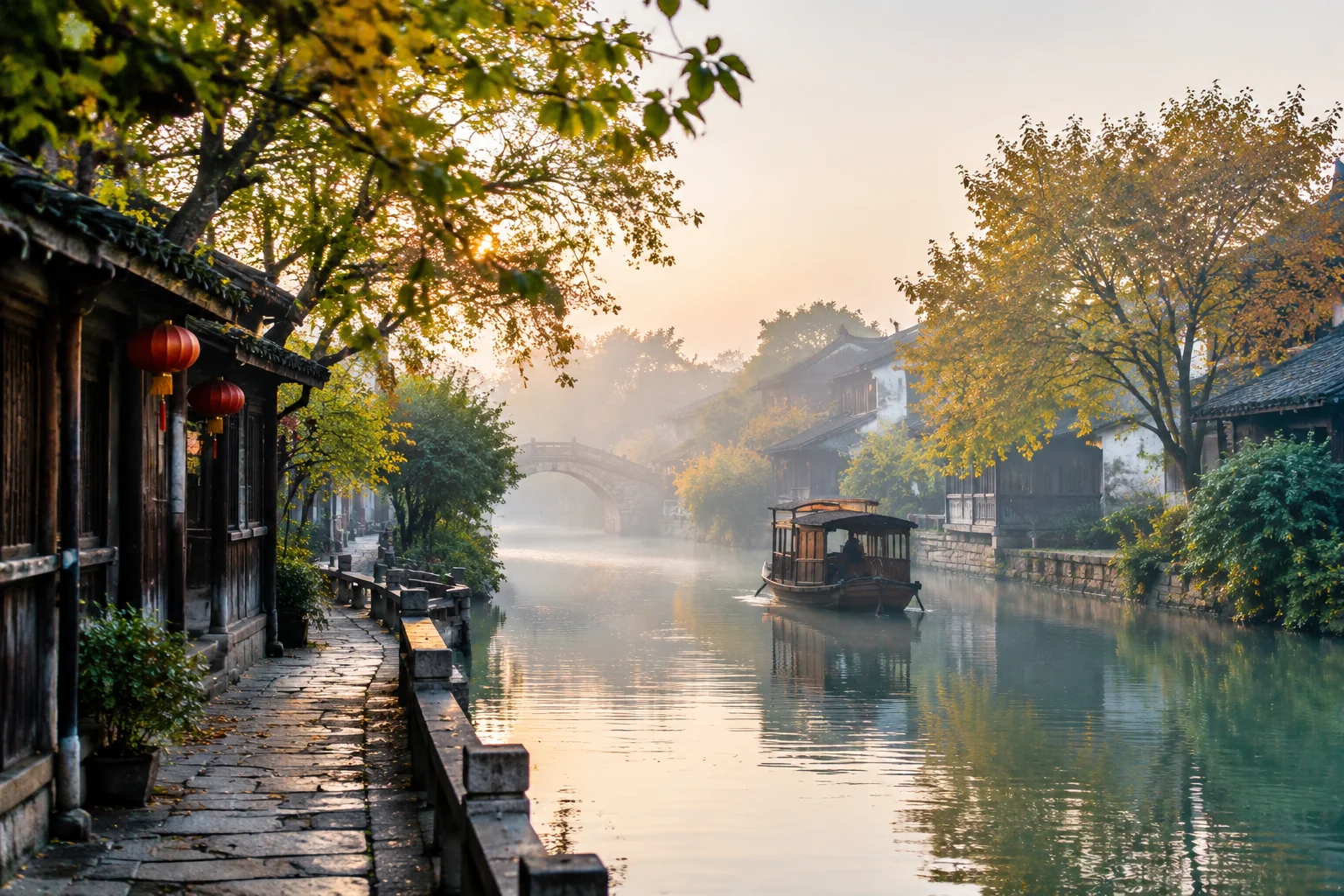
Direct answer: If you want the atmosphere that traditionally draws travelers to Wuzhen, shortlist spring or autumn, then protect early morning and late afternoon or evening within your chosen dates. The reference material describes these as the most evocative times, but they are not guarantees: mist, sunset light, event dates, opening hours and access rules all need checking before you commit.
This guide is for travelers choosing dates and daily timing for a first or short Wuzhen trip, especially those coming from Hangzhou or elsewhere in the region. Wuzhen lies in Tongxiang, Jiaxing, and is usually treated as a regional add-on rather than a quick stop inside Hangzhou itself. The main decision is not only which month to visit, but how to pace the day so that you are in the right part of the water town at the right light.
The important limitation is that the available Chinese reference material is background reading, not a live visitor service. It describes seasonal character and folk customs, but it cannot confirm today’s opening hours, event dates, transport links, ticket rules or performances. Treat the guidance below as a way to choose a sensible window, then verify the practical details with current official channels.
Start Here: The Short Answer for Wuzhen
For a first visit, spring and autumn are the two seasons to compare first. The reference guide describes spring and autumn as the most beautiful seasons in Wuzhen and singles out early morning and evening as the best parts of the day. In the morning, it describes thin mist over the waterways and a dreamlike mood; in the evening, it describes low sunlight, day visitors thinning out and a more lived-in town emerging.
Those images are useful for planning, but they should be read as atmospheric possibilities. River mist does not appear on demand, and a clear sunset is not guaranteed. Wuzhen’s climate background is humid and wet, with spring rain and plum rain, and with typhoon risk later in summer and early autumn. A good plan therefore includes a weather backup rather than a minute-by-minute schedule built around one perfect photograph.
A simple priority order looks like this:
- Best seasonal bet: spring or autumn, with dates chosen around the weather forecast and confirmed event information.
- Best daily window: early morning for soft light and a quieter start; late afternoon into evening for sunset and a different mood.
- Best folk-culture window: the Qingming period, when the reference links the Incense Market folk fair to spring, but only if the current year’s event is confirmed.
- Best approach for a short trip: choose one morning or one evening as your anchor rather than trying to force both into a rushed day trip.
Spring and Autumn: Two Different Kinds of Wuzhen Weather
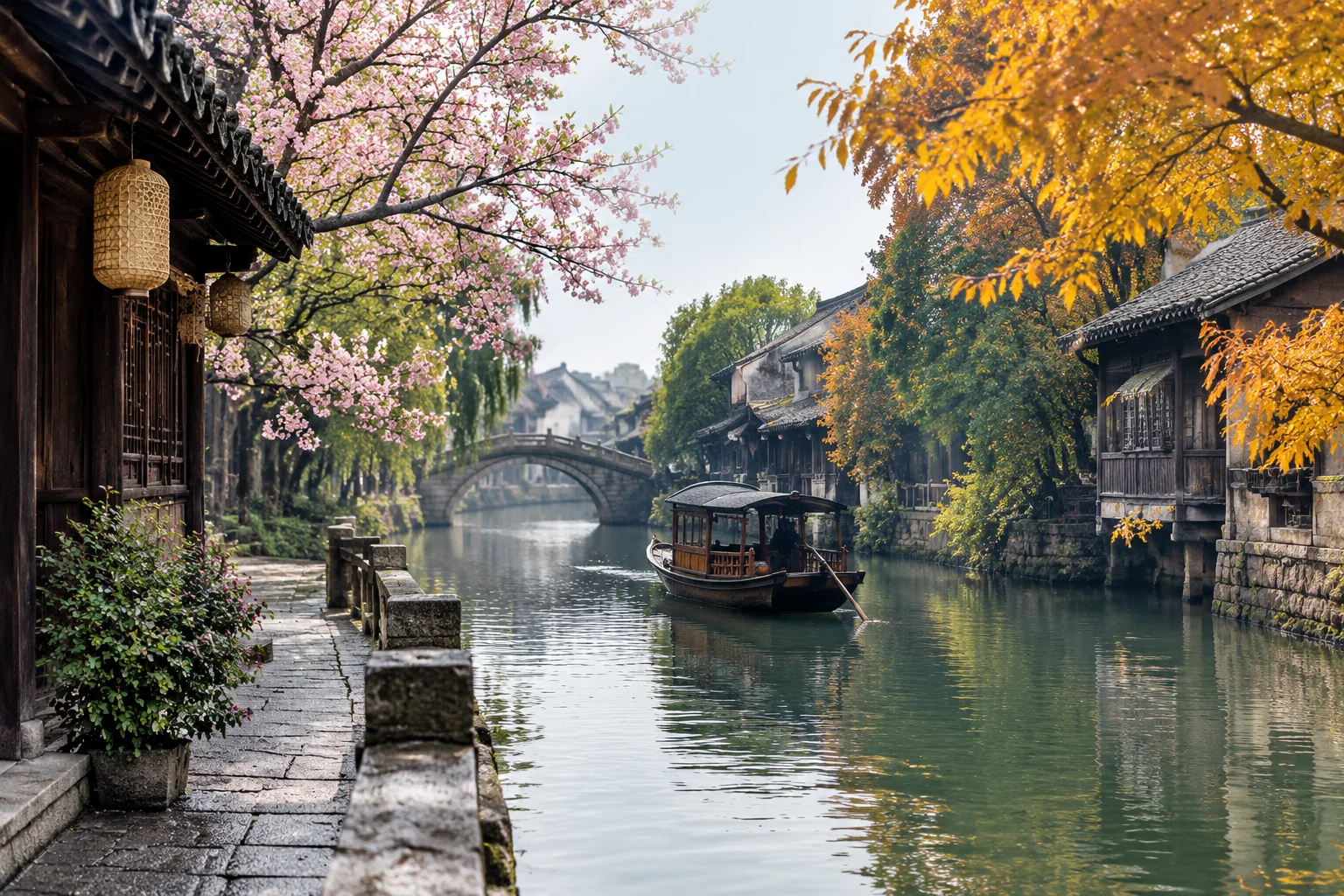
Spring is attractive because it fits the reference’s preferred season and because the Qingming-period Incense Market is described as a spring folk event. The same climate background warns that spring rain and plum rain are part of the region’s pattern. That can make the water town feel especially atmospheric, but it can also affect walking, photography, transport and the amount of time you spend outdoors. Build in flexibility: keep one indoor or slower block as a fallback, carry rain protection and avoid treating a single clear forecast as a promise.
Autumn is the other season the reference singles out. It may suit travelers who want a comfortable walking rhythm and a seasonal atmosphere without the wettest spring signals. However, the source also notes that late summer and early autumn can be affected by typhoons. For an autumn trip, watch the forecast in the days before departure and keep transport plans changeable.
The practical point is that spring and autumn are broad windows, not fixed weeks. Spring weather can vary sharply, and autumn can still feel summer-like early in the season. Use the season to narrow your shortlist, then use a current forecast to choose the exact dates.
Morning Mist and Evening Light: How to Build the Day
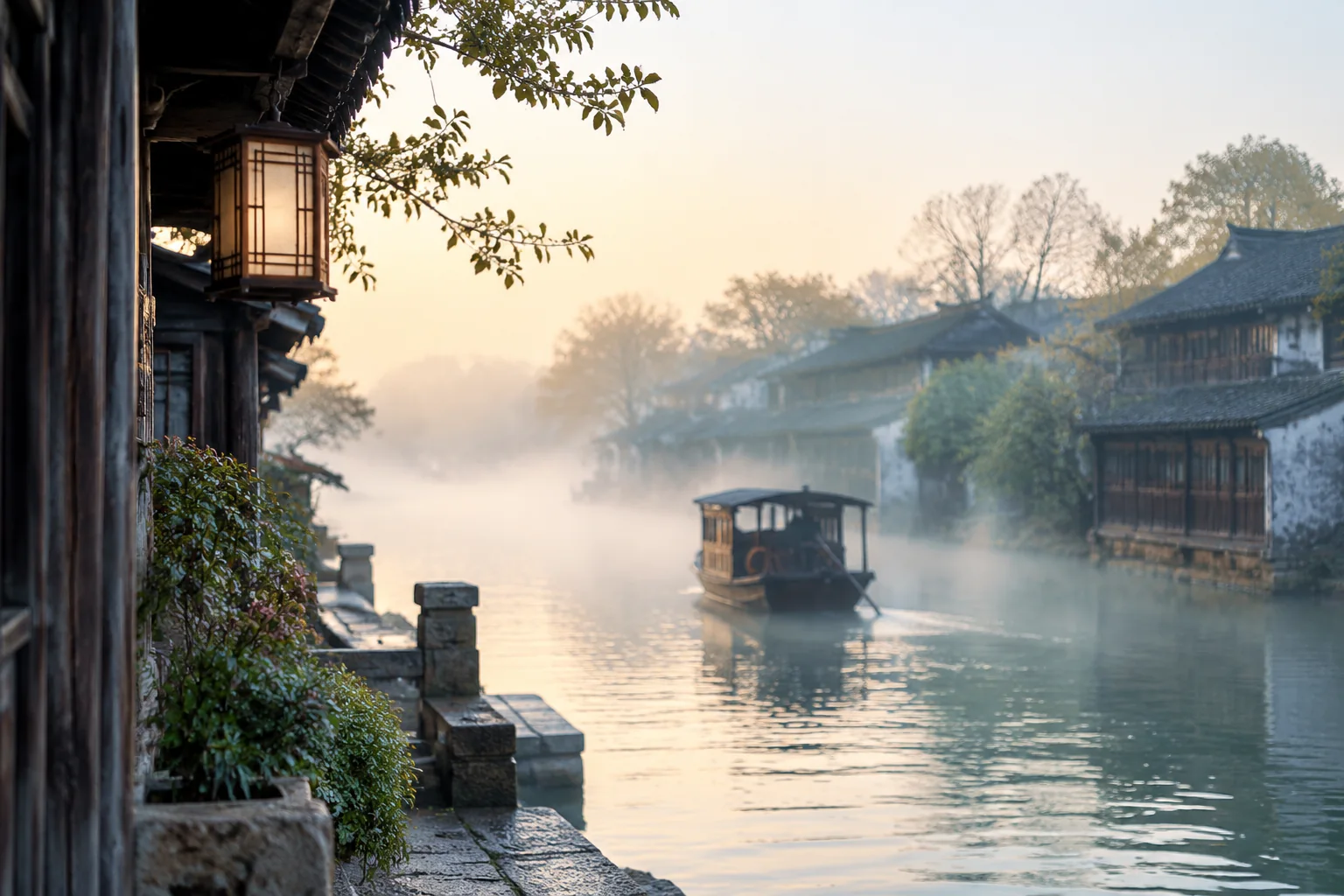
Morning is the time to prioritize if you want the version of Wuzhen described in the reference: mist on the water, soft edges, fewer people and a slower start. That description is appealing, but it depends on weather, water conditions and access. If you are staying overnight, you are better placed to start early; if you are coming from Hangzhou or Shanghai on the same day, leave a generous buffer for delays and do not assume you will arrive before the best light.
Evening is the other protected window. The reference describes the appeal of sunset and of day visitors dispersing, revealing a more lived-in town. Whether you can experience that depends on current opening arrangements, ticket rules, lighting, dining hours and where you are staying. Do not assume that streets empty at a particular time or that every area remains accessible after dark.
A balanced plan is to use one morning and one evening as anchors, with the middle of the day left flexible. If you only have one night, choose the anchor that matters more to you: an early start for mist and quiet, or a late stay for sunset and evening atmosphere. Trying to do both at full intensity on a short trip often produces a rushed visit and little tolerance for weather changes.
Qingming and the Incense Market: A Folk-Culture Window, Not a Fixed Date
The reference links Wuzhen’s Incense Market, or "Xiangshi," to the Qingming period and describes it as a spring temple-fair custom. It mentions temporary stalls, opera troupes, street performances and silkworm-related rituals. This is useful context for travelers who want more than scenery: it shows that Wuzhen’s seasonal identity has historically included folk performance and local custom, not only canals and old lanes.
What the source does not provide is a reliable current calendar. It describes the custom in general terms and links it to the weeks around Qingming, but annual dates, programming, tickets and whether a full fair is being held must be confirmed for the year you plan to travel. Do not book a trip solely on the assumption that the Incense Market will be running on a specific weekend.
Even without the event, spring can still be a reasonable time to visit. The East Scenic Area is described as having older residential streets, workshops and cultural sites such as the Mao Dun Former Residence, while the West Scenic Area is described as larger and more commercial, with evening appeal. If a folk event is a priority, check the current calendar first; if it is not confirmed, plan the trip around the water town itself rather than around a hoped-for programme.
A Practical Comparison: Seasons and Daily Windows
The table below turns the reference’s seasonal and daily guidance into a planning comparison. It deliberately avoids exact prices and fixed schedules, because those need current verification.
| Season or window | Why consider it | Tradeoffs to plan for | What to check before booking |
|---|---|---|---|
| Spring | Described as one of Wuzhen’s best seasons; linked to the Qingming-period Incense Market folk window | Spring rain and plum rain can affect walking, photography and transport; event dates vary | Current weather pattern, confirmed event calendar, opening hours and ticket rules |
| Autumn | The other preferred season in the reference; useful for a comfortable walking rhythm | Early autumn can still be affected by typhoon risk; conditions vary through the season | Forecast before departure, transport contingency, current entry arrangements |
| Qingming period / Incense Market | A chance to see the folk-culture side of Wuzhen described in the source | Not a guaranteed annual fixture on a fixed date; programming and access may change | Official event announcement, dates, tickets, performances and crowd-management rules |
| Early morning | Best chance of mist, soft light and a quieter start, as described in the reference | Mist is weather-dependent; early access and transport may be limited | First-entry rules, boat operations if relevant, weather and travel time from your base |
| Late afternoon and evening | Sunset and the shift after day visitors leave are the reference’s other daily highlight | Light, access and evening activity depend on the season and current management | Closing times, night access, lighting, dining hours and where you are staying |
East or West? Matching the Area to the Hour
Wuzhen’s East and West Scenic Areas are not interchangeable. The reference describes the East Scenic Area as the older, more residential and workshop-oriented part, with cultural sites and traditional street life. It describes the West Scenic Area as larger, with more shops and a strong evening atmosphere. That makes a simple timing principle useful: consider the East for a morning visit and the West for late afternoon into evening.
That principle needs a current check. Opening hours, ticket combinations, shuttle arrangements and night access can change. The two areas should also not be treated as one continuous stroll. Leave a transfer buffer and confirm how you will move between them, rather than assuming a quick walk from one to the other.
For a short stay, it is often better to choose one area well than to squeeze both. If you want the traditional street texture and museum-like stops, give the East Scenic Area a morning. If you want a broader range of shops, food and evening atmosphere, give the West Scenic Area the later part of the day. The reference also mentions a Wuzhen Theatre Festival using venues such as Wuzhen Grand Theatre, but the supplied extract does not give reliable annual dates; treat any festival plan as something to verify separately.
Sample Timing Plans for Short Stays
Half day: Choose either an early East Scenic Area visit or a late West Scenic Area visit. Do not attempt both unless current transport and opening hours make it genuinely comfortable. A half-day visit works best when you accept that you are sampling one mood rather than covering the whole water town.
One day: Start early in the East Scenic Area if access allows, take a slower midday break, then move to the West Scenic Area for late afternoon and evening. Build in a transfer buffer and check the current ticket rules before assuming you can move freely between areas. If you are arriving from Hangzhou or Shanghai that morning, shorten the plan rather than forcing it.
Two days: Use the first morning for the East Scenic Area and the first evening for the West. Keep the second morning as a weather backup or for a slower return to whichever area suited you. This is closer to the two-day rhythm suggested by the reference and gives you a second chance if mist, rain or transport disruption spoils the first attempt.
Arrival day: Do not schedule a tight sunset plan if you are coming by train or coach. The reference describes access via Tongxiang Railway Station and a connecting local bus, but service patterns and timings must be checked for your date. A generous arrival buffer is more useful than a perfectly timed itinerary.
Common Planning Mistakes and a Pre-Trip Checklist
One common mistake is treating "spring" or "autumn" as a precise date range. They are broad seasonal signals. Another is assuming that morning mist and evening light can both be captured on a day trip; they usually require an overnight stay or at least a very flexible schedule. A third is planning around the Incense Market without confirming that it is running in the current year.
Other avoidable problems include relying on old transport times, assuming that all performances run daily, ignoring rain and typhoon forecasts, and squeezing East and West into a timetable that leaves no transfer buffer. Travelers with limited mobility should ask current operators about step-free access, boat boarding and route surfaces; the supplied references do not provide reliable accessibility details.
A practical checklist before booking:
- Confirm current opening hours, ticket rules and night access for both scenic areas.
- Check the current-year calendar for the Incense Market and any theatre festival events.
- Verify train, coach and local bus connections from your base, especially if arriving from Hangzhou or Shanghai.
- Check the weather forecast close to departure and prepare for rain or heat.
- Decide whether your priority is a morning atmosphere, an evening atmosphere or a broader two-area visit.
- If staying overnight, confirm the location and cancellation terms of your accommodation.
- Ask directly about accessibility needs rather than relying on general descriptions.
- Keep one flexible block in the itinerary for weather or transport changes.
If you would like help comparing dates, pacing and bases for a Wuzhen trip, you can use the inquiry form at the end of this page.
FAQ: Wuzhen Seasons and Timing
Is spring or autumn better for a first Wuzhen visit?
Both are described as preferred seasons in the reference. Choose spring if you want the folk-culture context of the Qingming period and accept a higher chance of rain; choose autumn if you want a comfortable walking rhythm and can monitor early-autumn typhoon risk. The better choice depends on your tolerance for wet weather, your interest in events and the forecast for your dates.
What time of day is best for photographs in Wuzhen?
Early morning and late afternoon into evening are the most useful windows in the reference. Morning may offer mist and quieter waterways; evening may offer sunset and a change of atmosphere after day visitors leave. Neither is guaranteed. Check the weather, opening times and access rules, and do not plan a one-day trip around both windows unless transport allows it.
Can I see the Incense Market during Qingming?
The reference describes the Incense Market as a spring temple-fair custom linked to the Qingming period, but it does not establish a fixed current calendar. Check the current year’s official event announcements before booking around it. If the event is not confirmed, plan a normal spring visit and treat any folk performances as a bonus rather than the reason for the trip.
Is a day trip enough to see morning and evening in Wuzhen?
Usually it is better to choose one anchor. A day trip that tries to cover an early morning, a transfer between areas and an evening visit can become rushed, especially if you are arriving from Hangzhou or Shanghai. An overnight stay gives you a better chance of one early start and one evening, with a weather backup.
What should I do if it rains or I visit outside spring and autumn?
The water town can still be visited in rain, but you should adjust expectations and protect your schedule with flexible indoor or slower stops. The reference does not provide enough reliable detail to promise a full wet-weather programme, and it does not establish winter as a preferred season. Check opening arrangements, transport and event schedules for your date rather than assuming the spring or autumn experience will carry over.
Sources and Verification
This article draws on two internal reference documents: 《乌镇攻略》 (Wuzhen Guide), especially pages 2, 4, 9, 13 and 17, and 《浙江攻略》 (Zhejiang Guide), pages 16–18. These are internal reference documents, not official tourism pages and not live booking sources.
The Wuzhen Guide supplies the background on spring and autumn as preferred seasons, early morning mist and evening atmosphere, the Qingming-period Incense Market, the East and West Scenic Area characters, the Mao Dun Former Residence, climate notes and older transport context. The Zhejiang Guide supplies the broader Wuzhen overview and the reference to access via Tongxiang Railway Station and a connecting local bus, as well as the mention of the Wuzhen Theatre Festival and Wuzhen Grand Theatre.
Source-backed background includes the general seasonal preferences, the atmospheric description of morning and evening, and the folk-culture context of the Incense Market. Current details require confirmation and are not asserted here: opening hours, ticket prices, entry policies, night access, performance times, event dates, train and bus schedules, boat operations, weather forecasts, crowd levels and accessibility arrangements. The references’ older schedules and prices have deliberately not been reproduced as current facts.
For a visit, verify practical details with current official channels before booking. Treat the seasonal and daily advice as a way to choose a window, not as a guarantee of mist, sunset, empty streets or a specific event programme.
Find places & plan your visit
These links open external search results. Confirm the exact place, entrance and current arrangements.
Need help planning your trip?
Tell us about your travel plans and send an inquiry.