In this guide 19 sections ▾
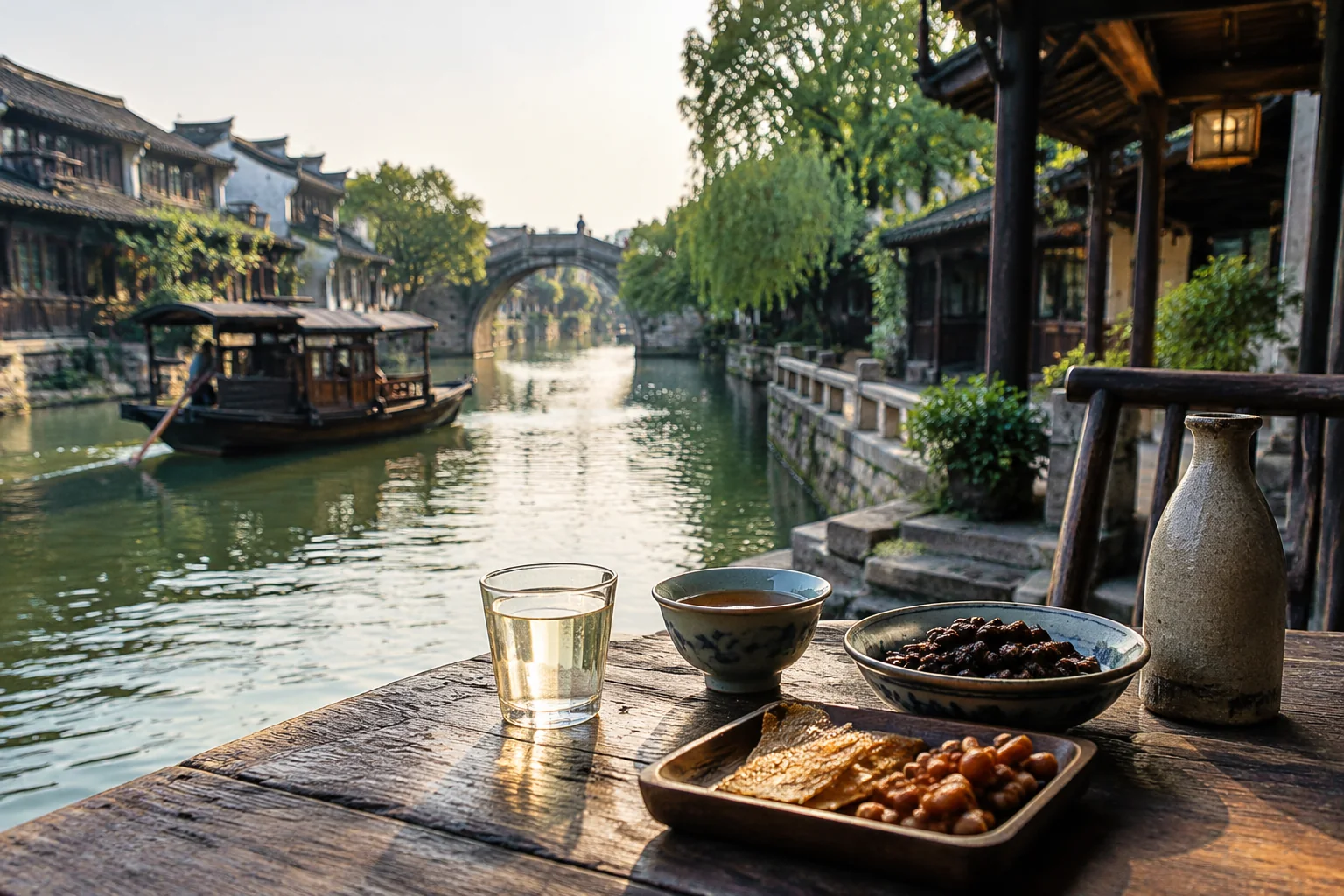
Wuzhen’s drink story is easiest to understand as a choice between two paces. One is a small glass of 三白酒 (Sanbaijiu, “Three White Wine”), the local rice liquor that the old guidebook material treats as a point of civic pride. The other is a slower tea table, often described through local tea habits and snacks such as 熏豆 (smoked beans) and 锅糍 (guo ci, a rice-crust food). The first is reasonably documented in the supplied references. The second is not documented in enough detail to present as a fixed recipe, a guaranteed teahouse order or a confirmed New Year ritual.
That imbalance is the most useful planning fact in this guide. Come to Wuzhen ready to ask questions rather than to tick off a famous drink. Choose an alcoholic tasting if you drink and want to understand a local fermentation tradition; choose a tea break if you want a nonalcoholic pause, are travelling with children, or prefer not to build a day around alcohol. In both cases, confirm current availability, ingredients, strength, allergens and transport. This guide is for independent travellers who want a grounded introduction, not a bar crawl or a medical recommendation. It cannot confirm today’s opening hours, tasting fees, alcohol content, menus, age policies, shuttle times or whether smoked-bean tea is currently served anywhere in Wuzhen.
Why Wuzhen’s Drink Traditions Need a Practical Approach
Wuzhen sits in the Hangzhou–Jiaxing water-town belt, in Tongxiang, and its identity is tied to rice, fish, canals and workshops. The supplied reference presents drinking as part of that texture: a glass of Three White Wine beside the water, a local tea, snacks from the lanes, and an evening atmosphere built around lit waterways. It is a pleasant picture, but it is also old guidebook material. It should be read as cultural background, not as a live listing.
The practical decision is not “which drink is most authentic?” It is “which experience fits this trip?” A tasting takes concentration, a little time and a plan for getting onward afterwards. A tea break takes less scheduling and works better for mixed groups. Trying to do both plus a full East–West circuit in one day can turn a pleasant pause into a logistics exercise.
A second decision is where to place the stop. The East Scenic Area is associated with older lanes, traditional workshops and cultural houses; the West Scenic Area is associated with waterways, shops and evening light. The reference’s suggested rhythm often puts the East in the morning and the West later in the day, but it also warns that the two areas are distinct. Treat any cross-area move as a transfer with a buffer, not as a short stroll between neighbouring sights.
Three White Wine: What the Name Actually Means
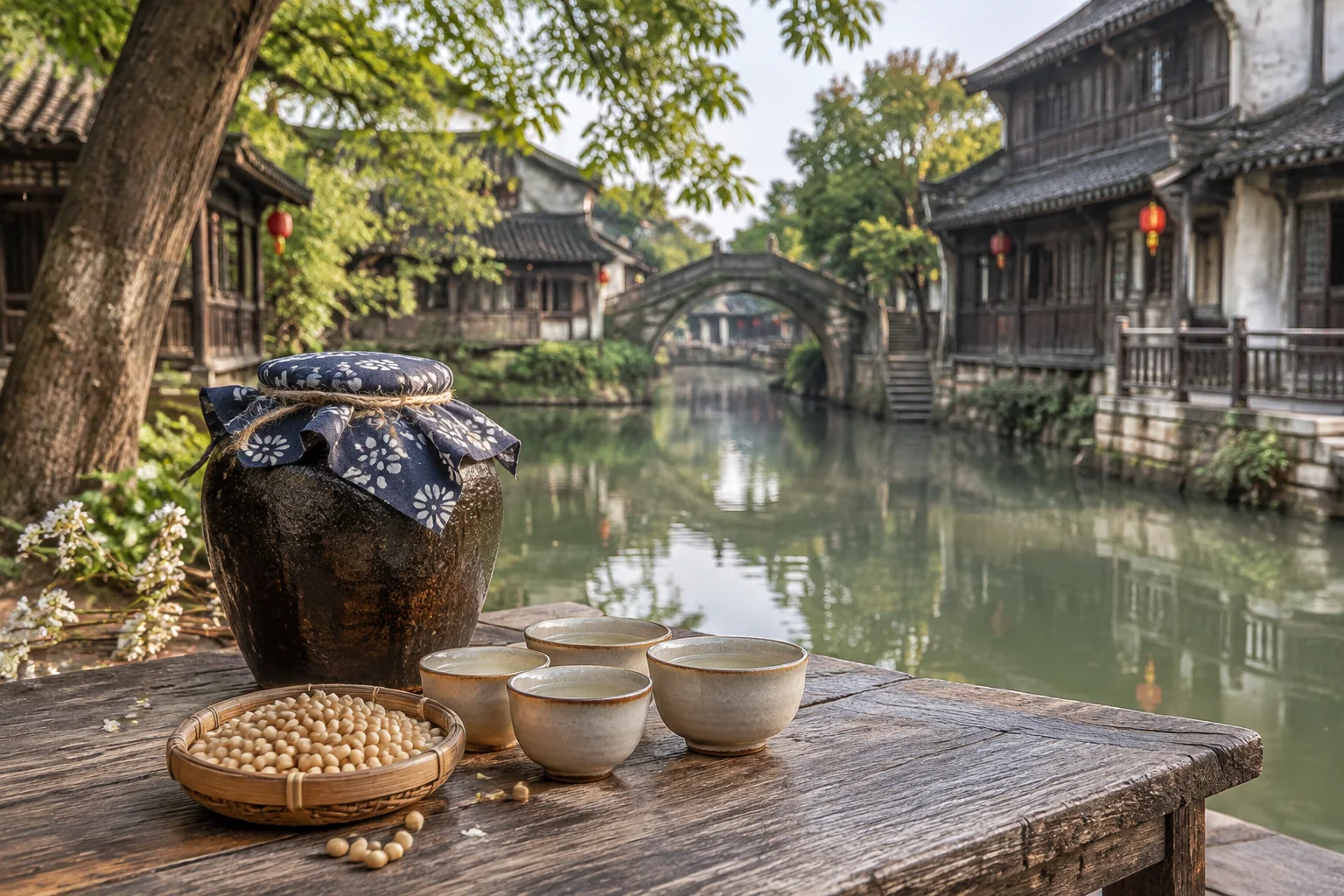
The name does not mean three cups or three varieties. The old town gazetteer quoted in the reference defines it as “white rice, white flour and white water” (白米、白面、白水). That is a recipe clue, not a full ingredient label. The “white flour” element is particularly worth asking about: it may refer to a starter or a grain preparation, and a modern producer may describe the process differently. Anyone with a wheat or gluten concern should ask directly rather than infer from the name.
The same reference describes a historic brewing industry in Wuzhen, with more than twenty workshops in the Ming period, and names the Gaogongsheng Distillery (高公生糟坊) as a surviving example of that tradition. It also recounts a tribute story connected with the Ming founding era. That story is interesting local lore and historical framing, but it is not a current fact-check of the recipe or the site’s present use.
The reference’s tasting language is evocative: fragrant, mellow, soft on entry, sweet, with a clean finish. Those are useful words for starting a conversation, not guarantees. A visitor may encounter Three White Wine as a small sample, a bottled product, a cooking ingredient or a display in a workshop. Those are not necessarily the same thing. Ask what you are being offered before you assume you are tasting the historic article.
One old promotional line calls the drink suitable for “young and old”. That should not be repeated as safety advice. It is alcohol. Do not assume it is low-strength because it is described as sweet or smooth, and do not treat it as suitable for children. Ask for the declared strength, the serving size and the age policy of the venue.
What to Ask Before You Taste
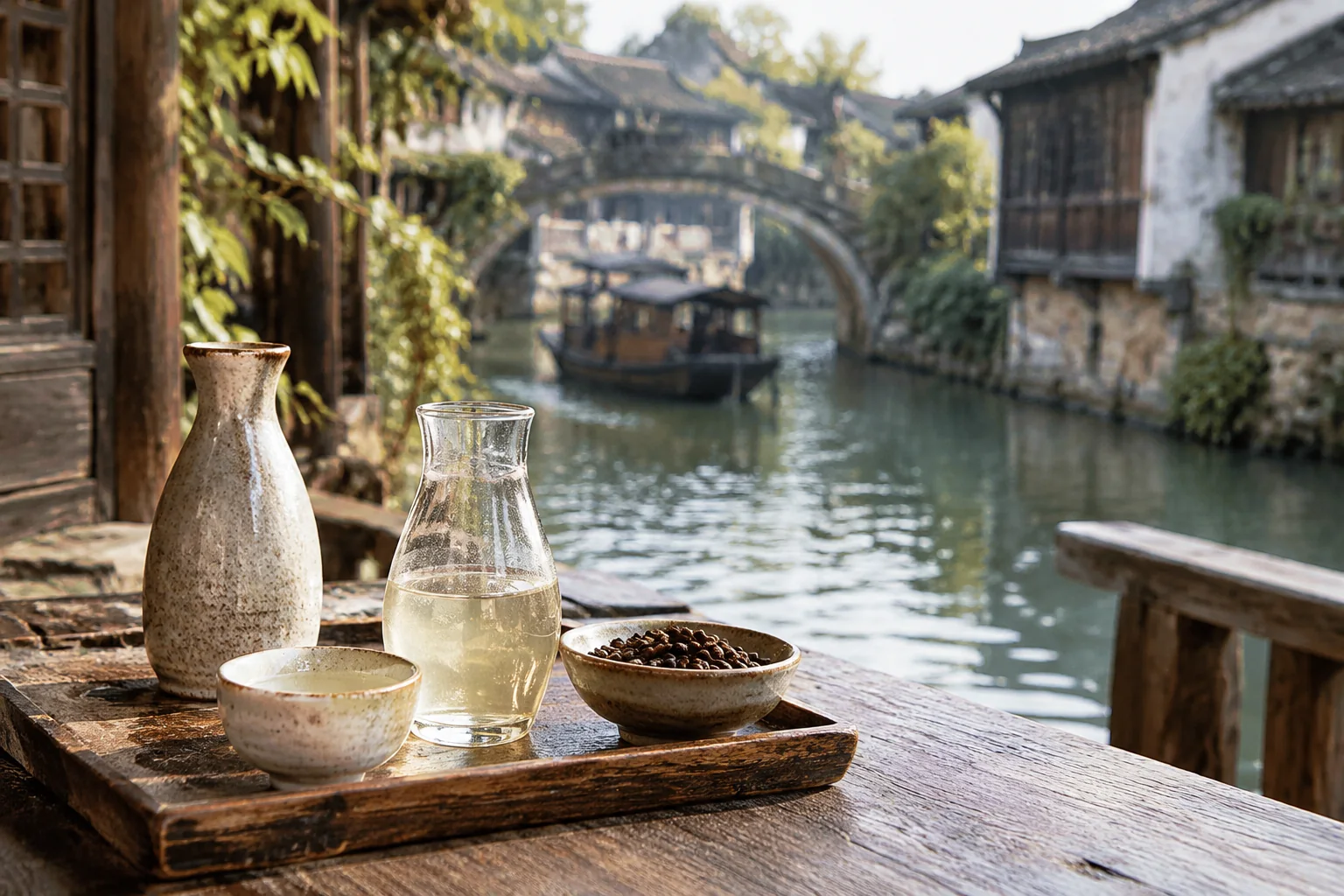
A good tasting starts with a few plain questions. They are not suspicious; they are the same questions a producer should expect from a visitor who wants to understand what is in the glass.
- Is this a tasting, a glass or a bottle? Ask how large the serving is and whether it is meant to be shared.
- What is the alcohol strength? Ask for the label or a declared figure. Do not estimate from taste.
- What are the ingredients? Confirm the rice, the flour or starter, and any additives. Ask specifically about wheat or gluten if that matters to you.
- Is it sweet, dry, aged or fresh? Ask how it is served and whether water is provided.
- Is there a nonalcoholic option? Tea, water or a local floral infusion may be available; do not assume.
- Are minors allowed in the tasting room? Check before entering with children.
- Is food available, and what allergens does it contain? Soy, wheat, fish and shellfish are plausible in local snacks; ask rather than guess.
- How will you leave afterwards? Decide on a driver, a walk or public transport before tasting, not after.
If the answers are vague, choose tea. A tasting is not a booking or a confirmed reservation, and a sample is not a promise that the same product is for sale. Keep the encounter small and conversational.
Smoked-Bean Tea: What the References Do and Do Not Confirm
This is the part of the topic where the supplied material is thin. The references mention 阿婆茶 (Apo cha, literally “grandma tea”) as a local tea enjoyed beside the water, and they mention snacks, rice cakes and seasonal foods. They do not describe smoked-bean tea, guo-ci, a preparation method, a specific teahouse, or a confirmed New Year association. The terms themselves point to a tea table with smoked beans and a rice-crust food, but that is not enough to publish a recipe or present a ritual as fact.
That gap should be handled openly. If smoked-bean tea is part of a family’s New Year hospitality, that may be a household or local practice rather than a standard menu item. A vendor’s explanation is evidence of what that vendor does, not proof of a town-wide custom. Ask whether the beans and guo-ci are eaten alongside the tea, added to the cup, or both; whether the tea is plain or blended; whether it is seasonal; and whether it is available that day.
Useful questions in Chinese include: “这里有熏豆茶吗?” (Is smoked-bean tea available here?), “锅糍是配茶吃的吗?” (Is the guo-ci eaten with the tea?) and “是新年才做吗?” (Is it made only for New Year?). The answers may vary. Do not treat a negative answer as a failure; Wuzhen’s tea culture is broader than one specialty.
A nonalcoholic break can be simple: choose a seated table, order a pot of tea, ask about refills, and add a snack or two. The reference also notes that 杭白菊 (Hangzhou white chrysanthemum) is a Tongxiang product despite the Hangzhou name. If you see it served as an infusion, ask whether it is plain or blended. It is a useful alternative to assume nothing about, and it pairs well with a slower afternoon. Tea is not medicine; order it for the pause, the warmth and the taste, not for health claims.
Pairing Three White Wine and Tea With Wuzhen Snacks
Pairing is a matter of pace and contrast, not rules. The reference mentions local eating pleasures such as 三珍斋酱鸭 (braised duck), 白水鱼 (plain-cooked fish), 红烧羊肉 (red-braised lamb), 臭豆腐 (fermented tofu) and various rice cakes and snacks. Availability changes by season and by vendor, so use these as names to look for, not as a guaranteed menu.
For a small Three White Wine tasting, savoury and salty bites are usually easier than a heavy meal. A little braised duck, a plain fish dish or a rice-cake snack gives the palate something to work against. If you are sharing a bottle, order food first and water alongside. Do not let the tasting become the whole meal.
For tea, think dry, savoury and nibbleable. If you find smoked beans or guo-ci, ask how they are served and whether they are meant to be eaten by the handful or added to the cup. Rice cakes, roasted snacks and light sweets are safer choices than a large hot dish if you want to keep the tea table simple. Ask about allergens, especially wheat, soy, fish and shellfish.
| Choice | What it gives you | Best for | Confirm before you commit |
|---|---|---|---|
| Three White Wine tasting | A small encounter with a local rice liquor; the reference describes a fragrant, mellow, sweet style | Adults who drink and want cultural context | Alcohol strength, ingredients, serving size, age policy, food and onward transport |
| Nonalcoholic tea break | A slower table with tea and snacks; the reference mentions Apo tea and local snack culture | Non-drinkers, families, wet weather and short stays | Tea type, refills, snack allergens, seating and whether the tea is seasonal |
| Split visit | Tea first, then a shared glass or small tasting for those who drink | Mixed groups and couples with different preferences | Whether sharing is allowed, nonalcoholic options, timing and the route between areas |
Where These Drinks Fit in a Wuzhen Day
A practical day starts with geography. The reference’s East Scenic Area list includes the historic 公生糟坊 distillery, Mao Dun’s Former Residence (茅盾故居), traditional workshop displays and the old stage. The West Scenic Area is presented as the more evening-oriented side, with waterways, shops and lit streets. That does not mean one side is “better”; it means the drink stop should sit inside a coherent route.
A simple sequence works well for a first visit. Start in the East Scenic Area in the morning, when the lanes and cultural houses are the main attraction. Use a workshop visit or a small tasting as a mid-morning pause, then eat a savoury lunch. In the afternoon, move to the West Scenic Area with a flexible buffer, take a tea break rather than another alcoholic stop, and leave the evening for a waterside walk. If you want a second drink, make it a small shared glass rather than a second full tasting.
For a half-day, choose one area. East for workshops, lanes and the distillery context; West for a tea table and evening atmosphere. Do not try to squeeze both areas and two drinks into a short visit. The reference mentions a shuttle between the East and West areas, but current routes, hours and boarding points should be checked at the visitor centre or with your accommodation. Do not rely on an old timetable.
Families should plan around tea rather than alcohol. Ask about age policies at any tasting room and do not assume children are permitted. Travellers with limited mobility should ask about steps, bridges, seating and accessible routes; the water-town setting does not guarantee step-free movement. Wet weather makes a tea stop more attractive, but do not assume every lane is sheltered. A short stay is usually better served by one area and one deliberate drink experience than by a rushed circuit.
Evening: Wine With a View, Without the Hype
Wuzhen’s evening image is strong: lights on the water, boats, doorways and the sound of performance. The reference even connects a bar scene with a famous television drama, but that is atmosphere, not a recommendation. Use the evening for a walk first. Then decide whether you want a single glass, a pot of tea or nothing at all.
If you drink, keep the evening stop small and ask what you are ordering. A local rice liquor may be stronger than expected; a “small” pour can vary. Eat something, drink water, and settle transport before the evening begins. If you do not drink, order tea or a floral infusion and enjoy the same waterside setting. A tea table is not a consolation prize; for many travellers it is the more flexible and more social choice.
Do not expect the evening to be quiet or empty based on old descriptions. Check current conditions, event schedules and crowd patterns. The point is not to recreate a photograph; it is to leave room for a pleasant pause without turning the night into a checklist.
Who Should Choose Wine, Tea, or Both
Choose the wine tasting if you are an adult who drinks, you are curious about fermentation and local history, and you have a safe way to continue afterwards. Choose tea if you are travelling with children, prefer not to drink, are sensitive to alcohol, or want a flexible stop that does not depend on a producer’s opening hours. Choose both only if you have time for a proper pause between them and are not treating the day as a race.
A useful rule is: one alcoholic stop, one nonalcoholic stop, and no more than one cross-area transfer. That leaves room for lunch, a walk and the possibility that a workshop is closed or a teahouse is full. It also avoids the common mistake of treating a guidebook’s list as a live schedule.
Common Planning Mistakes and a Pre-Trip Checklist
The first mistake is thinking “three white” means three drinks. It refers to white rice, white flour and white water. The second is assuming “white wine” means grape wine; it is a local rice liquor. The third is repeating old “suitable for young and old” language as if it were safety advice. It is not. The fourth is expecting smoked-bean tea to be available everywhere, or expecting a New Year ritual on demand. The references do not support that. The fifth is overfilling the day with East and West transfers. The sixth is forgetting to ask about allergens and transport.
Before you go, check:
- Current access to the East and West Scenic Areas, and whether the historic distillery exhibit is open.
- Whether tastings are offered, how large they are, and whether they need booking.
- The declared alcohol strength and ingredients of any Three White Wine you try.
- Whether nonalcoholic tea, water and food are available at the same stop.
- Age policies for any tasting room.
- Allergens in snacks, including wheat, soy, fish and shellfish.
- Current shuttle, boat and local transport arrangements between areas.
- Weather and footwear; the lanes and bridges are part of the experience.
- A plan for getting onward after drinking.
- Chinese phrases for tea and wine questions, saved offline if needed.
FAQ: Wuzhen Drinks for Independent Travelers
Is Three White Wine the same as baijiu?
It is a local rice liquor called 三白酒. The reference defines the name through white rice, white flour and white water. Whether it fits the technical category of baijiu depends on the production method, so ask the producer rather than assuming. It is not grape wine, and it is not a low-alcohol soft drink.
Can I visit a Three White Wine workshop in Wuzhen?
The reference identifies the historic Gaogongsheng Distillery (高公生糟坊) and lists 公生糟坊 in the East Scenic Area’s workshop context. That is source-backed background, not a current opening confirmation. Check at the visitor centre or a current local listing before making it the centre of your day. If the historic site is closed, look for a workshop display or a local shop rather than improvising a visit to a private production area.
What is smoked-bean tea, and can I find it in Wuzhen?
The supplied references do not document smoked-bean tea, guo-ci or a New Year association in Wuzhen. The names suggest a tea table with smoked beans and a rice-crust food, but no verified recipe or venue is provided here. Ask locally: whether it is available, whether the beans and guo-ci are eaten with the tea, and whether it is seasonal. Treat any answer as that vendor’s practice, not a town-wide rule.
Should I choose a wine tasting or a tea break?
Choose wine if you drink, want a focused cultural tasting and have a safe onward plan. Choose tea if you do not drink, are with children, want a lower-scheduling stop or need a wet-weather pause. For a mixed group, tea first and a small shared tasting afterwards is usually easier than making everyone do the same thing.
Is Three White Wine suitable for children?
No. It is alcoholic. Old promotional language about “young and old” is not a safety recommendation. Ask about age policies at any venue and choose tea or water for minors. Do not let a sweet or smooth description lead you to assume a low strength.
How do I ask about strength and ingredients in Chinese?
Useful phrases include: “请问三白酒是多少度?” (What is the alcohol strength?), “配料是什么?” (What are the ingredients?), “有试喝吗?” (Is there a tasting?), and “有熏豆茶吗?” (Is smoked-bean tea available?). Ask for the label if the answer is unclear. If you have a food allergy, say so explicitly and ask about wheat, soy, fish and shellfish.
If you would like help fitting a tasting, a tea break and a realistic East–West route into your Wuzhen plans, you can use the travel inquiry form at the end of this guide to share your dates, group and preferences.
Sources and Verification
This article is based on internal reference extracts, not on a fresh visit, an interview or a current fact-check. The documents are older guidebook-style material; their dates should not be treated as publication or verification dates.
- 乌镇攻略 (Wuzhen Guide), internal reference PDF, original pages 2, 3, 5, 6, 9, 11, 12, 14, 17 and 18. Used for the Three White Wine name and gazetteer quotation, the Gaogongsheng/Gaogongsheng distillery background, the East Scenic Area workshop and ticket context, the Apo tea mention, food examples, East–West orientation, Hangzhou white chrysanthemum and evening atmosphere.
- 浙江攻略 (Zhejiang Guide), internal reference PDF, original page 17. Used for the overview of Wuzhen’s water-town layout and its East–West visitor structure.
These are internal reference documents, not public links. They should not be republished as source material, and their embedded images are not reused here. The following points are source-backed background: the “three white” ingredient explanation, the historic distillery story, the flavour descriptors, the mention of Apo tea, the food examples and the general East–West layout. The following need current official or local confirmation before publication or travel planning: opening hours, tasting availability, alcohol strength, ingredients, menus, prices, age policies, reservation rules, shuttle and boat schedules, whether smoked-bean tea is sold, and any New Year association. No official current URL or fact-check date is asserted in this guide.
Find places & plan your visit
These links open external search results. Confirm the exact place, entrance and current arrangements.
Need help planning your trip?
Tell us about your travel plans and send an inquiry.